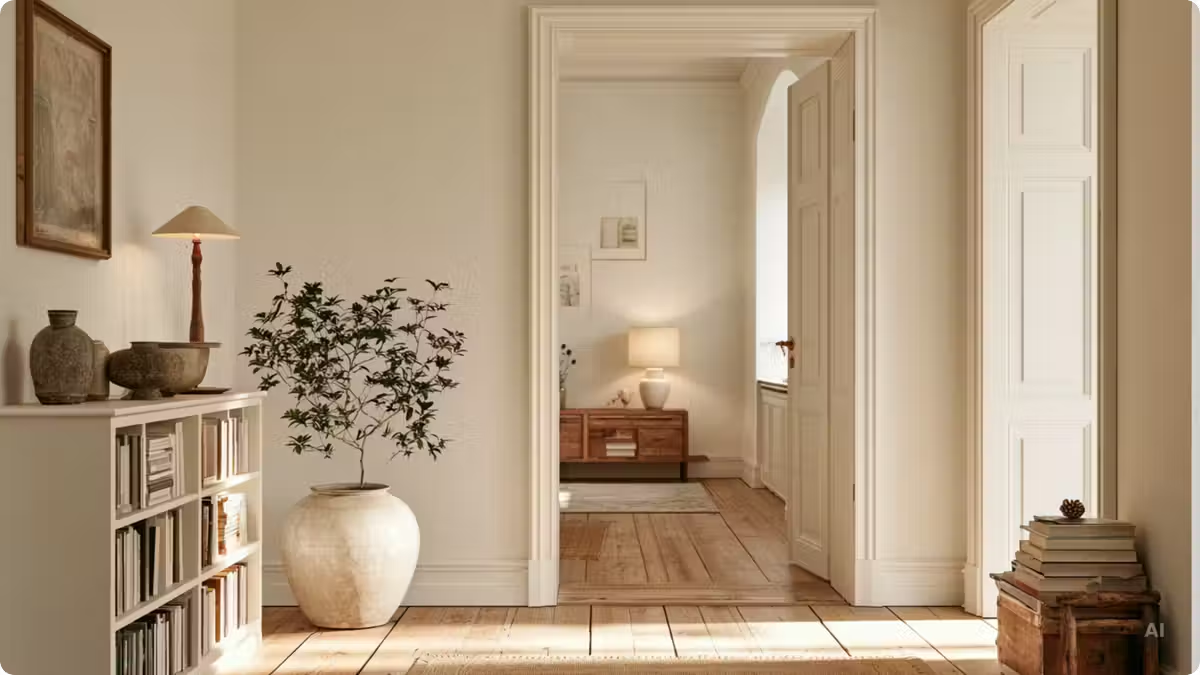
Small interventions can make a home feel more personal and curated while avoiding the cost and disruption of painting or swapping entire furniture collections. Interior designers frequently rely on subtle changes that reframe what is already in a room rather than replacing it.
Real books used as objects bring narrative and texture to surfaces. Coffee-table books are common, but designer Sarah Lederman of Sarah Lederman Interiors suggests small stacks of real books that reveal interests of the people who live there. She advises against color-coordinated spines or size sorting, arguing that a mix of titles and bindings creates a more interesting, individual statement.
Antique ceramics add uniqueness without overwhelming a minimalist aesthetic. Designer Isabel Ladd notes that pieces such as a vintage vase or serving platter are effortlessly chic and easy to source. Their value, she says, lies in the curated, individually assembled atmosphere they create, especially when placed alongside contemporary items to emphasize the contrast between old and new.
Hardware and small details can transform familiar furniture. Replacing standard pulls on dressers, cabinets, kitchen units or bedroom pieces with decorative models in metallic finishes or organic shapes gives the item a new, individual look. For a lower-effort option, decorative tassels can be hung on existing handles to introduce color, texture and personality.
The common thread across these ideas is restraint paired with personal selection. Choosing objects that reflect lived experience rather than catalogue perfection helps rooms feel refined, inviting and distinctly personal without extensive work.
- Entities: