Chestnuts are a seasonal ingredient used grilled in a paper cone, in poultry stuffing, with roast meat or in autumn soup, and commonly appear in holiday menus alongside capon, turkey or guinea fowl. Anses notes chestnut husks are brown, spiny with many long prickles containing 2–3 small flattened triangular nuts, whereas horse chestnut husks are thick green with short spaced spikes and usually contain one larger round nut. [1]
Air fryer cooking is presented as a quick method that gives a grilled texture provided the nuts are scored beforehand and steps are followed. [1]
Influenceur Lovely box proposes a method: soak chestnuts in a large volume of water for 30–60 minutes to remove those that have rotted or are infested with worms, discarding floating ones; make a cross incision on the rounded side of the remaining nuts. [1]
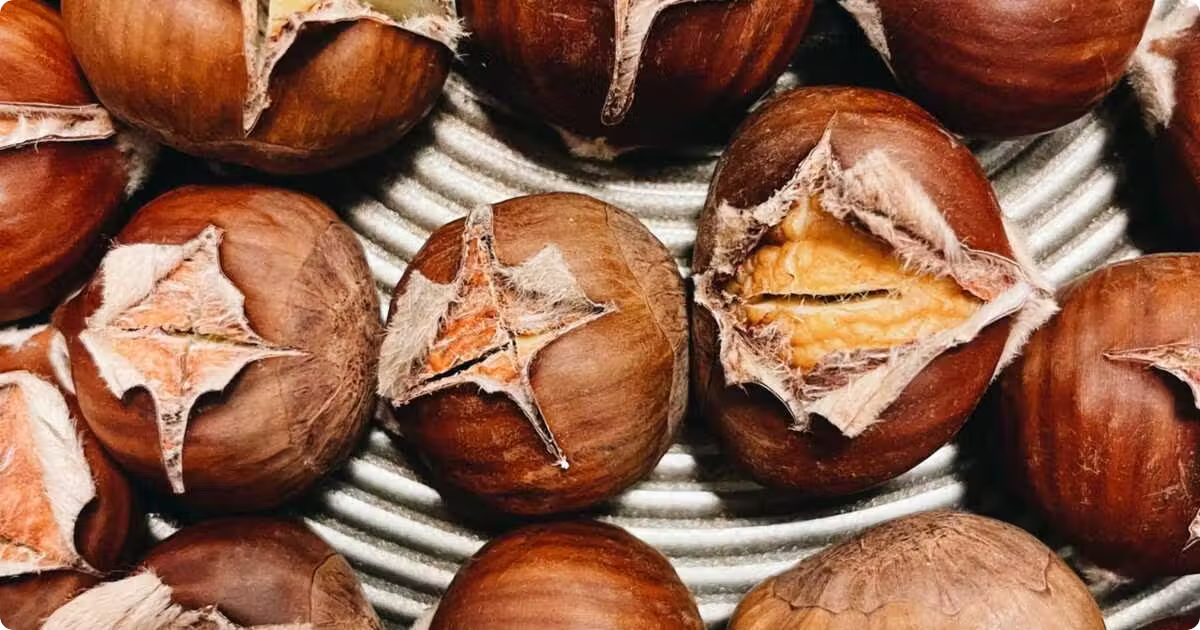
After drying, arrange the chestnuts on the air fryer rack, rounded side up, to allow the skin to open naturally; cook 18 minutes at 200°C until skins split like flowers. Let cool briefly and peel starting from the petals. [1]
The same method can be used in an oven with a longer cooking time. Use the Air Fry program on Ninja, Moulinex, Philips or Cosori models; set temperature to 200°C for about 18 minutes, adjusting for size and power, and check that the chestnuts are open and tender. [1]
The influenceur notes not to confuse chestnuts with horse chestnuts. The term marron is often used in cooking for large chestnuts or dishes such as turkey with marrons, but the two fruits are not analogous because the horse chestnut is toxic. [1]
Anses explains that chestnuts can be distinguished by husk shape: chestnut husk is brown, spiny with many long prickles containing 2–3 small flattened triangular nuts, while horse chestnut husk is thick green with short spaced spikes and usually contains one larger round nut. [1]