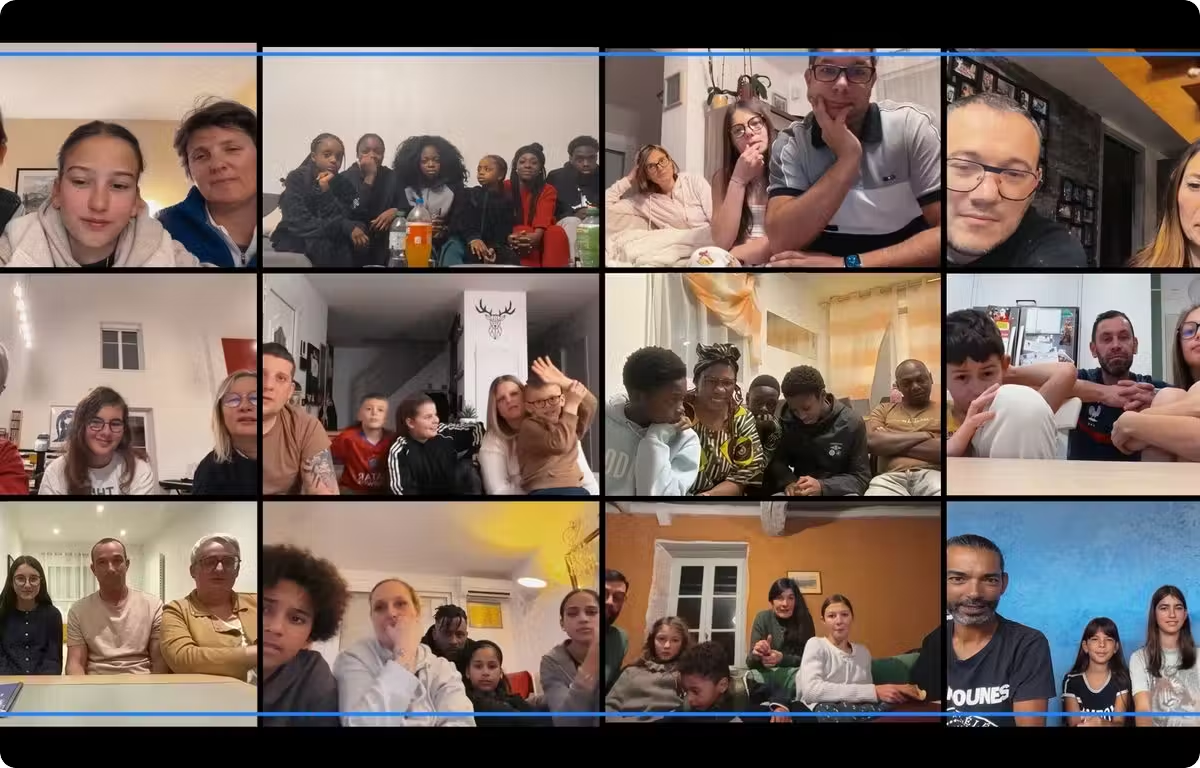
France Télévisions continues to expand its documentary portfolio aimed at family audiences with the launch of *Vies de famille*, a series offering a fresh perspective on contemporary domestic life. Following the success of *La Cour des grands*, which focused on middle school students, the broadcaster has shifted its lens to adolescence, a period often characterized by turbulence and complexity. The new program, *Vies de famille*, is designed to resonate with viewers by exploring shared experiences across diverse household structures. It features twelve families, including single-parent, same-sex couple, and mixed-heritage households, all united by having at least one adolescent child. The series aims to foster a sense of community and understanding among participants who might otherwise feel isolated in their parenting challenges. [1]
A distinctive feature of *Vies de famille* is its use of video conferencing to connect the participating families. This mechanism allows parents and teenagers to exchange viewpoints in a calm and enriching environment, despite living in different locations. Participants have reported that these sessions helped them realize their shared struggles and concerns. For instance, Ludivine, whose family is environmentally conscious, noted the value of hearing diverse perspectives. Her son, Blaise, described the experience of speaking with peers from other backgrounds as ‘incredible’, highlighting the social benefits of the format. This structure transforms private family dynamics into a collective narrative, emphasizing connectivity in an increasingly digital and fast-paced society. [1]
The series delves into specific, sensitive themes through the stories of its participants. Jean-Thomas Ceccaldi, the collection director, emphasized the importance of portraying both the heartwarming and difficult moments of family life. Examples include Anthony, a soldier dealing with long-term separation from his family, and Karine and her husband, who are supporting their transgender daughter, Madeleine, through her transition and education. These narratives are intended to debunk myths and reduce the feeling of isolation many parents feel. The filming process allowed additional topics, such as sexual orientation, to emerge naturally. Delphine’s story highlights life with a disabled partner, illustrating how happiness can be built together despite physical challenges. The show positions itself as a tool for social cohesion, created by France Télévisions to promote transmission and mutual understanding among viewers. [1]