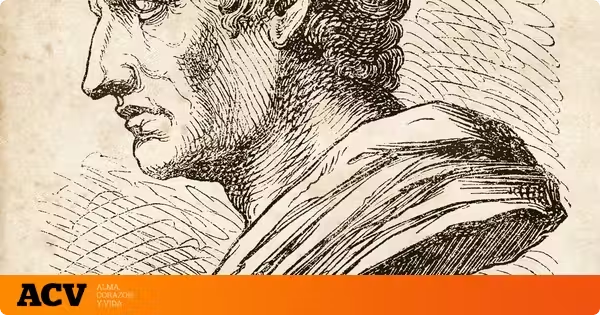
The incoming original centres on Aristotle’s view of friendship, quoting the line “Un amigo no es alguien que ocupa un lugar en tu vida, sino alguien que te sostiene cuando todo cambia” and developing the theme through Ética a Nicómaco. The article cites Seneca saying “Cuando uno es amigo de sí mismo, lo es también de todo el mundo” as part of the discussion on friendship and self-knowledge. The original attributes to Socrates the quotation “El amigo debe ser como el dinero; antes de necesitarlo, es necesario saber su valor”, used to frame the discussion of friendship. The article states that the wisdom of the past projects mysteriously onto modern dilemmas, reminding readers that humans have sought the same things for millennia, with Aristotle presented as a bright beacon of classical Greece. Making friends in the digital era appears easier thanks to screens, but psychologists warn about the fragility of virtual connections where immediacy often replaces true intimacy. Aristotle, who recorded these ideas in his celebrated Nicomachean Ethics dedicated to his son, considered it inconceivable to achieve a full and happy existence without authentic affections. Exploring Aristotle’s legacy shows he conceived affection as a territory with different shades, distinguishing three well-defined types of friendship: one based on utility, one born from pleasure in company, and virtuous friendship based on character. Maintaining sacred bonds demands constant dedication, a kind of daily training similar to physical exercise, since prolonged distance and lack of interaction can fade noble feelings. Philosophy teaches that genuine affection is a space of equality and growth where we seek the good of the other for its own sake, acting as a mirror to explore our own interior. [1]
It notes the idea that friendship requires constant dedication like physical exercise and that prolonged distance and lack of interaction can erode noble feelings. The piece situates Socratic thought alongside contemporary concerns about superficial digital connections and the need for genuine intimacy beyond immediate convenience. It describes Aristotle as still a guide for understanding the complexities of the human heart and the quality of relationships, and notes that his reflections on happiness and affective bonds retain surprising freshness. The article describes a scenario of perfect profiles and superficial affections where classical thinking gains renewed force, pushing people to seek relationships beyond passing interest, leisure or mere mutual convenience. Friends were not a pastime to fill free hours but a structural pillar of identity and emotional wellbeing. Virtuous friendship is the pinnacle of his thought, forged slowly through deep respect, sincere affection and honest desire for the other’s prosperity, becoming an indestructible refuge against life’s adversities. Contemporary research from prestigious institutions such as Harvard University supports this view, demonstrating that reciprocity and mutual support are essential for a satisfying life. Although the author of the Nicomachean Ethics prioritized the relentless search for truth above personal comforts, he never denied the beauty of sharing existence. [1]
It references contemporary research from Harvard University supporting the importance of reciprocity and mutual support for a satisfying life, including the impact of shared activities during periods of social isolation. The article invites readers to look inside themselves through the lens of classical thought about modern relational challenges. His work passionately defended that no one would choose a life without companions, reflecting that true fulfilment is built by sharing the path with others. This understanding underpins his celebrated line “Un amigo no es alguien que ocupa un lugar en tu vida, sino alguien que te sostiene cuando todo cambia.” Even in times of crisis, as recently evidenced during periods of social isolation, the lack of shared activities inevitably takes a toll on the solidity of our bonds. Finally, recalling his teachings returns a compass in an accelerated world, confirming that a good friend remains the greatest treasure we can cultivate. [1]
Aristotle is presented as a major classical guide for modern dilemmas about the heart and the quality of relationships, with his reflections on happiness and affective bonds remaining fresh. [1]