The intersection of climate change and gender-based violence represents one of the most pressing humanitarian challenges of our time, yet the financial structures designed to address it are undergoing a severe contraction. Recent reporting from organizations such as CARE France highlights a critical correlation between environmental degradation—specifically water salinization in regions like Bangladesh and drought in Ethiopia—and a resurgence in forced child marriages. However, the response to this crisis is hampered by a global decline in official development assistance (ODA) targeted at feminist organizations. This article analyzes the structural failures in funding and representation that allow these climate-gender cycles to persist, drawing on data from UN Women, the French Development Agency (AFD), and recent epidemiological studies. [1]
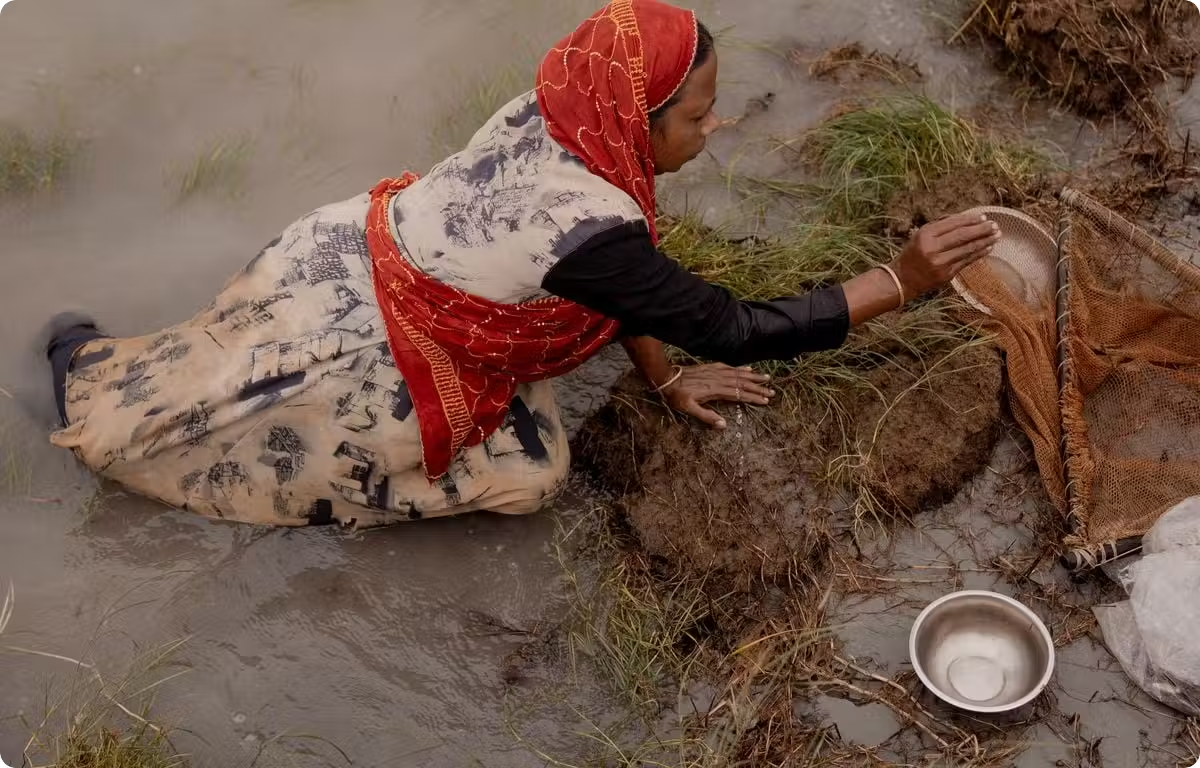
In the coastal delta of Ruhita, Bangladesh, the impact of climate change is visceral and immediate. Rahima, a shrimp fisher and community leader, spends her days submerged in saline waters that are rising due to sea-level rise and soil salinization. This exposure has severe health consequences, including chronic urinary tract infections, menstrual disorders, gynecological issues, and tumors. As documented by documentary photographer Agnès Dherbeys, who spent time with Rahima under the CARE program 'Women Lead in Emergencies,' these health crises directly influence marital practices. 'In Bangladesh, a sick girl is a girl people fear they won't be able to marry,' Dherbeys explains. The community perceives early marriage as a protective measure, ensuring girls are married off before they suffer reproductive health issues that might render them 'marriageable' but also burdensome. [1]
The medical evidence linking environmental salinity to female health is robust. A study published in October 2025 in *BMC Women’s Health* by two Bangladeshi public health researchers confirms a 'close link between exposure to salinity and reproductive health problems.' The same study calls for mobile clinics and large-scale rainwater filtration systems. Meanwhile, research published in *Nature* indicates that 9 million people in Bangladesh are exposed to high water salinity. The consequence is not just physical illness but a loss of economic independence. Adéa Guillot, spokesperson for CARE France, notes that married minors are often withdrawn from school, losing access to economic autonomy and becoming more vulnerable to gender-based and sexual violence. 'When Rahima fights for drinking water, she fights for women’s health, their independence, and against poverty and the marriage of women,' Dherbeys states. [1]
This dynamic is not unique to Bangladesh. The correlation between climate shocks and child marriage is evident globally. In Ethiopia, UNICEF reported a 119% increase in child marriages in regions most affected by the 2021-2022 drought. Similarly, CARE data shows that in Bangladesh, years with heatwaves lasting more than thirty days saw a 50% increase in marriages of girls aged 11 to 14. A 2017 study by three researchers at an American research institute, comparing sub-Saharan Africa and India, identified the mechanism: when droughts or floods destroy crops, families marry daughters earlier to receive financial compensation via dowry or to reduce the number of mouths to feed. 'Generally, forced child marriages are declining globally, but in specific contexts, we see a resurgence,' says Adéa Guillot. 'Climate crises are a factor that ultimately aggravates vulnerabilities.' [1]
Despite the urgent need for intervention, the financial and political frameworks supporting gender-focused climate action are weakening. At the COP 2025 held in Belém, Brazil, UN Women reported that 60% of national delegations remained predominantly male. While gender plans were strengthened at the table, Adéa Guillot argues they are not being implemented by governments. 'The gender plan was strengthened, but in reality, it is still not truly implemented by our governments,' she says, calling for better female representation in negotiations. The failure to include women in decision-making processes directly impacts the efficacy of climate policies, which often fail to address the specific gendered impacts of environmental change. [1]
The funding crisis is equally stark. According to UN Women, nearly nine out of ten feminist organizations worldwide are no longer able to respond to needs. This is driven by the largest annual decrease in ODA ever recorded in 2025. In France, the Agency for Development (AFD) provided €7 million to CARE’s 'Women Lead in Emergencies' program in 2024. While the program is funded until 2028, CARE is concerned about future budget cuts in the 2026 budget and the upcoming 2027 presidential election. Emilie Vigeanel, program manager for CARE France, warns: 'The future is very uncertain: we expect candidates to commit to preserving international solidarity and its funding.' [1]
The disconnect between policy goals and financial reality is evident in the UN’s 2030 target to eliminate forced marriages. 'It’s not moving fast enough,' Guillot declares. 'At the current rate, it would take another 170 years in sub-Saharan Africa to eliminate forced marriages.' The article serves as a critical reminder that climate justice is inherently tied to gender justice. Without significant increases in targeted funding and inclusive political representation, the vulnerable populations documented by researchers and activists will continue to bear the brunt of climate change through increased violence, poverty, and the erosion of their rights. [1]