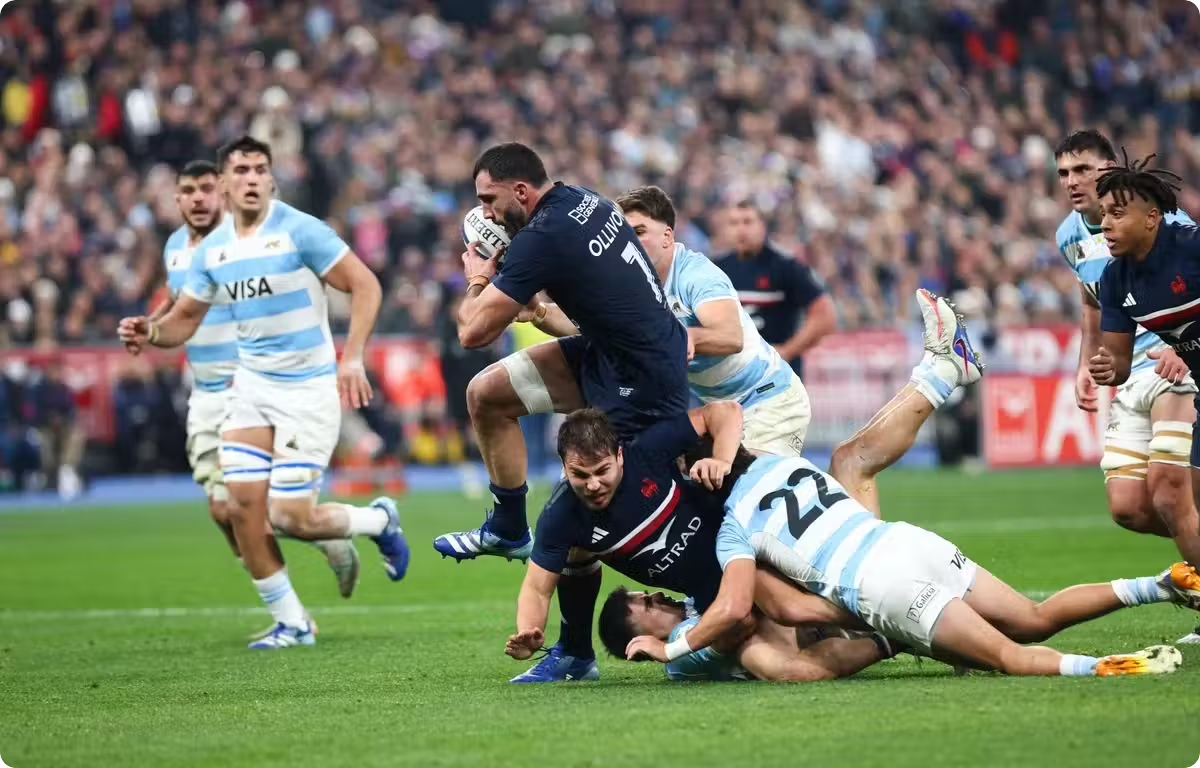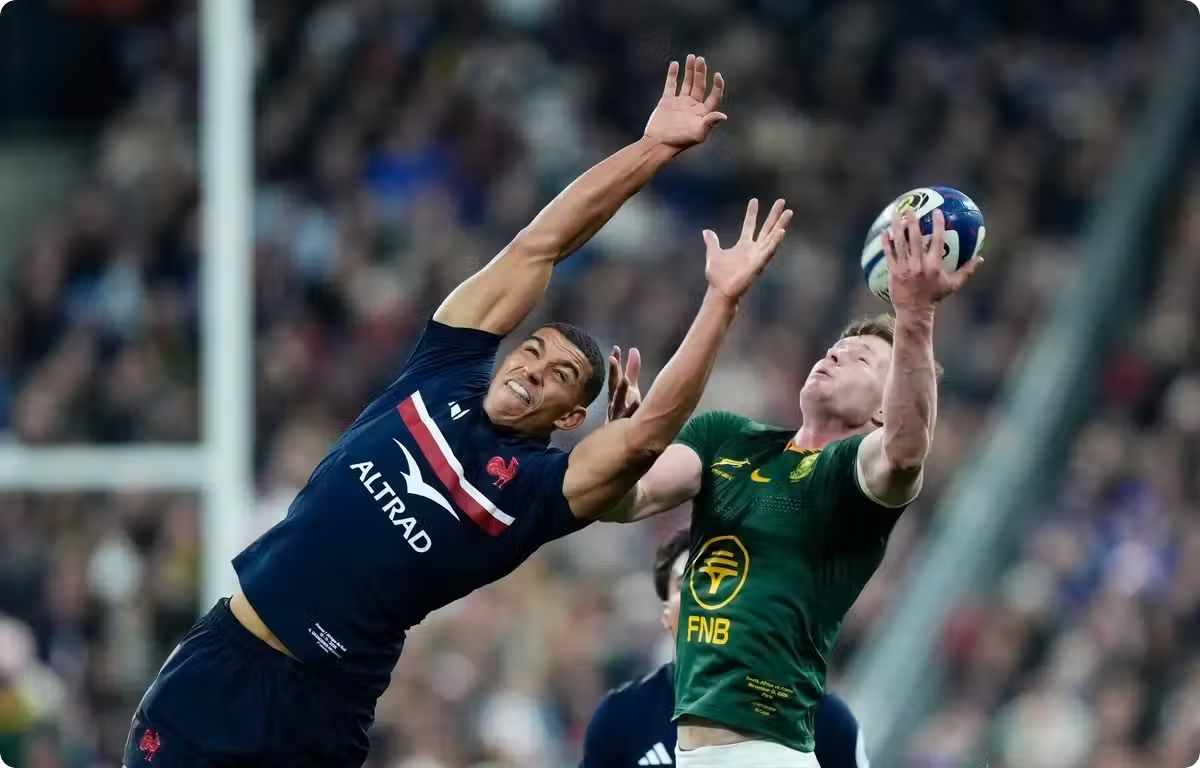
France faces Argentina in the ongoing championship, but the central story surrounding this clash extends beyond the immediate contest. The French squad, coming off a historic victory over the world champion Springboks with a depleted forward pack and a second half under immense pressure, is now positioned to secure top spot in their Northern Hemisphere pool. Winning with a bonus point is required to guarantee this outcome, a victory that would set up a potential Sunday showdown against South Africa at Twenikham. Coach Fabien Galthie has made minimal changes to the lineup starting with Matthieu Jalibert's return at fly-half, aiming to replicate the defensive resilience shown against the springboks. However, the tactical discourse dominating pre-match conversations focuses on a more subtle yet potent advantage: the French team's mastery of navigating the very edges of World Rugby's regulations. This strategic approach, often described colloquially as playing 'on the limit,' allows them to maintain high-intensity physical engagement while staying within the letter of the law, effectively neutralizing referees who are forced to interpret increasingly complex directives. [2] [1]
The debate over this 'limit-walking' strategy was reignited following France's narrow 21-19 victory over South Africa. Former UBB defense coach Christophe Laussucq draws parallels to the notorious Richie McCaw era, where the All Blacks legend manipulated referee interpretations to disrupt play without receiving penalties. McCaw, described as one of the most difficult players to officiate, played constantly at the maximum allowable boundary, forcing officials to make split-second judgments on infractions that were technically within the rules. While Laussucq notes that modern French teams lack a singular figure like McCay, the collective unit now employs a similar philosophy. Former international referee Alexandre Ruiz disputes the characterization of playing 'with the refereeing,' arguing instead that the French have maintained remarkable discipline. According to Ruiz, the team has not broken rules but has instead optimized their performance within the vast gray areas of the current framework. This distinction is crucial; where critics see manipulation, coaches and analysts see rigorous adherence to a rulebook that contains inherent ambiguities, particularly regarding recent high-profile changes. [1]
A significant catalyst for this tactical shift is the introduction of the new knee-drop tackle regulation, enforced by World Rugby since November 1st. The rule prohibits a player from tackling if they have one or two knees on the ground. This directive has caused substantial confusion among officials and opposition coaches alike, notably drawing sharp criticism from South African head coach Rassie Erasmus. Erasmus argued that the new rule creates an impossible environment for referees, who must distinguish between a knee grazing the ground slightly before impact versus landing fully prior to contact—a difference that is infinitesimal at full sprint speed. Alexandre Ruiz describes the scenario as a 'nightmare' for referees, given the lack of harmonization and the sheer difficulty of visual verification. By exploiting these microscopic timing windows, French players can execute high-risk tackles that are deemed legal, whereas slower reactions might result in penalties. This micro-detail, operating in fractions of seconds and centimeters, has become the new battlefield where matches are won or lost. [1]
Beyond tackle mechanics, the French team's proficiency extends to scrums and lineouts, where spatial and timing deviations are similarly scrutinized. David Attoub, a former international prop, explains that at the elite level, success hinges on micro-details such as being a fraction of a second early or late on engage. During scrums, French players frequently take one or two small steps toward their left upon impact, applying continuous psychological and physical pressure on right-handed locks, a tactic previously noted by the All Blacks. In lineouts and rucks, the definition of offside is tested through precise positioning. The strategy involves rigorous testing of boundaries early in matches, allowing referees to establish baseline warnings ('prevention') which then sets the standard for the rest of the game. Players use these initial interactions to calibrate their aggression, ensuring they remain just inside the threshold of legality. [1]
This evolution marks a significant departure from previous eras. Attoub recalls that older French tactics involved a cruder form of 'vice' where players were frequently caught and penalized for blatant infringements. Today, the approach is far more judicial and refined. Julien Puricelli, assistant coach at Lyon Olympique Universitaire, highlights the role of dedicated training with referees like Jérôme Garcès. By consulting directly with officiating experts, French staff members understand the precise thresholds of the rulebook. This insider knowledge allows the team to push the definition of 'authorized' behavior, capitalizing on loopholes where the regulations remain vague or open to interpretation. While Erasmus has condemned these tactics, labeling the number of overlooked French fouls as excessive, tactical analysts view his complaints as a communication strategy. Erasmus, currently serving a six-match suspension due to prior conduct, aims to secure potential penalty advantages for future clashes, hoping that highlighted 'missed calls' might influence officiating outcomes in a potential semi-final encounter. Regardless of Erasmus's grievances, the French remain focused on consolidating their top ranking, leveraging every technical nuance available to maintain their standing in the championship standings. [1]
As the story develops
Update
France vs Argentina: How the French rugby team navigates the fine line of officiating limits
With France leading 26-10 in the second half, Louis Bielle-Biarrey launched a precise pass to Emilien Gailleton, who extended his body near the touchline to score. The try, converted by Mattheeu Jalibert’s teammate Kalvin Gourgues, secured the bonus point France needed to top its Northern Hemisphere group. After a brief setback where Argentina committed a handling error, France reset their attack via a lineout. The French backs continued to probe for weaknesses in the Pumas' defensive line. Coach Fabien Galthié made three major substitutions to close out the game. Napolioni Nailatikau (Woki), Paul Gabrillagues, and Simon Daley replaced the starting trio of Charles Ollivon, Rabah Slimani (Jelonch), and Paul Boudehent (Guillard), signaling a defensive shift to protect the lead. The validity of Gailleton's try was initially questioned by the video referee due to concerns he might have had a foot out of bounds during the dive. However, the on-field decision stood, confirming the bonus point. [3]
Matthieu Jalibert had earlier orchestrated the third French try. After waiting for the perfect moment in the Argentine 22, he delivered a weighted pass to Kalvin Gourgues. Gourgues exploited the space created by Jalibert to dive over for the score, which was successfully converted by Gourgues himself, extending the lead to 21-10. Further reinforcements arrived in the second half as Paul Boudehent and Simon Porrecar replaced Joris Rodrigue Neti and Paul Gabrillagues at the tight-head prop and loosehead positions, respectively, to manage the closing stages of the contest. France’s dominance was briefly interrupted by a forward pass, halting a promising offensive drive by Thomas Ramos and Matthis Lebel. The error prevented the Tricolores from adding further points immediately. [3]
- Categories:
- Sport
- Entities:
Sources
- 20 Minutes France - Argentine : « Pas vu, pas pris »… Comment les Bleus arrivent à (bien) jouer avec les limites sur l'arbitrage
- 20 Minutes EN DIRECT France - Argentine : Les Bleus sont chauds patate, Guillard marque déjà le premier essai... Suivez le match avec nous
- 20 Minutes EN DIRECT France - Argentine : Les Bleus en quête du bonus, les Pumas à 14, on la veut cette finale face aux Boks... Suivez le match avec nous