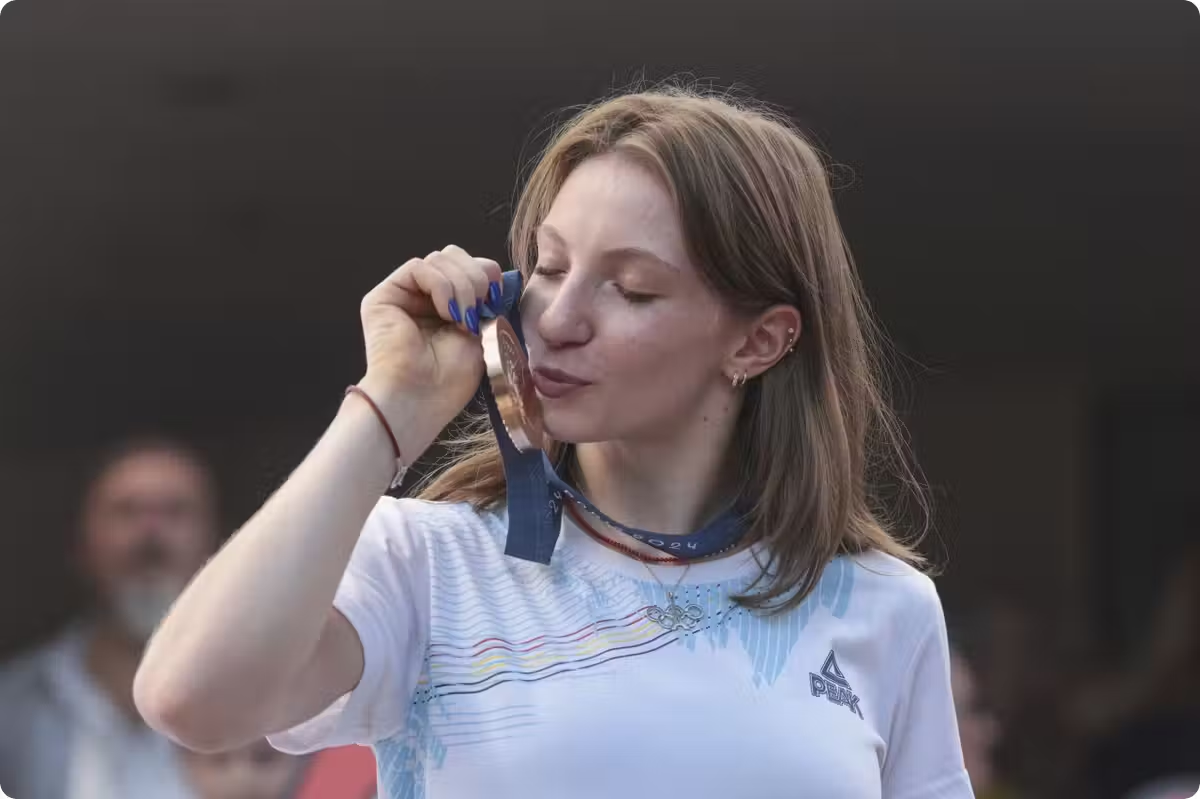
The Court of Arbitration for Sport (CAS) upheld the two-year suspension of gymnast Ana Maria Bărbosu, confirming the sanction initially imposed by the International Testing Agency (ITA). The decision was made by the Single Judge of the Anti-Doping Case Division (CAS ADD) and confirms the violation of the anti-doping rules through three location failures recorded within a 12-month period. [1] [2]
The proceedings were initiated by ITA on behalf of the International Gymnastics Federation, which accused the athlete based on article 2.4 of the anti-doping regulations. Ana Maria Bărbosu could not be found at three tests during a 12-month period at the provided locations, constituting a violation of the rules regarding the communication of location data. [1] [2]
The gymnast contested the occurrence of two of the three location failures and argued that no period of ineligibility should be imposed on her. The hearing took place on August 20, 2026, at which ITA represented World Gymnastics. After reviewing the evidence and written submissions, the court found the athlete responsible on November 4, 2026. [1] [2]
The two-year ban applies starting from May 5, 2026, the date of provisional suspension, and will expire on May 4, 2028. The athlete, World Gymnastics/ITA, the World Anti-Doping Agency (WADA), and the Romanian National Anti-Doping Agency have the right to appeal the CAS ADD decision to the CAS Appeal Arbitration Division, within the timeframes prescribed by the regulations. [1] [2]
In May 2026, the president of the Romanian Gymnastics Federation, Mihai Covaliu, anticipated that Ana Maria Bărbosu might return to the 2028 Los Angeles Olympics. Covaliu stated that a definitive ban is not the end of a career, suggesting that the athlete could regain her form and qualify for the 2028 edition, exactly at the end of the ban term. [2]
In its statement, ITA specified that it would make no further comments on this case. [2] [1]
As the story develops
Update
CAS upholds two-year ban for Ana Maria Bărbosu
The decision by the Court of Arbitration for Sport (CAS) to maintain the two-year ban imposed on gymnast Ana Maria Bărbosu for three location failures was announced on November 4, 2026. [3]
The procedure was initiated by ITA on behalf of World Gymnastics after three failures to comply with the obligation to provide testing location information were registered between September and December 2025. The athlete challenged the sanctions and requested a hearing at CAS ADD, which took place on August 20, 2026. [3]
CAS determined that the results obtained in international competitions starting from December 2025 will not be annulled. [3]
Ana Maria Bărbosu is involved in a separate arbitration procedure at CAS, related to the floor exercise final at the 2024 Paris Olympics. Documents are being transferred between parties, and the hearing is not scheduled before May 2027. [3]
Update
CAS confirms two-year ban for Ana Maria Bărbosu
Gymnast Ana Maria Bărbosu received a two-year ban from the Court of Arbitration for Sport (CAS), a sanction that began on May 5, 2026, and will expire on May 4, 2028. The period of provisional suspension has been included in the total duration of the penalty. [4]
The case originated from three incidents recorded between September and December 2025, related to the athlete's non-compliance with the obligation to communicate where she can be found for anti-doping tests. The three failures were noted in a period of approximately four months, below the maximum threshold allowed by the anti-doping regulation of 12 months for accumulating sanctions. [4]
The International Testing Agency (ITA), which manages the anti-doping program of the International Gymnastics Federation, informed the athlete about the recorded violations in the spring of 2026. [4]
The International Gymnastics Federation requested the annulment of sports results achieved by Bărbosu starting from December 2025, but this request was not fully accepted. The sports arbitral court did not order the annulment of performances recorded before the provisional suspension, nor those after it. [4]
Update
CAS maintains two-year ban imposed on Ana Maria Bărbosu
The Court of Arbitration for Sport (CAS ADD) partially granted the request of the International Gymnastics Federation (World Gymnastics) to initiate disciplinary proceedings against gymnast Ana Maria Bărbosu, due to three violations of the obligation to provide location information for anti-doping controls. [5]
The Single Judge of the Anti-Doping Case Division (ADD) heard the arguments of the parties on August 20, 2026, considering that the three failures were correctly recorded within the 12-month interval, constituting a violation of the regulations. [5]
The two-year sanction, calculated starting from May 5, 2026 (the date of provisional suspension) and expiring on May 4, 2028, reduces the period already served. However, the court decided that all sports results obtained by Bărbosu starting from December 2025 will not be disqualified, which is why World Gymnastics' request was partially granted. [5]
If the sanction remains in force, returning to competition approximately two months before the 2028 Los Angeles Olympics considerably reduces the available time for preparation and qualification. Final participation will depend on ranking criteria and the athletic situation at the time of resuming activity. [5]
Separate from the anti-doping case, Ana Maria Bărbosu is involved in an arbitral procedure regarding the bronze medal obtained in floor exercise at the 2024 Paris Olympics. This decision initially annulled the effects of a complaint by the US team, but later, the Swiss Federal Tribunal ordered a re-examination of the case. [5]
The parties involved in the Paris medal case continue exchanging documents, with the hearing not scheduled before May 2027. [5]
Update
CAS upholds two-year ban imposed on gymnast Ana Maria Bărbosu
Ana Maria Bărbosu is involved in a separate arbitration procedure at CAS, related to the bronze medal in floor exercise at the 2024 Paris Olympics. [6]
Update
CAS confirms two-year ban for Ana Maria Bărbosu: impact on qualification for Tokyo 2028
The Court of Arbitration for Sport admitted the request of the International Gymnastics Federation (World Gymnastics) and suspended Ana Bărbosu for two years from all competitions, after the athlete accumulated three location failures in the period September-December 2025. The decision of the Single Judge of the Anti-Doping Case Division (CAS ADD), taken after the hearing on August 20, 2026, confirms the violation of location data communication rules, a sanction that applies starting from May 5, 2026, and will expire on May 4, 2028. [7]
The suspension significantly limits preparation time for the 2028 Los Angeles Olympics, with qualification chances considered minute by sources, as the end of the term coincides with major pre-competitions. Ana Bărbosu, who studies at Stanford University, justified the location difficulties by campus access restrictions, but the court rejected arguments regarding two of the three failures. The International Gymnastics Federation requested the annulment of results starting from December 2025, a request partially granted only regarding the disciplinary procedure, without disqualification of performances. [7]
Update
RGF saves Anna Bărbosu's Paris medal, but anti-doping ban remains
President of the Romanian Gymnastics Federation, Ioan Suciu, considers that the two-year ban received by Ana Maria Bărbosu compromises the athlete's chances of participating in the 2028 Los Angeles Olympics, although the sanction expires before the competition. [8]
Ioan Suciu stated that he expected a lighter punishment and expressed surprise at the CAS decision, saying: 'I am unpleasantly surprised! I would have expected one year, unfortunately it is two years of suspension. And that means compromising participation in Los Angeles 2028. It is not good news given that Romanian gymnastics has so many problems. It was a complicated case that hinders us greatly for the future... it is an evening that is not good at all for the gymnastics family.' [8]
The 20-year-old gymnast, medalist with bronze in floor at Paris 2024, will not be able to officially compete until May 2028, during which time she will resume training for qualification to the Los Angeles Olympics. [8]
The sanction involves three location failures recorded within a 12-month interval, violating the anti-doping regulation that obligates athletes to continuously communicate addresses and schedules for surprise tests. [8]
The provisional suspension began on May 5, 2026, and the definitive one will expire on May 4, 2028, a period calculated already including the provisional ineligibility period. [8]
Returning to competitions in May 2028 leaves a narrow window before the last qualification opportunities, including the European Championships in June 2028, crucial for individual spots at the Olympics if Romania does not qualify as a team. [8]
Ioan Suciu explains his surprise at the punishment: 'I would have expected a single year'. RGF leadership acknowledges that the situation complicates future plans. [8]
The RGF president emphasizes the negative impact on preparation and qualification chances for Los Angeles 2028. [8]
'It is not good news given that Romanian gymnastics has so many problems,' declares Suciu. [8]
'It was a complicated case that hinders us greatly for the future... it is a gymnast who had chances to go to the Olympics. I don't know what else to say, it is an evening that is not good at all for the gymnastics family,' explains Suciu. [8]
Official statements appear in the context where Bărbosu was considered a starter for the spot in the team for the 2028 Olympics. [8]
Ana Maria Bărbosu is European champion in 2025 and obtained bronze at Paris 2024, being the main hope of Romanian gymnastics. [8]
Ineligibility prevents participation in official competitions, limiting opportunities to obtain the necessary score for Olympic qualification. [8]
The calendar after May 2028 allows a reduced interval until the last qualification opportunities. [8]
The European Gymnastics Championships in Athens, scheduled between June 1 and 4, 2028, could be decisive for individual spots at the Olympics. [8]
These Championships will distribute the last individual spots, in case Romania does not qualify as a team. [8]
Participation in Athens is essential for the chance to reach Los Angeles, but depends on reactivation and fulfillment of criteria. [8]
Ana Maria Bărbosu explained the American context that led to location difficulties for anti-doping tests. [8]
Before the CAS decision, the athlete described the circumstances that complicated compliance with location obligations. [8]
Studying at Stanford University, the athlete faced a different schedule and frequent changes of locations for training or daily life. [8]
These changes made it difficult to communicate exact data to authorities. [8]
'Addresses have clearly been much harder to understand and fill out. I was already tested twice since I've been in America, meaning things are clarified,' described the gymnast. [8]
'When it comes to my location and where I stay, these things change extremely quickly and periodically and it is very hard to keep track all the time because I have to fill in my location where I sleep, where I train, where I move every day, all year round.' [8]
'And anti-doping agents can come to test you within an hour without needing to call you, you don't need to be notified in any way and you just need to be available for them to test you.' [8]
Anti-doping rules impose a daily interval of 60 minutes of availability for tests. [8]
Athletes must constantly update location information. [8]
Three location failures in a year constitute a violation, even without banned substances. [8]
The sanction for Bărbosu strictly concerns failure to comply with location obligations, not positive results. [8]
The gymnast justified the accommodation problems in the US, mentioning that she had already been tested twice. [8]
Her arguments did not reduce the sanction to one year, as hoped by the RGF president. [8]
The suspension does not affect the bronze medal from Paris 2024, the failures occurring in 2025. [8]
The bronze medal case is disputed by the Romanian side with the US and Jordan Chiles, following a complaint regarding the floor score. [8]
CAS will re-examine this file after the decision of the Swiss Federal Tribunal in January 2026. [8]
Ineligibility ends in May 2028, one month before the European Championships in Athens. [8]
Athens could offer the last spots at the Olympics if Romania does not qualify as a team. [8]
Ioan Suciu sees the suspension as a major problem for the Romanian Team, considering Olivia's potential for the 2028 Olympics. [8]
Follow România Liberă on X, Facebook, and Google News! [8]
- Categories:
- Sport
- Entities:
-
- Paris
- Los Angeles
- Atena
- Ana Maria Bărbosu
- Federația Internațională De Gimnastică
- WADA
- Tribunalul De Arbitraj Sportiv
- Agenția Mondială Antidoping
- CAS ADD
- Agenția Internațională De Testare
- ITA
- Agenția Națională Anti-Doping Din România
- Divizia De Apel A TAS
- JO 2024
- Mihai Covaliu
- Tribunalul De Arbitraj Sportiv
- World Gymnastics
- WADA
- TAS
- ITA
- World Gymnastics
- Jordan Chiles
- Tribunalul Federal Elveţian
- Ana Bărbosu
- Jocurile Olimpice
- Agenția Internațională De Testare
- României
- Stanford
- Ioan Suciu
- Campionatele Europene De Gimnastică
Sources
- stirileprotv.ro Gimnasta Ana Maria Bărbosu, medaliată cu bronz la JO 2024, suspendată 2 ani pentru încălcarea regulilor antidoping
- DCNews Decizie la TAS. Gimnasta Ana Maria Bărbosu, suspendată doi ani
- News.ro TAS: Ana Maria Bărbosu, suspendată doi ani, începând din 5 mai 2026, în cazul privind nerespectarea obligaţiei de a comunica localizarea pentru testele antidoping / Rezultatele nu îi sunt anulate
- Evenimentul Zilei Ana Bărbosu, suspendată de TAS. Când va putea reveni în competiții
- MediaFax Ana Maria Bărbosu, suspendată doi ani pentru încălcarea regulamentului antidoping. Decizie TAS înaintea Jocurilor Olimpice din 2028
- observatornews.ro Ana Maria Bărbosu, suspendată doi ani după trei abateri antidoping. Ce se întâmplă cu participarea la JO 2028
- stirileprotv.ro Participarea Anei Bărbosu la Jocurile Olimpice din 2028, pusă sub semnul întrebării după suspendarea de doi ani
- Romania Libera Ana Maria Bărbosu riscă să rateze Jocurile Olimpice! Președintele FRG, surprins de suspendarea decisă de TAS