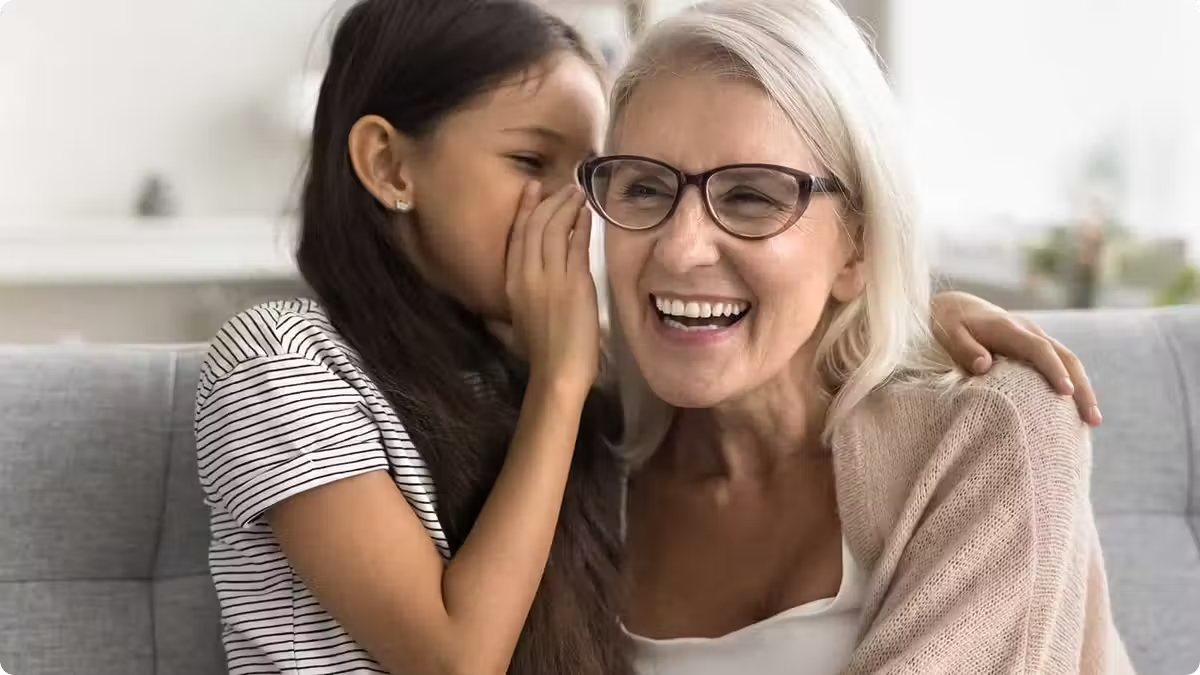
Psychologists suggest that while grandparents naturally wish to provide for their grandchildren, much of the typical guidance, advice, and value transmission conflicts with the role of the child's parents. Because parents are already managing schooling, discipline, daily schedules, and household rules, a grandparent attempting to replicate that level of oversight can create friction. The most effective support a grandparent can offer is often passive—being present and supportive without assuming the managerial responsibilities that belong to the parent-child dyad. Beyond logistical overlaps, there are specific emotional and historical roles that only grandparents can fulfill. Experts identify several unique contributions that are essential for a grandchild’s development, which parents, constrained by their immediate authority and responsibility, cannot easily provide. First, grandparents offer unconditional love free from the burden of outcome-based judgment. Parents carry the heavy weight of responsibility for their child's future success and moral character. Their disciplinary actions, boundary-setting, and authoritative commands (such as 'because I said so') are heavily influenced by anxiety regarding the child's long-term trajectory. This pressure, though invisible to the child, permeates parent-child interactions. Grandparents, by contrast, are not responsible for the child's ultimate 'success' or failure in society. They can offer affection without an implicit 'performance review' running in the background, allowing children to experience a form of love that is purely appreciative of their existence rather than conditional on their compliance or achievement. Secondly, grandparents serve as a living bridge to the family history that predates the grandchildren's birth. They possess direct knowledge of great-grandparents, deceased relatives, and extended family members whose stories are otherwise lost to time. Research by psychologist Robyn Fivush at Emory University indicates that these intergenerational family narratives are powerful predictors of a young person's well-being, often more so than their own personal stories alone. By sharing these accounts, grandparents provide grandchildren with a profound sense of place, belonging, and identity. While parents can share some of this history, the grandparent is the sole living link to the informal, unwritten parts of the family's past. [1]
As the story develops
Update
Why Well-Loved Grandparents Don't Try To Be Second Parents
Grandchildren require a distinctive form of support from their grandparents that differs fundamentally from parental oversight. Psychologists emphasize that while the instinct to provide care is natural, grandparents who understand their role best avoid attempting to replicate the managerial responsibilities held by parents. Frequent intervention regarding mundane details—such as insisting on warmer coats, criticizing bedtime routines, or objecting to dietary allowances like sugar and screen time—creates unnecessary friction. This constant commentary on how parenting should be executed suggests a misunderstanding of boundaries. Children quickly distinguish between adults who are present for love and those who are 'auditioning' for the role of a parent. The most harmonious intergenerational relationships occur when grandparents accept that the child already has primary caregivers and do not seek to compete with or overrule them. [2]
For many older adults, stepping back from active parenting duties is challenging because they spent decades holding total responsibility for their children's outcomes. This included managing manners, safety, education, daily routines, and the long-term development of the child's character. This lifelong habit of making solitary, critical decisions means that adjusting to a grandfather or grandmother role requires significant psychological adaptation. The grandparent must relinquish the urge to correct, overrule, or redo their adult child's choices, recognizing that differences in rules are not personal attacks. [2]
Key behaviors of grandparents who successfully navigate this shift include refraining from undermining parental authority to appear as the 'fun' one. They do not use gifts to buy affection or compare current grandchildren unfavorably to their own children. Instead of performing, these grandparents engage in simple, sustained presence. They enjoy everyday moments, such as sharing meals, listening to repetitive jokes, or attending school events, without needing to be impressive or memorable. A healthy grandparent-grandchild relationship operates without expectation or accounting. There is no need to track past sacrifices, such as driving distance for babysitting, or remind children of previous gifts. The bond thrives on mutual enjoyment rather than transactional gratitude. [2]
Psychologist Terri Apter, writing from the University of Cambridge, notes that this dynamic leverages the grandparent's unique position. While grandparents possess extensive experience with infants and child development, they operate with significantly less authority than parents. This separation of experience from authority allows them to offer support without the pressure of disciplinary responsibility. When grandparents respect this boundary, they provide a stable, low-pressure environment that complements the structured, authoritative role of the parents. This balance prevents ordinary family moments from becoming power struggles and allows the grandchild to experience unconditional acceptance. [2]
Unconditional Love Without Performance Reviews: Unlike parents, who are often anxious about their child's future success and moral development, grandparents are not responsible for the child's societal trajectory. They can offer affection without the underlying 'performance review' that accompanies parental discipline and boundary-setting. Intergenerational Family History: Grandparents serve as the living bridge to the family's past. As noted by psychologist Robyn Fivush of Emory University, intergenerational family narratives—stories about great-grandparents and extended family—are powerful predictors of a young person's well-being, often exceeding the impact of their own personal stories. By sharing these oral histories, grandparents provide grandchildren with a profound sense of place, belonging, and identity. While parents share the immediate present and future, grandparents anchor the child in the rich, informal, and often unwritten traditions of the lineage that preceded them. [2]
The dynamics of grandparenthood involve a complex negotiation between ingrained parenting instincts and the acceptance of a new, lighter role. Success in this role relies on recognizing that influence is derived from closeness rather than control, and that the child's development is supported by a diverse network of adult relationships, each with specific functions. Research continues to highlight the benefits of clearly defined family roles. When grandparents avoid the trap of acting as surrogate parents, they reduce family conflict and allow the primary parent-child bond to remain strong. This synergy ensures that the child receives structured guidance from parents and emotional security from grandparents. The absence of 'running commentary' on parenting choices is a hallmark of emotionally mature grandparenting. It signifies respect for the adult child's autonomy and confidence in their ability to raise the next generation. This respect fosters trust among three generations, creating a more resilient family unit. [2]
Ultimately, the goal of grandparenting is not to leave a legacy of strict rules but to leave a legacy of love and history. By embracing the role of the supportive non-parent, grandparents ensure they are remembered fondly and remain an accessible, cherished resource throughout the grandchild's life. The psychological distinction between being 'important' and being 'in charge' is critical. Grandchildren benefit most from grandparents who are emotionally available but operationally detached, allowing the parents to maintain their authority while the grandparents provide a sanctuary of unconditional positive regard. This approach mitigates the risk of the grandchild being caught in loyalty conflicts or manipulated through guilt and gifts. A clean, transparent relationship based on mutual affection and shared history provides a stable foundation for the child's emotional growth. [2]
While other content exists within the source platform regarding unrelated psychological traits, the core narrative focuses exclusively on the structural adjustments required for effective grandparenting. The emphasis remains on the necessity of letting go of parental habits to preserve the unique value of the grandparent role. The provided text references additional topics such as punctuality and phone usage preferences, but these are external to the central discussion of grandparental roles. The focus remains on the intergenerational dynamics and the specific psychological needs of grandchildren for a non-judgmental, historically connected guardian figure. [2]
- Categories:
- Society
- Entities: