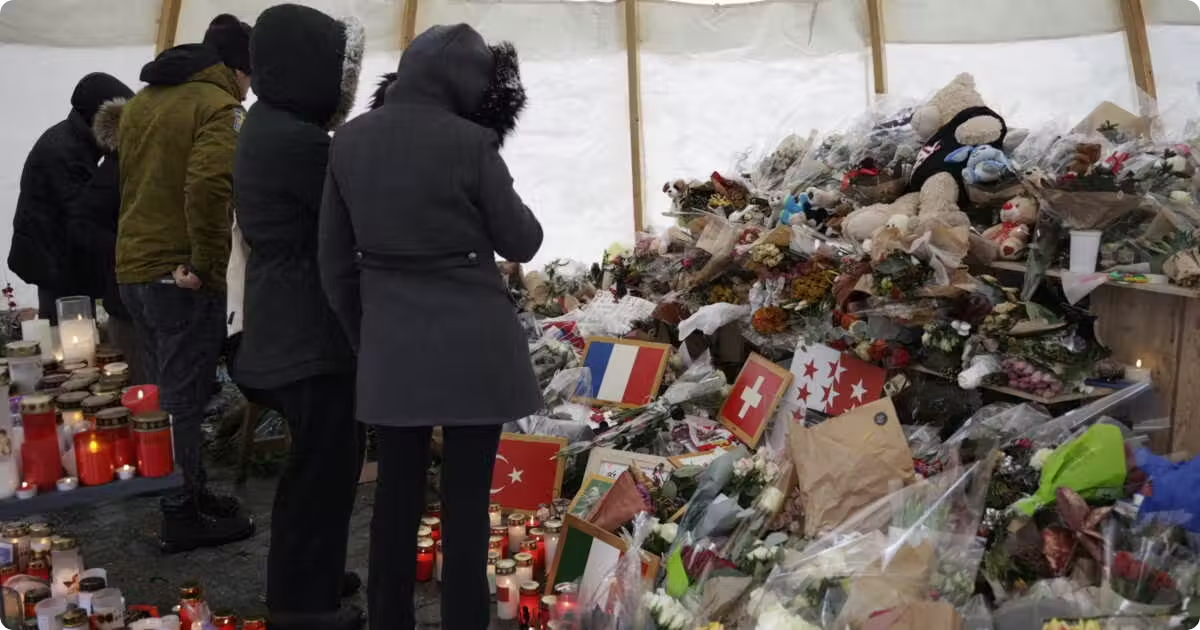
Seven survivors of the tragic fire at the Constellation club in Crans-Montana, which broke out on New Year's Eve, announced that they will not benefit from the emergency funds promised by Swiss authorities. The incident caused the death of 41 people and left 115 injured, and those seven affected individuals received the news while the nightclub managers' trial was ongoing. [1]
The conflict arises 11 months after the tragedy that shook Switzerland, with the seven refugees being excluded from grants of €65,000 promised by the canton of Valais and the confederation. The reason for the rejection lies in strict criteria and the treatment accorded to psychological injuries, which were not systematically considered in initial assessments. Among those excluded is Camille C., originally from Sète, France, who was present at the time of the fire alongside her friend Cyane, who lost her life. [1]
Camille C. described the traumatic experience through the lens of cold bureaucracy and bewilderment at the lack of empathy from institutions. Although she left the hospital for two days to allow patients with more severe injuries to occupy beds, she returned as soon as she was fit to undergo surgery. Difficulties arise because the eligibility criterion does not officially recognize trauma suffered by those who were not hospitalized and did not lose blood relatives, but lost close friends—a situation Camille compares to losing a sister. [1]
Although it was considered that the most severely injured and victims' relatives deserve full compensation, Camille C. feels reduced to the status of a beggar, highlighting the devastating psychological impact she endured, as well as the fact that she lived through the experience of near death. Alongside her, six other people are in a similar situation, excluded from funds despite having been directly exposed to danger. [1]
Mathias Reynard, head of health in Valais, clarified the criteria underlying the provision of emergency aid, specifying that they focus on direct relatives of deceased victims and persons hospitalized for at least one night as a result of the fire. This includes adolescents still in intensive care. However, Reynard acknowledged that hundreds of people suffer psychological sequelae and should receive a gradual assessment, without denying them their status as victims. [1]
- Categories:
- Society
- Entities: