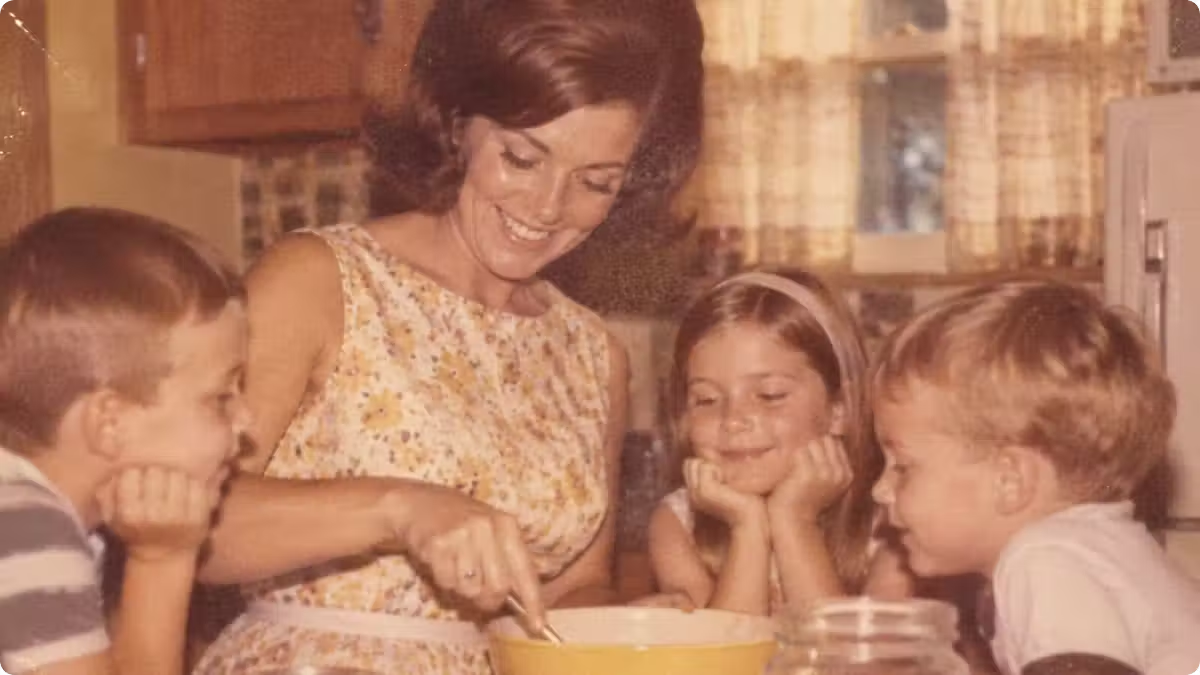
A 2007 Pew Research survey revealed a major gap in the perception of motherhood: 70% of the public believes that being a mother is harder now than 20-30 years ago, an opinion particularly strongly held by Baby Boomer women (aged between 50 and 64). These women criticize how new generations manage their role, having a perspective shaped in an era where caregiving was equated with loss of self, without the need for modern vocabulary such as 'burnout' or 'healthy boundaries'. [1]
That same cohort of Boomers grew up without accepting external help or asking for validation, building a standard of silent resilience that they now project onto their daughters, who face incomparable administrative and emotional complexity. [1]
Generation Gen X, although it was the first to be overburdened with balancing career and parenting simultaneously, did not develop a public discourse about the mental burden or emotional labor. They absorbed the costs of adaptation, shaping a pragmatic, 'good enough' parenthood, avoiding the total and pathological embrace seen in their matriarchs, but without demanding structural changes. [1]
The intergenerational conflict regarding motherhood does not stem from a lack of devotion on the part of new mothers, but from fundamentally different lines of demarcation between devotion and self-erasure. Matriarchs demonstrated love through total sacrifice, while contemporary daughters challenge the novelty of this sacrifice, considering it unsustainable and untenable in a modernized social context. [1]
A recent study published in the journal Personality and Individual Differences, led by Elif Cimsir and Ashley Hansen-Brown, identifies the link between the perception of parents' vulnerable narcissism and the increased risk of depression in adulthood, a mechanism similar to that described by psychologist Alberto Vega for daughters who take on the role of principal non-contractual caregivers. [1]
Both reports—the analysis of gender differences and their psychological implications, and the perspective of the Boomer Generation on societal changes—converge on the same conclusion: family communication breakdown occurs when historical standards of sacrifice clash with contemporary needs for autonomy and emotional balance. [1]
From a meta-informational point of view, the news analyzed by Bolde addresses the inter-generational cultural context of motherhood, being a Related Event of the article published on Adevărul, which focuses on the specific dynamics of caring for elderly parents among sisters. [1]
People do not dispute that a mother should love her children, but rather the exact nature of this love and how much of it must be surrendered. For Boomers, a good mother dissolved into her role; she did not cancel her dreams but made them irrelevant. For younger generations, keeping something for oneself does not denote a lack of devotion, but a recognition that the old model of maternal survival is unsustainable. [1]
Although it might just be an artifact of the generation's artwork or a promoted item on the site, source Bolde also presents links to other topics in popular psychology, such as the personality traits of those who prefer staying home or of silent leaders in a meeting. [1]
'Gen X – they just did it and didn't expect a medal' was not a campaign title, but a description of their life reality. [1]
They never went to the work frontline, but were content to handle the family with extreme pragmatism, shaping 'good enough' parenthood before this term took shape in specialized literature. [1]
They did not demand structural changes because, although they felt the burden, it wasn't their way of doing things. They absorbed the cost and adapted, and when Millennials began to loudly count the problem, Gen X shrugged. Not because they didn't feel it, but because counting it wasn't instinctual to them. [1]
This generation of latchkey kids became practical parents, with less pathetic empathy and less need to perform their roles in front of an audience. [1]
The core of the conflict remains the absolute difference between the two generations regarding the line separating devotion from self-negation. [1]
The source mentions that there is a large volume of secondary articles related to this primary article on the Bolde website. [1]
- Categories:
- Society