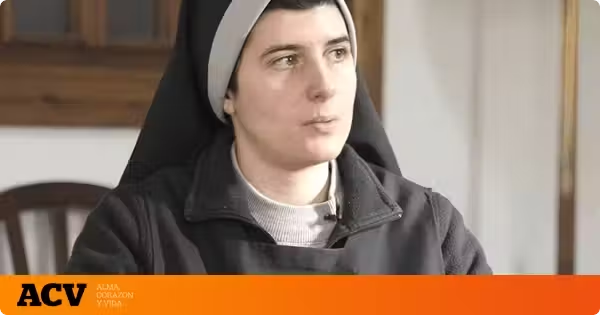
Social media networks have opened a window into the inner life of cloistered monasteries. Among posts related to faith and scenes from daily life, some religious women answer followers' questions about less known aspects of their communities. Sister Marta dedicated one of her videos to a practical matter that arouses the curiosity of her followers: the source of the money with which nuns live. [1]
The religious woman lives in a monastery of the Benedictine order in Sahagún, Leon province, and uses the Internet to bring her vocation closer to those who follow it. She presents herself as a 'happy nun' and a 'digital missionary'. On the TikTok platform, she addresses doubts about the economics of monasteries and makes the distinction between belonging to a religious community and receiving remuneration for the exercise of a professional activity. [1]
'So, know that we nuns do not have a salary per se,' explains Sister Marta. To clarify, she uses the example of religious women dedicated to teaching: 'The nuns in your college were paid as teachers, not as nuns.' She does not present this situation as a difference between men and women in religious life: 'Neither monks nor other religious men have a salary. Monks and nuns, religious men and women are independent at many levels, including economically.' [1]
Her explanation also includes planning for the post-retirement period. 'We want a life to survive and most of us are registered as self-employed to later access a pension,' she says. 'Therefore, we do not live just on air, and life is not offered to us for free.' [1]
In the case of her community, revenues come from various activities, not from teaching. 'In our monastery, in particular, we do not teach in class, but receive money from sweets, from the museum, from cosmetics, that is, from what we sell,' details the religious woman. She also specifies how she handles social contributions: 'We are registered as self-employed and pay social security. We contribute every month to have a pension when we grow old.' [1]
However, Sister Marta makes an important distinction regarding diocesan priests, who can receive a salary, although it is reduced and they must cover expenses such as travel between the parishes they serve. 'With this I do not mean that something is given to diocesan priests. The salary is small, and for example, car and fuel expenses to travel between the 18 villages or more that they serve come out of their pockets. And often major or minor repairs of each church they care for are also from personal funds.' [1]
- Categories:
- Society
- Entities: