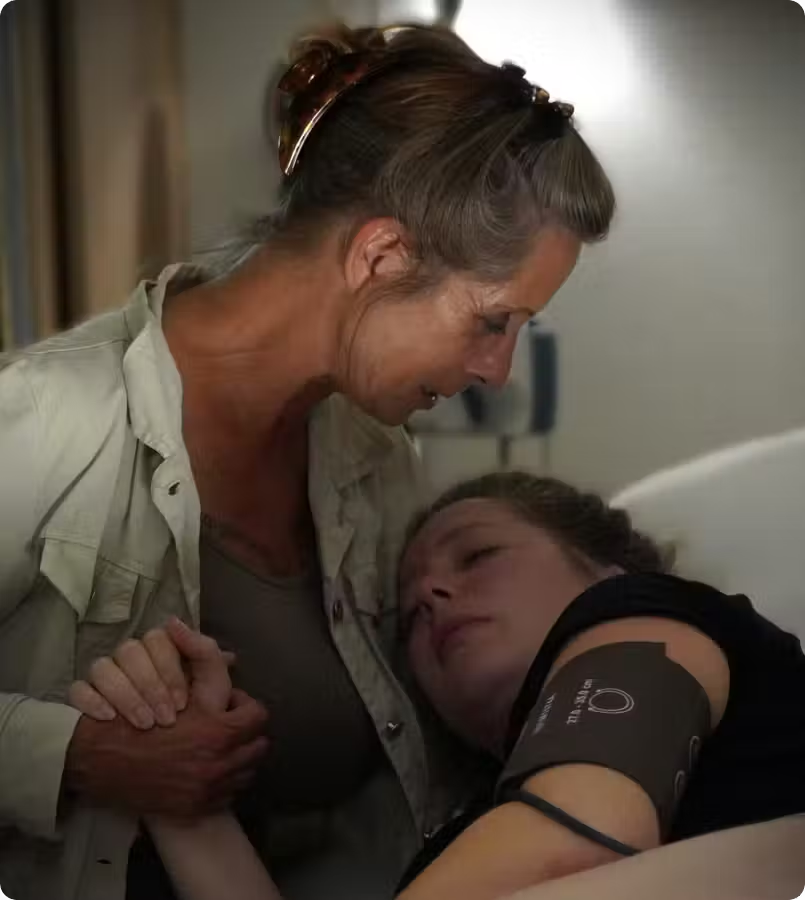
Kim van Duinen, 37, traveled to the Netherlands in late June to give birth, determined to remain in Cape Verde with her partner, Dénis, until the last possible moment allowed by travel regulations regarding her pregnancy. The story is part of the 'Bevallen zonder partner' (Giving Birth Without a Partner) series on Linda.nl, where mothers share accounts of missing their partners during childbirth and the alternative support systems that sustained them. Kim and Dénis met during a holiday in Cape Verde, where he worked in a restaurant. To pursue the relationship, she flew back early, and they ultimately decided in 2022 to end their long-distance arrangement by purchasing a home together on the island of São Vicente. Upon discovering Kim’s pregnancy, the couple began applying for a tourist visa for Dénis in January, aiming for Kim to deliver in the Netherlands due to its superior healthcare system. However, securing an appointment proved difficult, as the embassy operates on a rotating schedule across the islands, and slots fill quickly. Attempts to book an appointment online resulted in prolonged waiting periods, with the couple spending three nights hoping the system would open. Frequent refreshes led to a temporary ban from the booking portal, thwarting their efforts. A intermediary eventually identified an opening on a different island. Dénis traveled there in May without certainty of securing an appointment, but successfully submitted all required visa documents. Although officials estimated a processing time of fifteen working days, silence followed, and attempts to resolve the delay via phone or email failed. As the delivery date approached, Kim flew to the Netherlands. Leaving Dénis behind, they relied on the assumption that the visa issue would be resolved in time, marking their final separation before the birth. The Centro Comum de Vistos rejected the visa application, failing to believe Kim was pregnant despite medical declarations from a gynecologist provided with the paperwork. Since Kim was already in the Netherlands, the only path for appeal required physical presence on another island, creating an impossible logistical hurdle. To circumvent the rejection, Dénis enlisted political connections to secure a letter of support for entry at the embassy. Simultaneously, a Dutch attorney assisted in compiling the appeal dossier. By the time Dénis could formally lodge the objection, time was running out. Kim’s due date arrived on September 21, but the baby remained in utero longer than expected. Suspecting she might be unconsciously prolonging the pregnancy to ensure Dénis’s presence, Kim reflected on his history of missing the births of his other two children. During a hospital check-up that detected irregularities in the baby’s heart rate, doctors induced labor. Dénis was scheduled to participate remotely via video call, but poor connectivity and the duration of the process meant his presence was limited. Throughout the labor, Kim’s friend called Dénis every thirty minutes to update him once Kim began receiving contractions. Physically exhausted, Kim remained in a trance-like state, aware of little beyond the immediate pain and effort. Kim gave birth to their daughter, Macy, on October 1. Supported by her mother and the friend present at the hospital, she found comfort in her mother's proximity, noting the universal need for maternal support during moments of physical vulnerability. From her friend, Kim learned that Dénis nearly fainted while watching the delivery remotely, particularly upon seeing the vacuum pump. He remained pale and distressed, revealing the emotional toll of the distant observation. The immediate postpartum period was exceptionally challenging. With her mother returning to work and her friend developing fever blisters the day after the birth, Kim faced the early days of motherhood essentially alone. Clarity returned to Kim only after she received a video recording of herself and baby Macy. Dénis, who had been emotionally overwhelmed, was visibly shaken by the visual reality of the birth he could not attend. Visa approval finally came through, and Dénis flew to the Netherlands on November 23. Had they known the extent of the bureaucratic hurdles, Kim admits she likely would have given birth in Cape Verde, though the shared crisis undoubtedly strengthened her bond with her own mother. This narrative highlights the extreme lengths couples traverse to overcome immigration barriers, illustrating a scenario where political advocacy and legal assistance were necessary but ultimately insufficient to prevent a parent from missing their child's arrival. The 'Bevallen zonder partner' initiative invites readers to submit their own stories of partner absence during childbirth, offering a platform for shared experiences and community support among parents who faced similar disruptions. Readers interested in following the 'LINDA.mini' series and receiving weekly updates on similar personal stories can subscribe to the newsletter delivered directly to their inbox. Kim’s journey underscores the resilience required to navigate international relationships under stringent visa regimes, where administrative delays can dictate the fundamental realities of family formation. The emotional distance created by technology and geography was starkly visible in the contrasting reactions of the participants: Kim’s immersive physical struggle versus Dénis’s isolated, digital anxiety, bridged only by intermittent communication. Despite the successful reunion months later, the birth itself remains a defining moment of separation, reminding Kim and Dénis of the fragility inherent in their cross-border union and the sheer unpredictability of bureaucratic systems. [1]
- Categories:
- Society
- Entities: