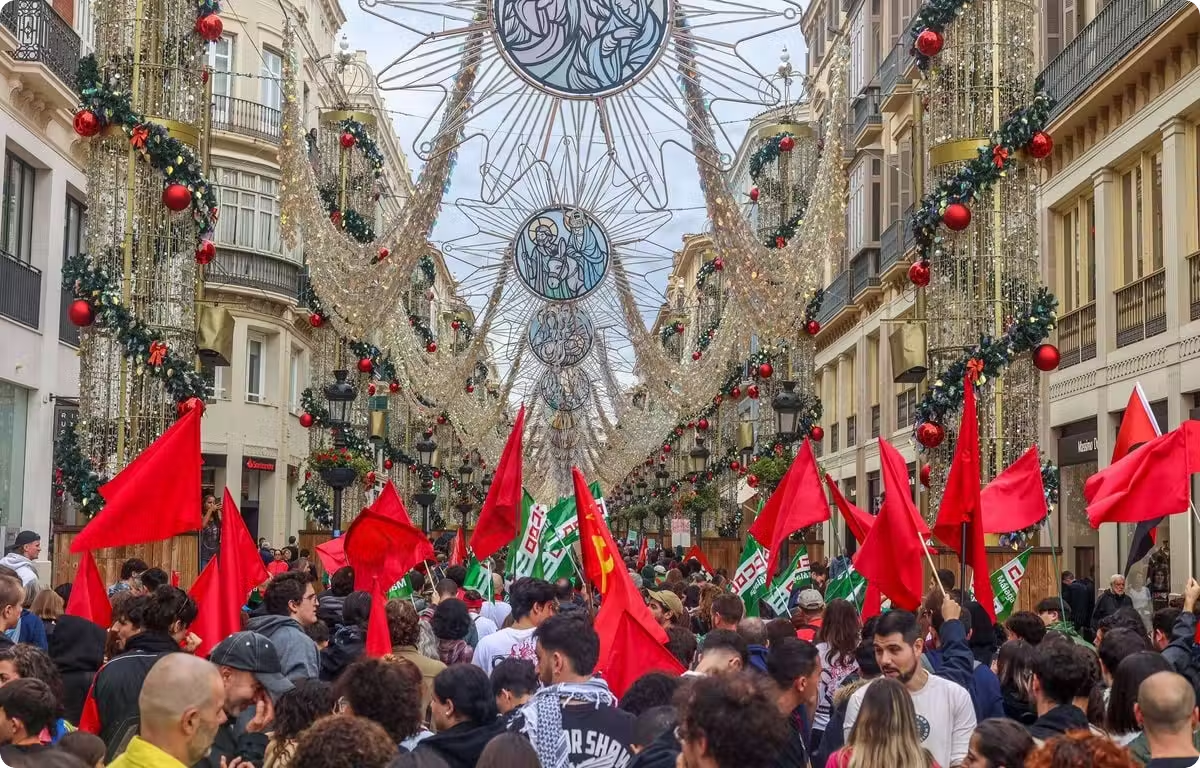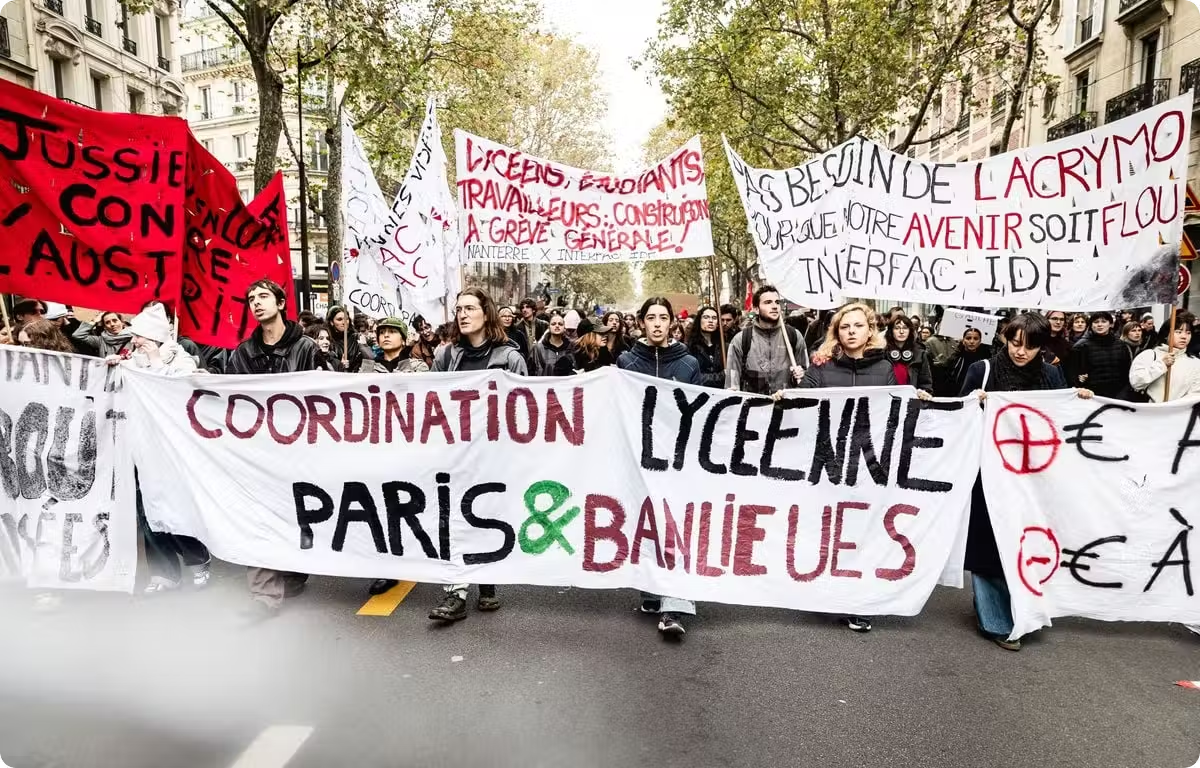
An intersyndical coalition involving youth organizations and teachers has called for another day of strikes and demonstrations on Tuesday, November 10. This mobilization occurs as discussions with the executive branch remain at an impasse, nearly two months after the onset of the protest movement by high school and university students. Éloïse Lefebvre-Milon, co-general secretary of the Union étudiante, issued an appeal following a meeting at Matignon regarding the Parcoursup reforms, which concluded without resolution. She urged supporters of the youth's legitimate demands, as well as those backing workers' rights, to join the streets on Tuesday. Éloïse Lefebvre-Milon, co-general secretary of the Union étudiante, explicitly called on all those supporting the legitimate demands of youth, as well as the demands of workers, to take to the streets on Tuesday. Her statement followed a meeting at Matignon focused on the Parcoursup reform, which ended without any breakthrough. The mobilization call is backed by a broad intersyndical coalition comprising major labor and student unions: CGT, FSU, FO, Solidaires, the Union syndicale lycéenne, UNEF, Union étudiante, Fage, and FSE. This alliance was formed to coordinate the upcoming Tuesday actions. The signatories of the joint communique emphasized the need to amplify the mobilization by maintaining continuous pressure on the government. This call follows the previous mobilization day on November 5, which saw participation figures ranging from 575,000 to 1.6 million demonstrators across France, according to official and union estimates. Marylise Léon, secretary general of the CFDT, France’s largest union, criticized the recent minimum wage increase as insufficient. However, she welcomed the fact that, for the first time, aid to businesses is being conditioned upon sector-level wage negotiations. She warned that the next two weeks represent a critical period, as Prime Minister Lecornu expects results by early December. Sophie Binet, the leader of the CGT, dismissed the government's measures as mere crumbs that would fail to extinguish the prevailing social anger. Her remarks underscore the dissatisfaction among major unions who view the current package as inadequate. Force Ouvrière (FO) expressed approval that the government had abandoned its dogmatic refusal to boost the minimum wage. Nevertheless, the union judged the overall announcements as not meeting the scale of the challenges facing the country. Following a social conference at Matignon attended by unions and employer organizations on Monday, Prime Minister Lecornu announced a discretionary boost of 0.6% to the minimum wage (Smic). This is the first such discretionary increase since 2012. It is added to the automatic price-based revaluation of 1%, resulting in a total increase of approximately 1.6%. As a result of these combined increases, the net monthly minimum wage will rise to nearly 1,502 euros starting December 1. This represents an increase of approximately 24 euros, a figure significantly lower than the 100-euro demand from the CFDT and the 150-euro demand from the CGT. Despite the announcement of the minimum wage boost, Prime Minister Lecornu failed to calm the social anger that has shaken France for several weeks. Discussions between high school students and the government remain at an impasse, prompting the 20 Minutes newsroom to continue its intensive coverage of the ongoing social mobilization. [1]
- Categories:
- Society
- Entities: