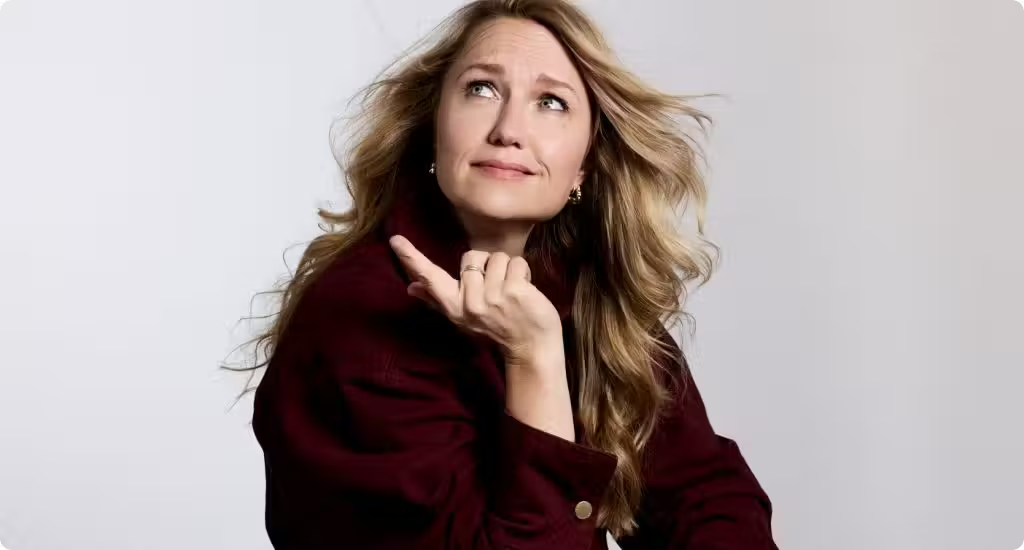
Columnist Floor Bakhuys-Rozeboom reflects on the societal pressure surrounding motherhood and her deep connection to women who choose not to have children, following her observation of podcast host Gwen van Poorten exploring her own desire for motherhood on the 'Maybe Baby' podcast. [1]
Bakhuys-Rozeboom questions whether her algorithmic consumption of content related to motherhood implies uncertainty about her status as a mother of two, noting that her history as a writer on family dynamics could be misinterpreted as doubt about her role as a 'happy housewife'. [1]
Her interest in themes of childlessness is rooted in extensive professional engagement: she read Jantine Jongebloed's book 'Somewhere I Want a Child', Liesbeth Smit's 'Real Women Have Children', and Orna Donath's 'Regretting Motherhood', having interviewed both Jongebloed and Donath for magazine features. [1]
The journalist has written stories about surrogates who do not want families, single women who prefer life without partners, and critically examined the nuclear family model, most recently publishing an article for LINDA on the rise of the satisfied single woman who consciously chooses a life without a fixed partner or family. [1]
While readers sometimes question if her focus on these topics reveals personal dissatisfaction with her own motherhood, Bakhuys-Rozeboom asserts that her choice to have children was never in doubt; it was her partner who shared this certainty. It was only after experiencing the intense, overwhelming nature of parenthood that she realized the magnitude of what she had embarked upon. [1]
She expresses no regret, describing pregnancy as a miracle and childbirth as hell but also a wonder, viewing her children as the greatest gift of her life. However, this experience taught her that parenthood is not for everyone and that the choice to become a parent is not as self-evident as society often pretends. [1]
Having felt how profoundly motherhood changed her life—what it gave and what it demanded—she understands why women consciously choose otherwise. She specifically addresses women, arguing that the path to motherhood is so historically ingrained that it requires courage to forge one's own way, rather than following the pre-laid tracks. [1]
Respectfully, she admires young women who seriously consider whether motherhood fits them and will bring happiness, precisely because she lacks those daily doubts. Her experience enables her to understand the complex emotions tied to raising a family through life's turbulent waters. [1]
Ultimately, regardless of the life chosen, there will be moments of enjoyment and mourning for the unmade choices. Every person harbors un-lived lives, and the key realization may be that no choice is salvation. [1]
She expresses confusion over mothers who feel personally attacked by women who choose no children, or men who evangelize the family life as the only 'best way to live' for everyone. [1]
Bakhuys-Rozeboom concludes that it is a richness that people feel free to choose lives that truly fit them. Despite having brought children into the world, she states she will always feel connected to women who will never have children. [1]
- Categories:
- Society