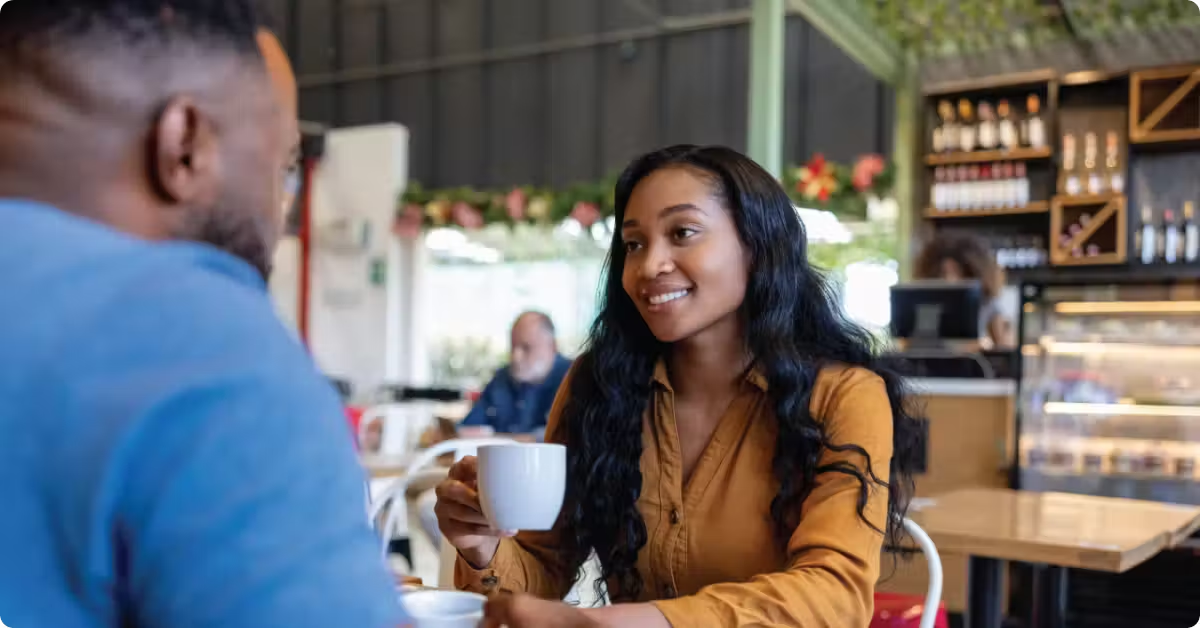
In a detailed analysis regarding the preferences and barriers encountered by single Black adults in the United States, Pew Research Center identified various factors influencing their relationship status. Among the reasons cited for not being in a relationship are a preference for dating without commitment, feeling too old, financial instability, a lack of past success in dating, and being too busy. Additionally, some individuals reported feeling that others would not be interested in them or that they were not yet ready to enter a new relationship following the end of a previous one Pew Research Center. Financial instability was explicitly highlighted as one of the contributing reasons why some single Black adults are currently not in a relationship Pew Research Center. Previous negative experiences with dating were also noted as a deterrent to forming new relationships among the surveyed demographic Pew Research Center. Time constraints, described as being too busy, serve as another significant barrier preventing some single Black adults from pursuing romantic partnerships Pew Research Center. Psychological factors, including the perception that no one would be interested in them, were identified as reasons for remaining single Pew Research Center. The emotional aftermath of prior breakups remains a factor, with some respondents indicating they are not yet ready for a new commitment Pew Research Center. [1]
The research specifically examined the types of relationships single Black adults are seeking, exploring the qualities they prioritize in a potential partner Pew Research Center. [1]
Beyond the reasons for being single, the study measured the importance of specific traits in a partner. Key considerations for single Black adults include the partner's financial stability, their willingness to help with household chores, and whether they possess a college degree. Emotional and social attributes, such as being caring, compassionate, romantic, and maintaining a close relationship with their family, were also assessed Pew Research Center. [1]
As the story develops
Update
Dating Attitudes and Relationship Barriers Among Single Black Adults in the U.S.
A comprehensive analysis by the Pew Research Center examines the dating attitudes and relationship views of single Black adults in the United States. The study explores the types of connections they seek, the qualities they prioritize in a partner, the reasons for their single status, and provides an estimate of the proportion of Black Americans who are currently single. [2]
The findings are based on a survey of 6,871 U.S. adults conducted between June 16 and 29, 2025. The sample included 4,271 Black adults, consisting of 1,057 respondents from Pew Research Center's American Trends Panel and 3,214 from SSRS's Opinion Panel, ensuring the results are representative of the full U.S. adult population. The report includes the specific survey questions, detailed response sets, and the comprehensive methodology used for the analysis. The research was conducted by the Pew Research Center, a subsidiary of The Pew Charitable Trusts, with additional support from The Trusts and the People & Voices Initiative. For the purposes of this report, the terms 'Black Americans' and 'Black adults' are used interchangeably to describe U.S. adults who self-identify as Black, regardless of whether they identify solely as Black or in combination with other races or Hispanic identities. The analysis incorporates comparisons between Black adults and other U.S. adults who do not self-identify as Black. White adults in the study are defined as U.S. adults self-identifying as White, either alone or in combination with other races or Hispanic identity. Asian adults are defined as U.S. adults self-identifying as Asian, either alone or in combination with other races or Hispanic identity. Hispanic adults refers to U.S. adults who self-identify as Hispanic across any race. Within the study, 'single' adults are categorized as those who are not married, do not live with a partner, and are not in a committed romantic relationship. The term 'single-and-looking' describes adults who are single and actively seeking either a committed romantic relationship, casual dates, or both. These insights are derived from the survey of 4,271 Black adults carried out in June 2025. [2]
There are notable gender differences regarding dating goals: Black men are more likely than women to state they are looking for a romantic relationship or dates. Conversely, among those actively seeking, Black women are more likely than men to specify a desire for a committed romantic relationship over casual dates. The research further delineates the specific types of relationships desired by Black singles. Roughly 53% of single Black adults categorize themselves as 'single and looking,' seeking a committed relationship, casual dates, or both. Among this group, Black women are significantly more likely than men to seek exclusively a committed romantic relationship (45% vs. 24%). Conversely, Black men are more likely than women to be seeking exclusively casual dates (27% vs. 18%). Black men are also more open to either a committed relationship or casual dates (49%) compared to Black women (37%). Additional data regarding dating outlooks filtered by other characteristics are available in the report's appendix. [2]
Regardless of gender, single Black adults who are looking for partners share similar priorities. Majorities agree that it is extremely or very important for a partner to be caring and compassionate, romantic, willing to help with household chores, and a believer in God. Despite these commonalities, Black women generally place a higher level of importance on these characteristics than Black men do. [2]
Financial stability is a critical priority for Black women, who are far more likely than men to emphasize this trait. Women are also more inclined to rule out partners who earn significantly less than they do or who carry significant debt. [2]
The study found that singles represent a substantial portion of the Black population, with 42% of Black adults being single. This is notably higher than the 29% of other U.S. adults who fall into the same category. When comparing singles across racial groups, Black adults are more likely to be seeking a relationship or dates (53%) compared to White adults (36%), and their likelihood is similar to that of Hispanic adults (49%). Approximately four-in-ten Black adults, specifically 42%, are single according to the June 2025 survey. Single adults in this context include those not married, not cohabiting with a partner, and not in a committed romantic relationship. The prevalence of being single is relatively balanced between genders, with 44% of Black women and 40% of Black men identifying as single, although gaps exist within other demographic subgroups. The analysis observed variations in singlehood based on age, specifically comparing those in the youngest (18-29) and oldest (65+) brackets against those aged 30-49 and 50-64. Educational attainment also correlates with relationship status, with differences noted between those with a high school diploma or less and those with some college or a bachelor's degree or higher. [2]
The study also identifies specific 'dealbreakers' that cause single-and-looking Black adults to rule out potential partners. The most prominent dealbreakers include significant debt (56%), long-distance living (43%), the partner raising children from a previous relationship (38%), and differing religious views (38%). Dealbreakers vary by gender: women are more likely than men to reject partners who have significant debt (64% vs. 48%) or who earn significantly less money than they do (42% vs. 18%). Certain factors show more agreement between genders: similar percentages of women (46%) and men (40%) rule out partners who live far away, and similar proportions (36% women, 40% men) rule out those raising children from another relationship. Additionally, few rule out partners for earning significantly more money (10% of women, 12% of men). [2]
Black women also exhibit a higher tendency than men to rule out partners based on civic, religious, or racial differences. Specifically, 42% of women would not consider a partner who does not vote, compared to 26% of men. Religious alignment is also more critical for women, with 45% ruling out those with different religious views, compared to 30% of men. [2]
The research explores the perceived reasons why single-and-looking Black adults remain unpartnered. Participants were asked to identify major factors contributing to their current single status from a provided list. The most cited reason for being single is a lack of luck with dating or relationships in the past, which was mentioned by 40% of women and 30% of men. Financial instability was another leading cause, though it was more frequently cited by men (30%) than women (19%). [2]
The study also examined the perspectives of Black singles who are not actively looking for a relationship. Those not looking for a partner were also asked to explain why they are single. A significant difference emerged: those not looking for a relationship are far more likely to say they simply enjoy being single (42%) compared to those who are looking (24%). They are also less likely to attribute their status to bad luck in previous relationships (24% vs. 35%). Aside from these points, there were no significant differences in the reasons provided by those looking for a relationship versus those who are not. [2]
- Categories:
- Society