While school continues in Ukraine’s war even when nothing seems stable—lessons resume after nights spent in shelters, teachers connect from cities under attack, and students join classes from windowless apartments or from friends’ homes abroad—this continuity is a testament to the creativity, adaptability, and commitment of educators and students, who have navigated extraordinary uncertainty for years. [1]
Liudmyla Herasymenko, a university lecturer at the Ukrainian Aviation Academy in Kropyvnytskyi, is one of millions of educators carrying the invisible burden of supporting students’ social and emotional well-being. “Due to the ongoing threat hanging over us, you can’t plan your day,” says Herasymenko. “You make plans, but everything can change in an instant, and you must adapt. We get alerts, so we have to go to the shelter; then there’s the electricity schedule, which means finding power and Wi-Fi. There’s a lot of stress that we experience.” [1]
Herasymenko is not alone; a growing number of children and educators are facing unprecedented disruptions and stress due to life in conflict-affected areas. More than 473 million children live in conflict zones or flee from them, and approximately 204 million people reside in areas controlled or contested by armed groups. Under these conditions, teachers navigate burnout and secondary trauma while holding space for students’ fear, grief, and hope. The question is not whether teachers and students need support, but what types of support are feasible, sustainable, and relevant. [1]
Amid years of disruption, Ukrainian educators have found creative ways to help students stay connected. Social-emotional learning (SEL) practices such as “SEL Kernels”—brief activities developed by Harvard’s Laboratory for Student Wellbeing and Equity (EASEL)—have become tools for managing emotional regulation and conflict resolution. These practices were adapted through field research and collaborative co-design with Ukrainian teachers and LEGO Foundation trainers, identifying five priorities: cooperation, mindfulness, cognitive skills, emotional intelligence, and teacher well-being. [1]
After implementation, teachers found SEL Kernels beneficial for the well-being of both themselves and their students. For example, Herasymenko uses brief mindfulness moments, asking students to identify the “rose, thorn, and bud” of the day—an aspect that went well, a challenge faced, and a positive expectation ahead. She also incorporates five-sense grounding exercises. “I can’t imagine teaching the way I did before the war,” she says. “Now I prioritize students’ mental health more than academic performance. It’s more important for them to be well and stress-free during my lessons.” [1]
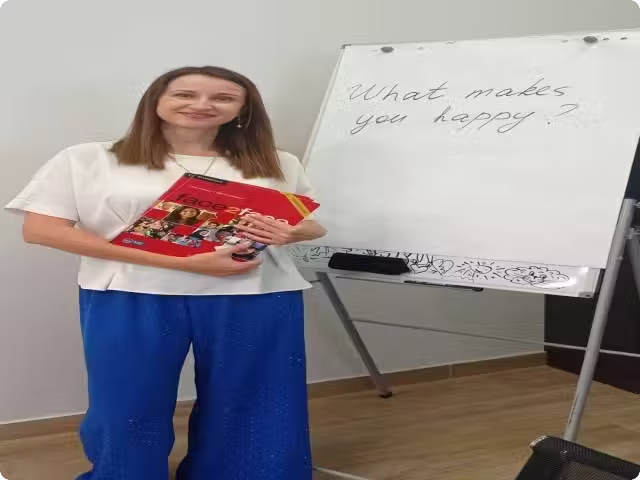
The war in Ukraine has significantly impacted neighboring countries, driving internal displacement up from 20 million in 2024 to 32 million in 2025, according to the Internal Displacement Monitoring Centre (IDMC). In Poland, educators face new emotional challenges. Małgorzata Lidacka, a teacher in Kraków working with Ukrainian students aged 7 to 10, describes the burden of being simultaneously a teacher, coach, and therapist. “If you make a mistake, it can affect them,” Lidacka says, highlighting the difficulty of connecting with parents due to cultural barriers. [1]
To manage this heightened mental load, Lidacka adopted SEL strategies, promoting play for shared joy and small acts of kindness. She began asking open-ended questions and practicing mindful listening in communications with parents, discovering that this approach facilitates rapport-building. She also appreciates the remarkable adaptability of Ukrainian students, many of whom quickly learn Polish and show deep engagement in learning, demonstrating extraordinary determination. [1]
Supporting caregivers is essential. Lidacka discovered the Greater Good Educators Community of Practice (CoP), which provides a global space for educators to connect around science-informed practices related to purpose, gratitude, and compassion. This helped her realize she was not alone and that sustainability begins with teacher well-being. “After three years, I see that we’re burned out,” says Lidacka. She and her colleagues, including Herasymenko, recognized the importance of breaks and recharging for professional survival. [1]
Through SEL initiatives, educators are not waiting for ideal conditions to create nurturing learning environments. They continue teaching, adapting, and building community amid years of uncertainty. SEL initiatives are not a panacea, but they provide additional support to the work already underway. By investing in educator well-being, we ensure the sustainability of those making learning, connection, and hope possible even under the most difficult circumstances. [1]
- Categories:
- Society
- Entities: