In the latest installment of the 'Remarkable Births' series featured on Linda.mini, Anniek van der Wielen, a 37-year-old mother, opens up about a tumultuous period in her life that saw her navigate infertility, an unexpectedly rapid second pregnancy, and a highly critical birth situation for her youngest daughter. Her story resonates with many parents who find themselves balancing the demands of new life with unforeseen medical and emotional hurdles. Van der Wielen’s journey from desperate longing to the joy—and chaos—of raising two children about ten months apart offers a candid look at the realities of modern motherhood. [1]
For Anniek, the path to motherhood was not straightforward. She and her husband Bert spent two years trying to conceive without success. The turning point came after she decided to visit a fertility clinic, where she was advised to try for one more year before returning for further intervention. The pressure mounted as she began using ovulation tests, a process she dreaded because it made the waiting feel like a task rather than a natural hope. The anxiety peaked when, despite experiencing cramps, she did not get her period as expected. A pregnancy test, originally intended to confirm she was not pregnant so she could let go of the dream, instead revealed that she was. [1]
Her first pregnancy progressed smoothly, despite being diagnosed with gestational diabetes which required insulin injections. A planned induction at week 38 was interrupted when her waters broke early at 36 weeks and six days. After a tense wait where she thought they still had time, she realized labor had advanced quickly. On March 13, her son Boaz was born weighing 3,200 grams. Recovery was swift; her cycle returned within four weeks, and feeling confident in her new rhythm, she scheduled an appointment for an intrauterine device (IUD) placement. [1]
However, just two months after Boaz’s birth, while preparing for the IUD procedure, Anniek realized she was late for her period again. A test confirmed she was pregnant once more. The shock was immediate, not just medically but practically. Her husband, working a demanding schedule that included night shifts, struggled to process the sudden reversal of their plans. While Anniek eventually learned to relate to the situation, Bert found himself wishing for more time to consider whether they were ready for a second child so soon. This second pregnancy progressed differently than the first; Anniek noticed fewer typical symptoms initially, confusing them with post-pregnancy adjustments. [1]
By the middle of her second pregnancy, however, severe pain set in. Anniek experienced intense ligament and pelvic pain, forcing her to work until week 36—a decision she later regretted, noting that looking back at photos from the third trimester, she appeared exhausted. Like her first pregnancy, this one was complicated by gestational diabetes, leading doctors to schedule an induction at week 38. On January 13, a balloon was inserted to prepare for the induction, and she was told to return the next day. [1]
Home life took a dramatic turn when Anniek’s waters broke unexpectedly while she was resting with Boaz. She went to the hospital but was sent home because she had no dilation yet. Back at home, she monitored early contractions before heading to the hospital around 6:00 PM. Labor progressed rapidly, but a crisis emerged when the baby, Julia, got stuck. Bert, who had been filming the birth, was abruptly told to stop as the medical team rushed in. [1]
The situation became dire. Anniek recalls asking repeatedly if the baby was alive but receiving no response. The room filled with specialists, including a gynecologist and pediatricians. Anniek was instructed to sit on all fours and then later to put her knees next to her head while the gynecologist applied pressure to her abdomen and pulled on the baby. The tension was palpable, and Bert, witnessing what looked like the doctor pulling the baby's head off, fainted and had to be caught by nursing staff. [1]
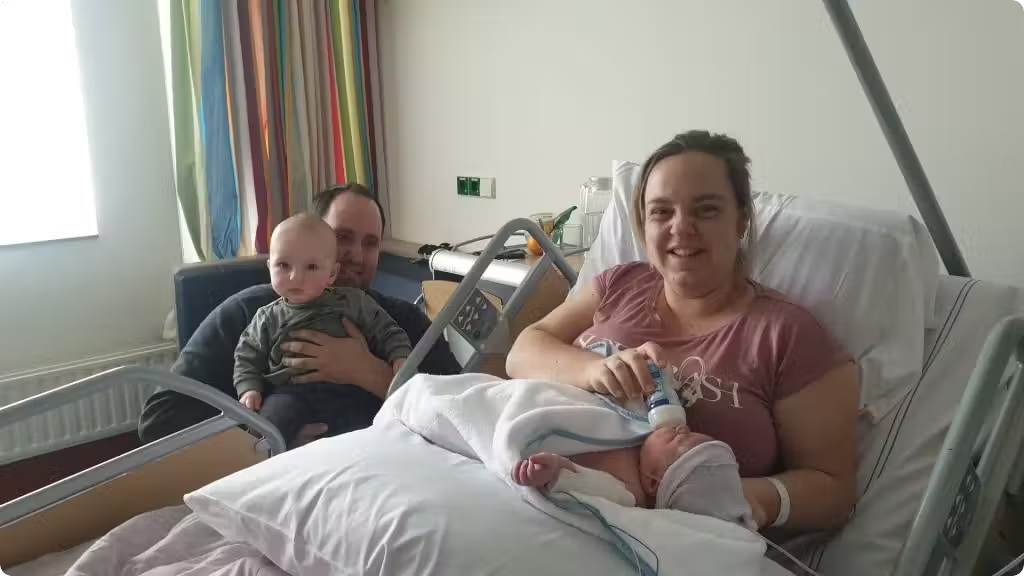
When Julia was finally delivered, a crack sound was heard. She was immediately taken away for resuscitation and examination, leaving her parents in agonizing silence for three-quarters of an hour. When the doctors finally emerged, they revealed that Julia was alive but had suffered a broken arm during the difficult birth. There would likely be a dent in her arm as a lasting mark, but the relief that she was safe outweighed the injury. The couple was moved to the incubator ward, where they could finally see their daughter. [1]
Julia remained in the hospital for five days. Because Anniek was not allowed to hold her initially, she kept her close by having her lie in their bed. Julia had an IV for pain relief in one arm and a cast on the other, alongside treatment for jaundice. The cast stayed on for twelve days, a period Anniek describes as terrifying, fearing any movement might cause pain. Despite offers of help, Anniek chose to manage the intense early months alone, relying on her own resilience and tendency to talk things through rather than leaning heavily on external support. [1]
Today, Boaz is five years old and Julia is four. Anniek reflects on the first two years as intense, marked by Julia being a crybaby, dealing with her broken arm, and managing a cow’s milk allergy. Sleep deprivation was severe, with the family surviving on maximum three hours of sleep per night. However, the dynamic has shifted dramatically. The siblings now share the same class, friends, and interests. They bicker like typical siblings but are also best friends. [1]
Anniek expresses deep gratitude for how things unfolded, describing the experience as 'pitiful' but stating she wouldn't want it any other way. Recent nights have brought slight improvements in their sleep routine, offering a glimpse of normalcy. Her story, shared under the 'Special Births' column on LINDA.nl, serves as a poignant reminder of the unpredictability of childbirth and the strength required to navigate it. [1]
- Categories:
- Society
- Entities: