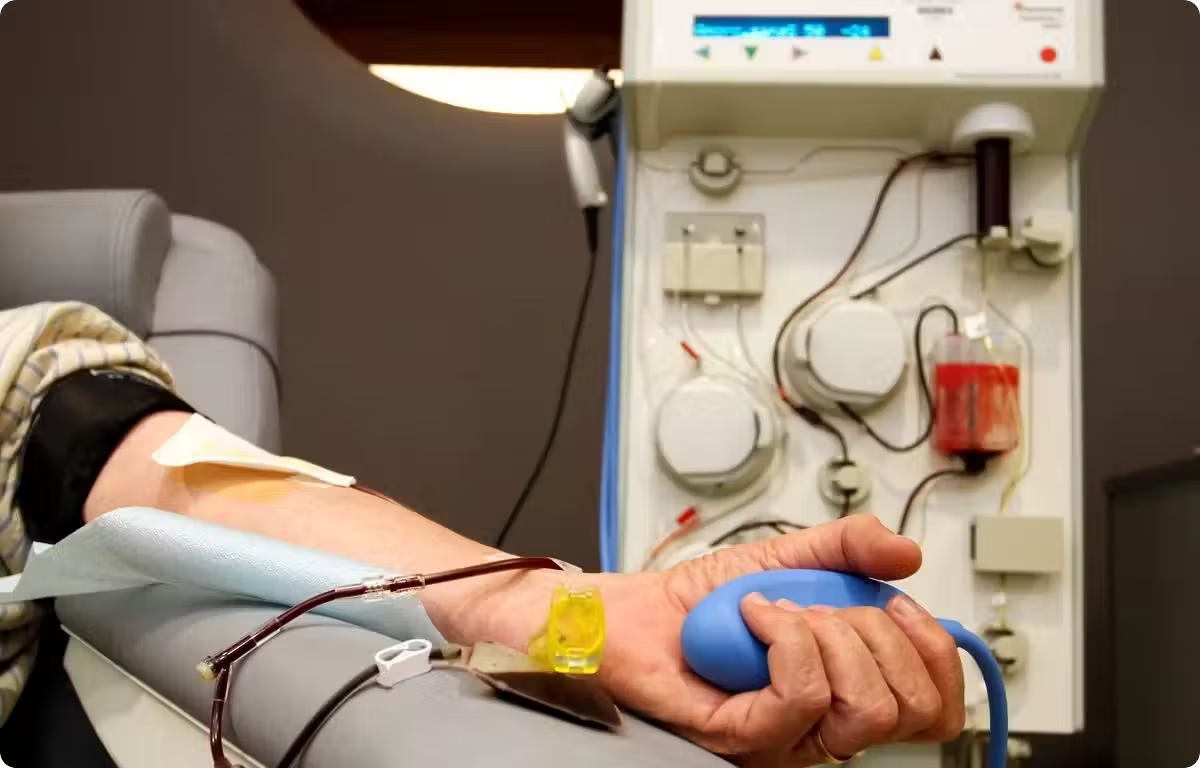
A cyber attack targeted, on the night from Sunday to Monday, a supplier for the French Blood Institute (EFS), mainly aiming at the cold rooms where plasma is stored at -30 °C. The incident particularly affected facilities located in the Burgundy-Franche-Comté region, confirmed by the medical institution. [source:CURRENT|News.ro] [1]
According to French press reports, the temperature monitoring and control system was compromised, allowing settings to be changed remotely. Normal conservation temperatures were thus sharply raised, reaching estimated values of 110 °C, according to reports based on the newspaper “Le Canard enchaîné”. [source:CURRENT|News.ro], [source:E925683|Observator News] [1] [2]
The French Blood Institute specified that although it was not the direct target of the attack, anomalies were reported that led to changes in the operating parameters of cold rooms equipped with the affected supplier's solution. EFS stated that surveillance and alarm installations allowed for the rapid identification of the situation. [source:CURRENT|News.ro], [source:E925683|Observator News] [1] [2]
The institution assured that all necessary measures were taken to prevent alteration of any samples or blood products, emphasizing that no stock loss was recorded and there was no negative impact on patient health. [source:CURRENT|News.ro], [source:E925683|Observator News] [1] [2]
This incident occurs in the context of recent cyber attacks in France, including one against supermarkets in mid-October and against Crédit Mutuel Arkéa bank on Wednesday. Additionally, a similar attack occurred in several European countries, but no official link between these events has been established yet. [source:CURRENT|News.ro] [1]
As the story develops
Update
Cyber attack on blood banks in France: 110 °C in freezers, but no samples lost
The ransomware-type incident, reported on Monday in France, targeted the cooling system of an external supplier to the Établissement Français du Sang (EFS), affecting three plasma storage centers. The attackers attempted to manipulate equipment settings to raise temperatures to extreme levels, within the context of proliferating similar attacks against supermarkets in Europe that caused major food losses. Unlike the supermarket case, alarm systems detected changes rapidly at EFS, and plasma samples were moved safely, without compromising products. [3]
The institution specified that although it was not the direct target of the initial attack, anomalies were reported that led to changes in the operating parameters of cold rooms equipped with the affected supplier's solution. EFS mentioned that surveillance and alarm installations allowed rapid identification of the situation, enabling staff intervention. Blood collection and distribution activities were not interrupted; hospitals and medical facilities continue to receive necessary products for patients. [3]
The institution assured that all necessary measures were taken to prevent alteration of any samples or blood products, emphasizing that no stock loss was recorded and there was no negative impact on patient health. Both plasma bags intended for transfusions and plasma used for manufacturing medicines were stored in these spaces, all secured immediately after the problem was discovered. [3]
This incident occurs in the context of a series of recent cyber attacks in France, including one against supermarkets in mid-October and against Crédit Mutuel Arkéa bank on Wednesday. Additionally, a similar attack occurred in several European countries, but no official link between these events has been established yet, with the National Cybersecurity Agency and the Ministry of Health involved in the investigation. [3]
“No consequences for health have been identified and no blood product has been lost,” EFS transmitted. The institution explained that monitoring and alarm systems detected unusual changes quickly, and employees intervened before stored blood or samples were affected. This incident follows news from this week when supermarkets in several European countries reported cyber attacks on refrigerators and freezers that were controlled remotely. Temperatures rose, and tons of food spoiled, resulting in losses amounting to millions of euros. [3]
According to French press reports, the temperature monitoring and control system was compromised, allowing settings to be changed remotely. Normal conservation temperatures were thus sharply raised, reaching estimated values of 110 °C, according to reports based on the newspaper “Le Canard enchaîné” and the AP agency. According to the institution, “temperature and defrost thresholds were raised to extremely high levels.” [3]
The French institution responsible for collecting and distributing blood, Établissement Français du Sang (EFS), announced on Tuesday evening that the attack took place on Monday and affected a cold equipment supplier serving three of its plasma storage centers. The French national cybersecurity agency and the Ministry of Health are investigating the attack. [3]
Update
Hackers manipulated temperatures to 110 °C in the plasma bases of the French Blood Institute
According to Le Canard enchaîné and AP, the temperature of the cooling systems was manipulated remotely up to 110 °C. The incidence particularly affected facilities in the Burgundy-Franche-Comté region. Although normal, plasma conservation temperatures (intended for transfusions or medicine manufacturing) were raised abruptly. [4]
Temperatures were programmed to reach extreme values up to 110 °C. Monitoring and alarm systems allowed rapid identification of anomalies generated by the solution from the affected supplier. EFS assured that there was no impact on patient health and no blood products were lost. [4]
The incident occurs weeks after attacks against supermarkets and two days after that against Crédit Mutuel Arkéa bank. A similar attack targeted the Crédit Mutuel Arkéa institution on Wednesday. Several cyber attacks have recently targeted stores and supermarkets in Europe. Hackers compromised the refrigeration and IT infrastructure of retailers such as Mega Image, Profi, and Cărturești. [4]
Update
Cyber attack on blood banks in France: 110 °C in freezers, but no samples lost
Three blood banks in France were the target of a new cyber incidence that sharply increased the temperature of refrigerators containing blood samples. The interventions worked in time, and the Ministry of Health announced that no health effects were registered. The attack indirectly targeted the European refrigeration company for the EFS transfusion center, where blood samples are stored. According to the weekly “Le Canard enchaîné,” hackers accessed the computer system controlling Coolworld, manager of the blood banks' cold rooms, mainly in the Burgundy and Franche-Comté regions. The temperature of the cold rooms, where blood is normally conserved at -30 degrees Celsius, was raised to 110 degrees Celsius. The French Ministry of Health explained that the transfusion center's monitoring systems early detected anomalies regarding changes in operating parameters of cold storage facilities controlled by an external entity. The ministry clarified that EFS monitoring rapidly detected anomalies and took necessary measures to ensure no blood sample would be compromised. The minister added that no health impact was detected and no part of blood products was lost, confirming that the refrigerators predominantly contained plasma bags intended for transfusions. The cyber action coincided with other similar incidents on supermarket refrigerators in various European states, including France, where hackers remotely controlled thermometers or activated defrost mode. [5]
Update
Hackers increased temperatures in the plasma storage units of the French Blood Institute
Cyber attacks in Europe are spreading. The refrigerators of three regional blood banks in France were targeted by hackers from Sunday night until Monday. Blood supply was not affected, the French Transfusion Center assures. The French Ministry of Health announced that the situation is under control; remote access has been disabled. Investigations are underway. The attack took place during a period when refrigeration systems in dozens of European supermarkets were sabotaged by hackers, who raised the temperature in refrigerators and freezers to over 50 degrees Celsius, leading to the disposal of huge quantities of food. The incidents sparked concern in the European Union, especially amid the threat of Russia's hybrid war. From refrigerators and heating systems to security cameras and alarms, many devices that can be controlled remotely can become targets. Possible cyber attack at 6 stores in Romania belonging to the same commercial chain. Clarifications from DNSC. [6]
Update
Hackers increased temperatures in the plasma storage units of the French Blood Institute
Blood banks in France were targeted by a cyber attack, with hackers taking control of certain refrigeration equipment and changing temperature settings from approximately -30°C to 110°C. The attack was possible through the external company Coolworld, the refrigeration and maintenance service provider for EFS facilities. The French Blood Institute (EFS) specified that it was not the direct target; hacker access was achieved through the supplier. French press indicates that three EFS units were affected, including centers in the Bourgogne-Franche-Comté region. A duty technician observed abnormal temperature changes during the night; employee intervention occurred before stored products were compromised. Monitoring and alarm systems enabled rapid identification of the incident. Staff took control of some equipment, while for others they decided to shut down installations and move products to cold storage not connected to the internet. Initially, information concerned biological samples collected from donors, kept for verifying blood safety. Later, EFS confirmed that spaces where frozen plasma was stored, intended for transfusions and medicine manufacturing, were also targeted. EFS representatives transmitted that no blood product losses were registered, blood collection and distribution continued without interruptions, with no reported consequences for patients. [7]
The value of 110°C represents the temperature introduced into the control system, not a temperature actually reached inside the freezers or by products. Equipment settings, air temperature, and effective plasma temperature are distinct parameters. Freshly frozen plasma must be kept at a maximum of -25°C. Prolonged exposure to higher temperatures would compromise products, making them unusable for transfusions. Authorities did not specify how long facilities were affected or the real temperatures recorded inside. The French Ministry of Health announced that the situation is under control, with remote access to affected equipment disabled. EFS is intensifying monitoring, collaborating with the ministry and the National Agency for Information Systems Security (ANSSI). Investigators are examining how hackers entered the supplier's systems, which equipment was compromised, and when facilities can be safely restarted. To date, the responsible group has not been publicly identified, nor has a specific exploited cyber vulnerability been confirmed. [7]
The incident in France arises in the context of a series of cyber attacks that have targeted supermarket refrigeration installations in several European countries. In October, hundreds of stores in France were affected by hackers who raised refrigeration system temperatures up to 50°C, generating significant food losses and fires. Subsequently, similar attacks were reported in Great Britain, Italy, Germany, Belgium, Estonia, Ireland, Finland, Luxembourg, the Netherlands, and Sweden. In Sweden, a Coop chain store discovered modified settings at 50°C. Seven Swedish stores returned to normal after disconnecting from the internet. In Belgium, 15 Carrefour stores were targeted, according to Reuters. Experts have not identified the authors of this series of incidents. Hypotheses include Russian hacker groups or Iranian cyber activists, but there is a lack of evidence. European Commissioner for Agriculture, Christophe Hansen, warned that attacks are an attempt to disrupt the supply chain and undermine consumer confidence. The EU Agency for Cybersecurity requested rapid information exchange between member states to coordinate responses. The attack on blood banks shows that risks of internet-connected refrigeration equipment extend beyond the commercial sector, putting essential products for transfusions and medical treatments at risk. [7]
- Categories:
- Security
- Entities:
-
- Anssi
- Coolworld
- Le Canard Enchaîné
- EFS
- AP
- Europa
- Romania
- DNSC
- Bourgogne-Franche-Comté
- News.Ro
- TF1info
- Mega Image
- Institutul Francez Al Sângelui
- Crédit Mutuel Arkéa
- Établissement Français Du Sang
- Profi
- Cărturești
- Franche-Comté
- Burgundia
- Ministerul Francez Al Sănătății
- Centrul Francez De Transfuzii
- EFS
Sources
- News.ro De la -30 °C la 110 °C. Sistemele de refrigerare ale Institutului Francez al Sângelui au fost ţinta unui atac cibernetic
- observatornews.ro După frigiderele magazinelor, hackerii au atacat şi congelatoarele unei bănci de sânge din Franţa
- antena3.ro După frigiderele din supermarketuri, hackerii au atacat și băncile de sânge din Franța. Temperaturile au fost setate la valori extreme
- stirileprotv.ro De la -30 °C la 110 °C. Sistemele de refrigerare ale Institutului Francez al Sângelui au fost ţinta unui atac cibernetic
- G4Media Trei bănci de sânge franceze au fost atacate cibernetic. Temperatura din frigidere a crescut brusc
- Digi24 Băncile de sânge, noua țintă a atacurilor cibernetice. Trei centre regionale au fost vizate în Franța
- Adevărul Băncile de sânge din Franța, ținta hackerilor. Temperatura congelatoarelor cu plasmă a fost modificată de la -30°C la 110°C