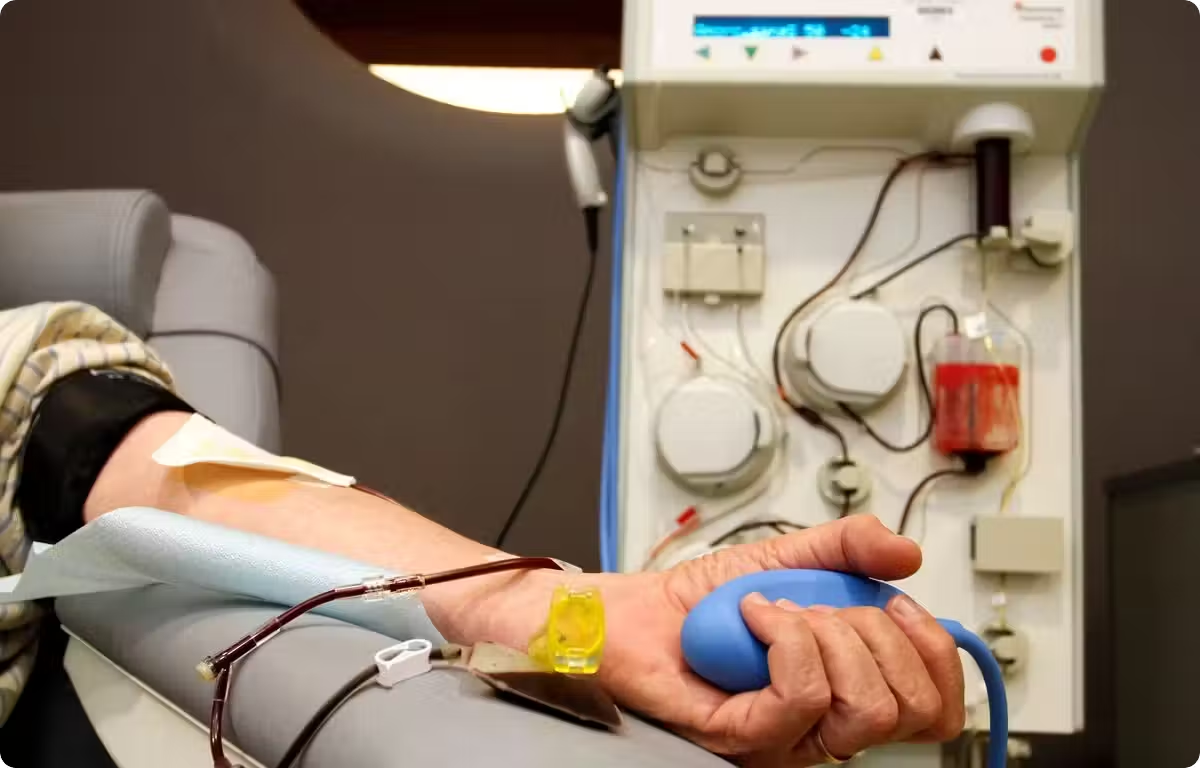
A cyberattack targeting control systems of freezers in the healthcare sector took place in France, in the Bourgogne-Franche-Comté region, replicating the operating method of the incident in Romania from November, which affected cold storage equipment in supermarkets. According to information published by Cyberattaque, citing the publication Le Canard enchaîné, the attack targeted units for storing blood and blood plasma intended for transfusions. [2]
The temperature set in the freezer control system reached 110°C, a value reflecting the erroneous configuration introduced by the attackers and not the actual physical temperature inside the equipment or the stored products. This distinction is crucial because the risk to blood products depends on actual storage conditions and the duration they were exposed to inappropriate temperatures, as freshly frozen plasma requires maintaining a temperature of at most -25°C. [2]
Staff at the involved centers detected the thermal anomalies during the night, allowing technical teams to intervene before the incident affected current operations or led to the destruction of plasma quantities. The European Federation of Blood and Organ Transplant Organizations (EFSO) confirmed that the incident targeted frozen plasma, but there is no public evidence of stock losses, disruption of transfusions, or harm to patients. [2]
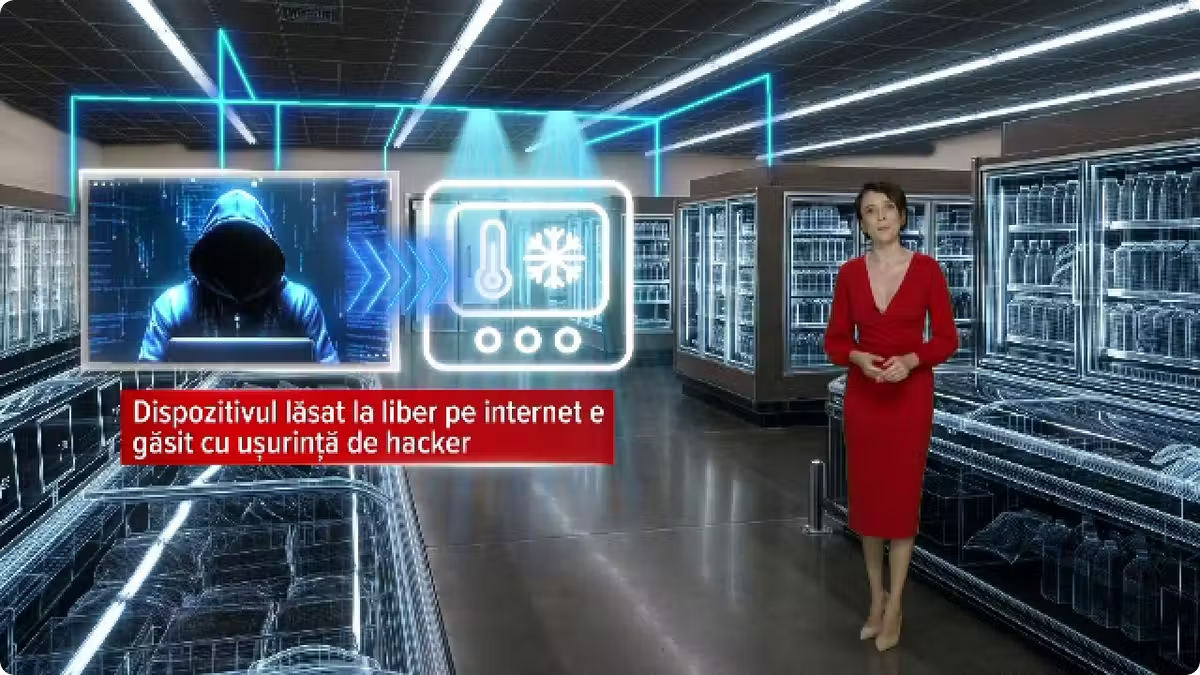
Analysis of the incident points to an attack pattern similar to the one in Romania, where hackers took control of Coolworld equipment microcontrollers, forcing continuous defrost cycles. However, the difference in modus operandi does not automatically confirm that the same attackers acted in both cases or that the same vulnerabilities or access methods were used. [2]
French authorities have not publicly disclosed technical details regarding the exact control system model targeted, the vulnerability exploited, or any compromised maintenance accounts, which excludes confirmation of the theory that the attack resulted from exploiting a specific vulnerability of Danfoss equipment. The security alert issued by CERT-FR on October 12 had already warned about massive compromises of Danfoss AK-SM, AK-SC, Copeland, and Dixell XWEB systems, insisting that operators must not expose administration interfaces directly to the internet. [2]
As the story develops
Update
Hackers attacked blood plasma freezers in France, following the Romanian incident
In the case of supermarkets, refrigeration systems play a direct role in preserving products that require controlled temperatures. Their operation depends on equipment and programs that monitor and regulate cooling conditions. Using outdated computer programs or those without security support can leave equipment exposed to risks. Without updates and adequate protection measures, companies may struggle to prevent unauthorized access to connected systems. Reported incidents in European supermarkets show that the effects of a cyberattack can extend beyond the IT area and reach the equipment supporting a company's daily operations. A problem with refrigeration facilities can generate multiple categories of expenses for a retailer. If temperatures are no longer maintained within required parameters, some stored or displayed products may become unusable. In addition to the loss of goods, there are costs for diagnosing and repairing equipment, replacing components, and verifying affected computer systems. If store operations are disrupted, the company may also record losses from commercial activity. Such an incident may also impose additional investments in digital infrastructure security. Companies must consider updating computer programs and protecting connected equipment, not just the systems used for managing documents and commercial data. As companies connect their equipment to the internet, IT security no longer concerns only computers and databases. Facilities ensuring the operation of commercial activities can themselves become targets of cyberattacks. [3]
In the case of the six supermarkets in Romania, there is currently no public assessment of financial losses. The value of potentially compromised products, the duration of the incidents, or the costs incurred for remediating the problems are unknown. According to information communicated by DNSC on November 3, six stores from the same retail chain in Romania reported abnormal increases in the temperature of their refrigeration equipment. [3]
The European Commission confirmed it is in contact with member states and national authorities investigating the incidents. Available information does not specify how the attackers gained access to the systems, what vulnerabilities they exploited in each case, or whether all equipment used in Romanian stores was affected in the same way. [3]
The European Commission confirms it is in contact with member states and national authorities investigating the incidents. The Commission is calling for the organization of a special meeting with member states to assess the impact and response to these massive cyberattacks. [3]
Update
Russia suspected of cyberattacks, involving hybrid warfare
The analysis report published by Politico, picked up by Rador, highlights that two waves of cyberattacks against supermarkets in Europe exposed the vulnerabilities of the EU's critical infrastructure. Cybersecurity experts warn that these incidents could be part of Russia's hybrid war against Europe. Following the attacks, many analysts blamed Moscow. Russia has intensified its hybrid war in recent months, prompting EU capitals to draw up discreet plans for responding to a potential major hybrid attack. 'If we don't change direction, we will lose,' said Margellati. There were numerous plausible explanations for the first wave of attacks in France, from bored teenagers to a disgruntled former employee. However, those attacks showed hostile countries how easy it is to strike supermarkets. 'At this scale, and given that it repeated itself, I'm less convinced that someone is truly innocent,' stated Inti De Ceukelaire, a cyber researcher. Experts warn that all potential culprits remain plausible. James Sullivan, cybersecurity director at RUSI, stated that all options seem open, ranging from state actors to individual actions. There is no evidence that supermarkets were extorted for money, nor any claim of responsibility by an activist group. A disgruntled employee seemed an explanation for the initial attacks in France, but not for the subsequent multi-national ones. External adversaries will watch and learn from the impact and disruptions, according to Joseph Rooke. [4]
Refrigerators in supermarkets from at least nine EU member states, including Romania, Germany, Belgium, Luxembourg, Sweden, Ireland, the Netherlands, Estonia, and Finland, were temporarily taken out of service. The incident repeated attacks that targeted French stores on October 11-12. Alongside Iran, China, and North Korea, Russia is considered one of the four countries that most frequently target Europe with state-supported cyberattacks. However, experts argue that the patterns and targets in this case rule out the other three. The Kremlin's hybrid manual combines disruption of crucial services with psychological pressure, while remaining below the threshold of large-scale military attack. Supermarket attacks might fit a pattern of collaboration between state services and the underworld, long observed in Russia. Joseph Rooke, senior director at Recorded Future, explained that as geopolitical tensions rise, cooperation or false attribution to criminals by criminal groups increases. The attacks have drawn attention and sent the message that remote cyberattackers can target essential services. Charl van der Walt, head of security research at Orange Cyberdefense, stated that cyberattacks do not need to be designed as psychological operations to have cognitive effects. The Russian Ministry of Foreign Affairs did not respond to a request for comment. The Belgian Federal Prosecutor's Office confirmed opening a criminal investigation. Although circumstantial evidence or context may point to Russia, at this stage there is no certain response. Few plausible explanations remain other than a state-backed hacker or prankster, and the level of expertise required seems higher than realistic for a prankster, although AI facilitates access to information. [4]
Main European Commission security officials analyzed the incidents. European Commissioner for Agriculture and Food, Christophe Hansen, described the facts as a 'deliberate attempt to disrupt our food supply chain'. Xavier Bellekens, director of cybersecurity company Lupovis, stated that there are firm indications pointing to a 'Russian state-sponsored agent'. Andrea Margellati, director at Centro Studi Internazionali, stated that a cyberattack on everyday infrastructure, such as refrigeration systems, signifies more than simple disruption. The adversary revealed its capacity to disable these systems and sends a political message: European governments face two fronts, one in the East and one on their own territory. [4]
Identifying the perpetrators remains difficult and marked by uncertainty. Even after the completion of technical analyses, governments may hesitate to officially name the culprit for political, diplomatic, or espionage reasons. Lupovis researchers collected data regarding attacks on 'bait' (honey jars), data indicating a state-sponsored group. The expertise required for such attacks, including understanding industrial control systems and refrigeration technology, is not trivial. [4]
'It is unknown who is behind this attack and it may never be identified,' a spokesperson for the Belgian cybersecurity agency said. Servers used by hackers to target bait were previously used by Russian groups, and the similarity in tactics also points to Moscow. [4]
Update
The Kremlin rejects allegations of involvement in cyberattacks on European infrastructure
The Kremlin firmly rejected accusations that Russia was behind the cyberattacks targeting supermarket refrigeration systems and blood centers in Europe, describing these assumptions as 'absurd' and 'groundless'. Russian Presidential Spokesperson Dmitri Peskov announced during the daily phone briefing that such unsubstantiated accusations have become a 'persistent trend' in European countries. [5]
Update
The Kremlin denies involvement in cyberattacks, calls them 'absurd'
Kremlin spokesperson Dmitri Peskov firmly rejected accusations that Russia was behind cyberattacks on refrigeration systems, describing the claims as 'absurd' and 'groundless'. He noted that such unsubstantiated accusations represent a 'persistent trend' in European countries. [6]
Update
The Kremlin denies involvement in cyberattacks on supermarkets
Kremlin spokesperson Dmitri Peskov on Thursday, November 5, rejected accusations regarding Russia's involvement in cyberattacks targeting refrigeration systems at supermarkets in several European countries. 'These are absurd statements, which, as always, are based on no reasoning and supported by no evidence.' According to the TASS news agency, Peskov remarked: 'There are groundless accusations regarding our country's involvement in anything; unfortunately, this is becoming a constant trend in European countries'. [7]
The incident affected refrigerators in supermarkets from at least nine EU member states, including Belgium, Luxembourg, Sweden, Germany, Ireland, the Netherlands, Estonia, Finland, and Romania, according to local press and representatives of the targeted chains. The attack represents a repetition of incidents that hit stores in France on October 11 and 12, affecting supermarket refrigeration systems as well as blood centers, where storage temperatures were altered, endangering plasma stock. A spokesperson for the Belgian cybersecurity agency stated: 'It is unknown who is behind this attack and it may be that we never find out'. [7]
After the outbreak of incidents, many analysts pointed to a single suspect: Russia. Alongside Iran, China, and North Korea, Russia is considered one of the four countries that most frequently target Europe with state-supported cyberattacks. However, specific experts note that the pattern and targets of this attack cycle rule out the other three. Xavier Bellekens, director of cybersecurity company Lupovis, stated: 'We strongly believe that the activity could be attributed to a Russian state-sponsored group.' [7]
Russia has intensified its hybrid warfare campaign in recent months. The EU capital is quietly working on response plans for a potential major hybrid attack, which could lead to the death of European citizens, a scenario becoming increasingly likely. The Kremlin's hybrid strategy combines disruption of critical services with psychological pressure, without exceeding the threshold of open military attack. [7]
Update
The Kremlin denies allegations of involvement in cyberattacks on European refrigerators
The Kremlin firmly rejected accusations that Russia was responsible for a series of cyberattacks targeting supermarket refrigeration systems and blood centers in Europe, describing these assumptions as 'absurd' and 'groundless'. Russian Presidential Spokesperson Dmitri Peskov announced during the daily phone briefing that such unsubstantiated accusations have become a 'persistent trend' in European countries. In recent weeks, supermarkets in various European countries have reported cyberattacks on their refrigeration systems, leading to the thawing of significant quantities of food. In some cases, stores have been forced to remove affected products from sale. [8]
Update
Supermarkets in Europe targeted by a new wave of cyberattacks
Earlier this week, hackers increased temperatures in cooling systems throughout Europe, in the second cyberattack of its kind in the last three weeks, forcing supermarkets to update their systems to try to protect themselves. European authorities have not yet publicly disclosed how the attackers gained access, and officials have not indicated who might be behind these crimes. However, some European media speculated that Russian hacker groups might be involved. Refrigerators and freezers in supermarkets across Europe were targeted by cyberattacks, with the culprit not yet clearly identified. To date, no hacker group has claimed responsibility for the attacks. Identifying the culprits is complicated by the simplicity of the attack, compared by cybersecurity analysts to flipping a switch. It is speculated that the attackers behind these incidents are cybercriminals with ties to North Korea, Russia, or China. [9]
Kremlin spokesperson Dmitri Peskov told reporters on Thursday: 'These are absurd statements. As always, they are not supported by any reasoning whatsoever, no evidence, and yet here we have these unfounded accusations against our country, which is involved in everything.' [9]
The European Union condemned the attacks, saying they represent 'a deliberate attempt to disrupt our food supply chain and undermine consumer confidence in it,' according to The Guardian source. Some experts anticipate that in the coming years, hackers supported by these countries will use artificial intelligence-based cyberattacks to achieve their geopolitical objectives. [9]
- Categories:
- Security
- Entities:
-
- Danfoss
- Copeland
- Dixell
- Coolworld
- Le Canard Enchaîné
- Irlanda
- Iran
- The Guardian
- Feliciu Paraschiv
- PROTV
- Mihai Rotariu
- DNSC
- Asociația Comercianților Mici Și Mijlocii
- Cristian Iosub
- Directoratul Național De Siguranță Cibernetică
- Asociația Marilor Retaileri
- CERT-FR
- Cyberattaque
- Bourgogne-Franche-Comté
- Ţările De Jos
- Suedia
- Belgia
- Estonia
- Luxemburg
- Comisia Europeana
- China
- Rusia
- Germania
- Finlanda
- Moscova
- Christophe Hansen
- Politico
- Coreea De Nord
- UE
- Rador
- Xavier Bellekens
- Lupovis
- Andrea Margellati
- Centro Studi Internazionali
- Dmitri Peskov
- Olanda
- TASS
- UE
Sources
- stirileprotv.ro Cum au preluat hackerii controlul frigiderelor din șase supermarketuri din România. „E ca într-un scenariu de film”
- Economica.net După frigiderele din supermarketuri, hackerii au atacat congelatoarele cu plasmă sanguină. Temperatura a fost setată la 110°C
- Adevărul Șase magazine din România au raportat creșteri anormale ale temperaturilor frigorifice. Cât poate costa vulnerabilitatea digitală
- G4Media Rusia e suspectată de atacarea frigiderelor Europei
- observatornews.ro Reacția Kremlinului, acuzat de atacuri cibernetice asupra frigiderelor din supermarketuri: "Afirmaţii absurde"
- observatornews.ro Reacția Kremlinului, acuzat de atacuri cibernetice asupra frigiderelor din supermarketurile europene
- Adevărul Kremlinul respinge acuzațiile privind atacurile cibernetice asupra supermarketurilor europene: „Afirmații absurde”
- stirileprotv.ro Răspunsul Kremlinului la acuzațiile că Rusia ar fi implicată în atacurile cibernetice asupra frigiderelor din supermarketuri
- PRO TV Chișinău Rusia, acuzată de implicare în atacurile cibernetice asupra supermarketurilor din Europa. Reacția Kremlinului