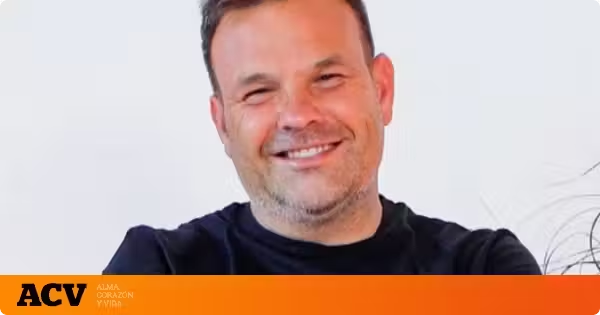
The debate over how to provide adequate and affordable housing access continues to gain momentum across Spain, with industry insiders increasingly pointing to structural barriers that stifle construction volumes. Among those voicing frustration is José Elías, a prominent businessman based in Badalona, who argues that the production of protected housing (VPO, Vivienda de Protección Oficial) is far simpler than political and administrative narratives suggest. Speaking on his podcast *Búscate la vida*, co-hosted with Eric Ponce, Elías laid out a blunt diagnosis of the current market: the problem is not a lack of capability or innovation, but a combination of speculative land pricing and inadequate incentives for private developers. [1]
Elías brings significant weight to the argument, not just as an observer but as an active participant in the construction sector. As the president and main shareholder of Audax Renovables and owner of La Sirena, he is deeply embedded in industrial and business networks, yet he frequently addresses urban development challenges. His central claim is startling in its simplicity: he produces 400 units of protected housing per year, and he maintains unequivocally that building them should be easy. “I know what I’m talking about, and I know it is much easier to build them,” he stated during the episode. “It is easy, we have the people to do it.” This assertion directly contradicts the prevailing narrative among policymakers and activists who often cite complex regulatory frameworks, bureaucratic delays, or technical shortages as primary bottlenecks. [1]
For Elías, the core issue lies in the economic model that governs construction incentives. He argues that if a developer is expected to take on the risk and labor of constructing affordable homes, the state must ensure the venture remains financially viable. “You are talking to someone who faces the problems of VPO housing,” Elías explained. “More VPO housing isn’t being built because there is someone who doesn’t know how to add, failing to realize that if you want someone to work, you have to give them something in return.” By this, he implies that the financial margins for protected housing are currently too thin, lacking the necessary support structures—such as tax breaks, subsidies, or guaranteed returns—to attract sustained private investment. Without these incentives, private firms naturally retreat from projects that offer little profit potential. [1]
Beyond profitability, Elías identifies the availability and cost of land as the most significant obstacle. In traditional real estate development, the starting point for any project is calculating what buyers can afford based on their savings and mortgage capacities. Once the target selling price is established, the developer works backward to determine how much can be allocated to land, construction, and overhead. This creates a dynamic where the perceived value of the final home inflates the price demanded by landowners. If a seller knows that future apartments will command high prices due to demand or speculation, they will insist on higher fees for the plot. Consequently, a significant portion of the buyer’s purchasing power is absorbed by the initial land cost before any brick is laid. [1]
This mechanism allows landowners and speculators to “get rich” simply by holding onto soil, often buying plots cheaply and reselling them for exorbitant sums. Elías cites specific examples of this inflation, noting instances where land purchased for nominal amounts is being sold for up to three times its value, or where prices have skyrocketed dramatically within short periods. “The problem is that there are people getting rich off the land,” he said. “They bought land at a certain price and are now selling it for triple.” He argues that this speculation distorts the entire housing market, making it impossible to construct dignified, affordable homes for ordinary citizens even when construction capacity exists. [1]
To break this cycle, Elías proposes a straightforward solution: state intervention to control land prices and increase the supply of land dedicated to protected housing. He suggests that if the government could release land for VPO projects at limited, regulated prices, the cost of construction would become manageable, and developers would have both the incentive and the resources to build. “Limit the price of the land, put VPO land into circulation, and let’s build dignified houses for people,” he urged. This approach shifts the burden away from demanding higher profits from developers and instead focuses on providing the foundational resource—land—at a stable, predictable cost. [1]
Furthermore, Elías questions why the state does not take a more direct role in building these homes if the private sector is unwilling or unable to do so profitably. “Otherwise, the State should take care of making these VPO homes,” he noted, adding that he does not understand why this alternative has not been fully explored or implemented. His position highlights a broader tension in Spanish urban policy: the reliance on private developers to meet social housing goals without providing sufficient mechanisms to align private profitability with public necessity. When the two are misaligned, Elías argues, the result is a shortage of affordable units despite the technical and human capacity to build them. [1]
- Categories:
- Real Estate