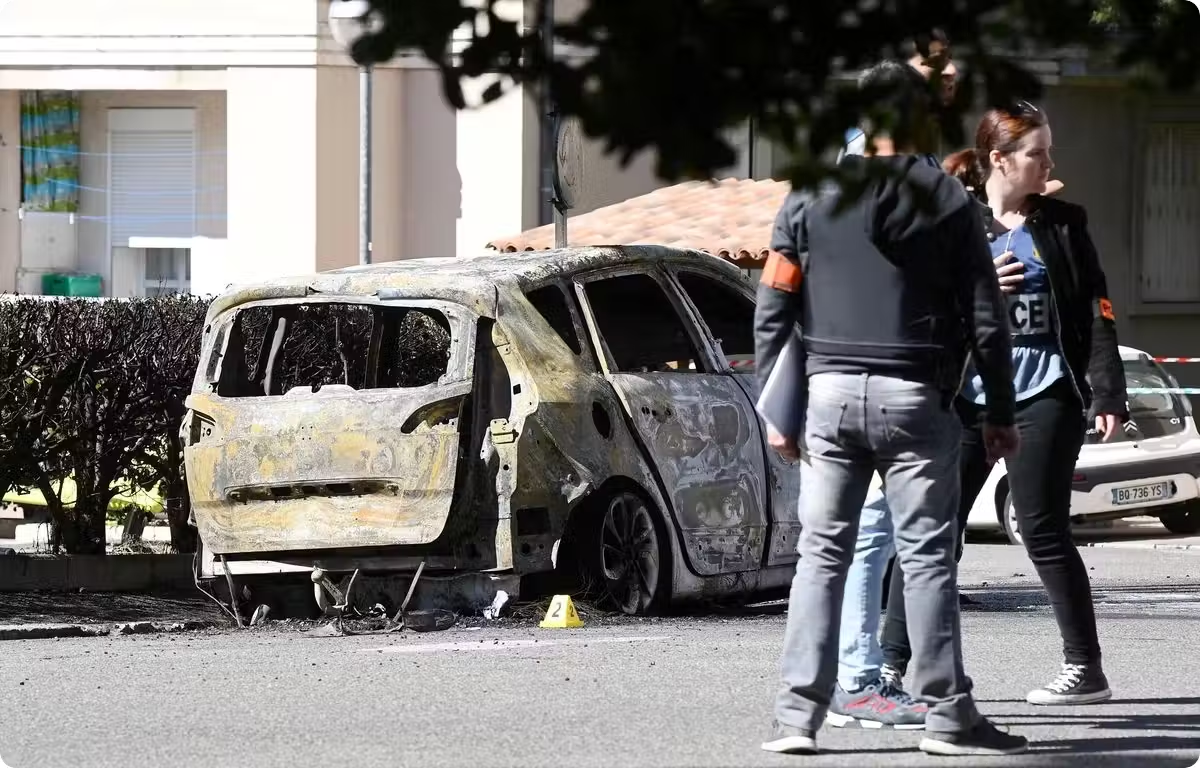
The criminal court in Aix-en-Provence is currently hearing the trial of Malik Kariba, known as the 'butcher', who is accused of participating in the murder of Nassim near Marseille in late December 2020. Kariba appeared before the court on Monday, maintaining his defense that he acted solely as an executor. He admitted to dismembering and burning the body of his victim but denied ordering the killing, which police describe as a savage settlement of accounts. [1]
His testimony has shed light on evolving methods within narcotics trafficking networks, particularly the practice of mutilating corpses to send messages of terror and humiliation. Rudy Manna, a national delegate for the Unsa Police union, noted that while the use of 'barbecue' methods—encasing victims in cars to burn them—has been common in Marseille for twenty to twenty-five years, dismemberment is becoming more frequent. Manna described this trend as a 'Mexicanization' of criminal tactics, where traffickers import methods used by drug cartels to instill fear in rival factions. [1]
Beyond intimidation, mutilation serves a practical purpose in evading law enforcement. Experts explain that dismantling a corpse facilitates its transport, especially when the murder occurs in locations difficult to access, such as apartments, allowing criminals to discard remains in water or remote areas without drawing immediate attention. Additionally, the destruction of physical identifiers like fingers and hands was historically intended to hinder identification through fingerprints. Although forensic science has advanced, making DNA analysis possible even after severe trauma, perpetrators often resort to arson. However, legal expert Bernard Marc points out that fire rarely destroys a body completely; tissues often survive, allowing investigators to extract DNA despite the difficulties. [1]
The brutality of these crimes leaves a profound psychological impact on police officers who encounter them. Rudy Manna highlighted that unlike cases involving firearm injuries, there is currently no formal psychological support system for officers dealing with mutilated bodies. The traumatic images remain with detectives for years, contributing to a silent burden within police stations where professionals are expected to compartmentalize their emotions. Manna emphasized the need for more psychologists within police ranks to address the long-term mental health consequences of witnessing such horrors. [1]
- Categories:
- Justice