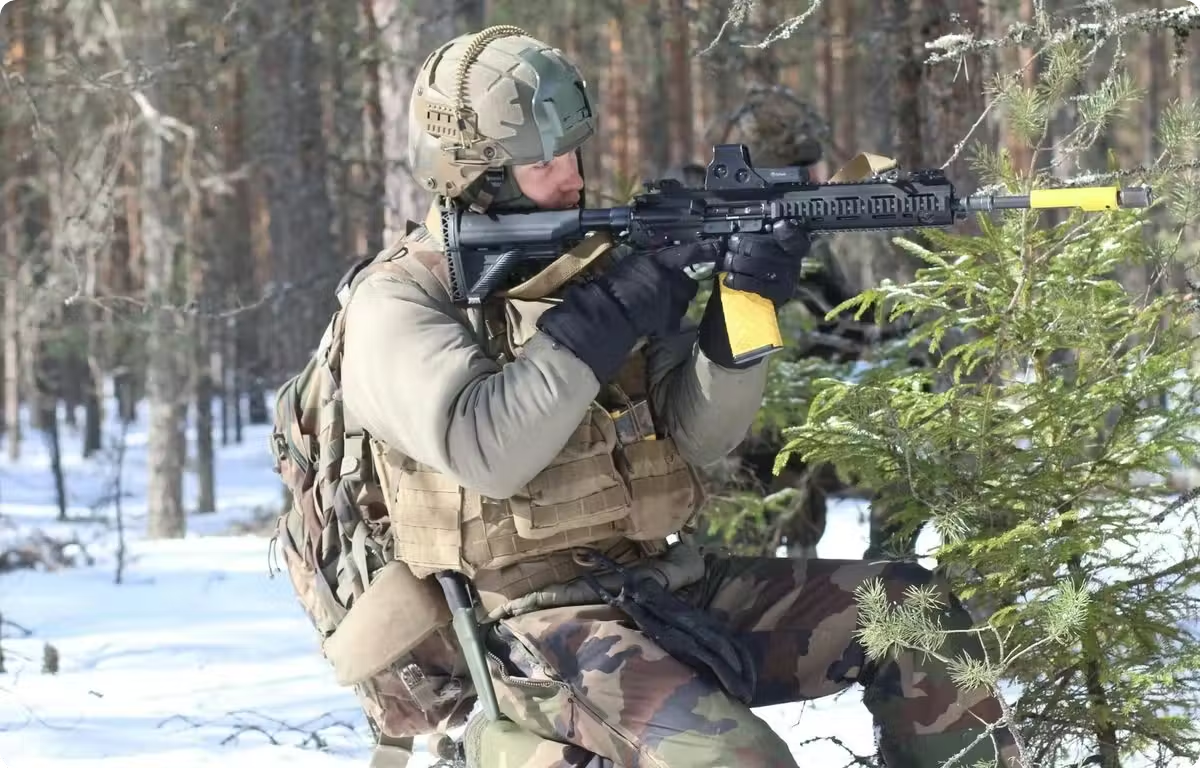
A significant military exercise involving thousands of European soldiers is underway in Poland, raising questions about the future deployment of NATO and allied forces to Ukraine. The Koalicja 26.2 exercise, taking place from November 9 to November 22, 2026, is the largest preparatory drill for the Multinational Force-Ukraine (MNF-U), a military force established by the Coalition of Volunteers. This development comes as diplomatic efforts intensify, with US envoy Steve Witkoff announcing new trilateral peace negotiations between Russia, Ukraine, and the United States scheduled for November 10-11 in Abu Dhabi.
Approximately 2,800 military personnel from eleven European countries, including around one thousand French soldiers, are participating in the exercise. The MNF-U, created in February 2025, brings together 35 countries and aims to guarantee a robust and lasting peace in Ukraine once hostilities cease. Under joint Franco-British command, the force is designed to conduct military training and reassurance activities for Ukraine. In theory, it could deploy up to 20,000 military personnel to the region.
The MNF-U's potential capabilities include sending military trainers to help rebuild and strengthen Ukraine's armed forces. Additionally, the force could conduct aerial missions to allow civilian aviation to resume operations in Ukrainian airspace and carry out demining operations to normalize traffic in the Black Sea. However, experts caution that while the exercise demonstrates readiness, there is currently no European willingness to directly enter Ukraine for combat or ceasefire enforcement.
Political observers view the exercise as a strategic message to Moscow, demonstrating that Europe, represented by nuclear powers like France and the UK, remains a significant military force despite the modest size of the current contingent. This serves as a warning that European nations cannot be excluded from negotiation tables, given their leading role in supporting Ukraine and their stated readiness to intervene if necessary.
Analysts note a disconnect between the political signaling and the practical realities. While the exercise shows the Coalition can move beyond symbolic gestures, the logistical and political challenges of deploying troops into a high-risk zone remain unresolved. Internal divisions persist, with France favoring exclusive European involvement, while Germany and the UK insist on US security guarantees. The United States, however, has shown no interest in such commitments, creating a complex diplomatic landscape likened to a game of bluff.
The timing of the Koalicja 26.2 exercise, coinciding with the announcement of peace talks in Abu Dhabi, has led some to interpret it as a signal of European resolve. However, consultants argue that the exercise was planned independently and should not be viewed solely as a reaction to diplomatic moves. With no clear prospect of peace in the near future, the primary goal remains ensuring military readiness for unforeseen developments, offering policymakers viable options should the situation evolve rapidly.
- Categories:
- International Relations
- Entities: