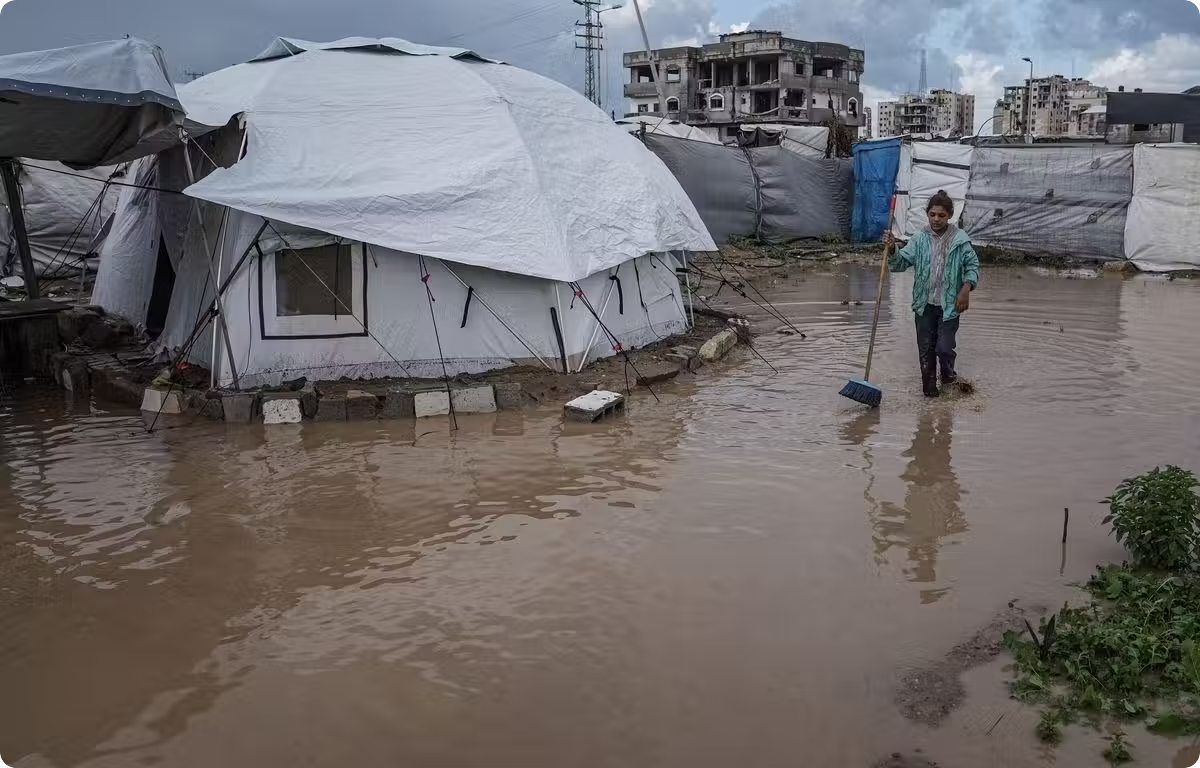
In the early hours of the morning, hundreds of families were seen fleeing flooded displacement camps in the center and north of the Gaza Strip, as well as in the city of Gaza.
An unprecedented crisis is unfolding in the Gaza Strip, where torrential rains during a depression affecting the Palestinian territory have flooded approximately 70,000 tents housing tens of thousands of displaced persons, leaving them without shelter and resulting in several injuries, local authorities confirmed on Saturday, November 7. Dujane walls and cracked roofs collapsed, causing injuries, some serious, across the enclave, the Hamas-controlled government press office stated. During the night, the territory's civil defense received more than 1,500 emergency calls. Its spokesperson, speaking to AFP, specified that his teams were operating without any equipment or resources. The aid organization, operating under Hamas authority, cannot handle alone the consequences of this storm. The spokesperson has launched an urgent appeal to the international community and humanitarian organizations. In a communique, the coalition of Palestinian civil society organizations warned against the risk of disease spread and a looming disaster threatening Gazans. It also called on Israel to ensure unrestricted humanitarian aid flows into the Palestinian territory.
Since the ceasefire announcement between Hamas and Israel in October 2025, Israeli authorities have prevented the entry of prefabricated houses intended to house displaced persons and limited the entry of tents, Mustapha Qazzaat, a municipal advisor in Gaza and head of the Gaza emergency committee, told AFP. The Palestinian territory urgently needs 200,000 caravans, as well as equipment to clear debris from destroyed houses and buildings, main thoroughfares, and urgently restore electricity and heating. He made this statement to AFP. This flood has been experienced by the Palestinian population every winter. For instance, Oum Mohamed al-Hersh, aged 45, who lives with her family in a tent in western Gaza, confessed she could not save mattresses and all their clothes got soaked. Her children ask where they will sleep tonight, but she has no answer. Maryam Odeh, aged 34, living in Deir Al-Balah, expressed her frustration that she doesn't know how to protect her children anymore. Similarly, Khaled al-Najjar, aged 41, worries about his family due to collapsing tents, cold, and spreading diseases.
- Categories:
- International Relations