The integration of artificial intelligence into modern warfare has reached a critical juncture, raising profound ethical and security concerns among humanitarian organizations, legal experts, and civil society. As conflicts become increasingly complex, the deployment of lethal autonomous weapons systems (LAWS)—often referred to as 'killer robots'—has intensified debates over accountability, transparency, and the fundamental role of human judgment in life-and-death decisions. A recent advocacy campaign, supported by a petition gathering more than 110,000 signatures, urges the international community to adopt a binding treaty that strictly regulates and, potentially, bans the development and use of such weapons on the battlefield. [1]
Nicole Van Rooijen, executive director of the campaign 'Stop Killer Robots,' emphasizes the core moral dilemma: 'We cannot delegate questions of life and death to an algorithm.' Her organization, along with various NGOs and human rights groups, argues that the increasing reliance on AI for targeting and weapon guidance removes essential human oversight from combat scenarios. While proponents claim that autonomous systems can operate without being jammed—a vulnerability of remote-controlled drones seen in conflicts such as those between Russia and Ukraine—the absence of human intervention introduces significant risks of error and unintended casualties. [1]
According to Van Rooijen, AI can be integrated into weapons such as drones, submarines, missiles, and robots to automatically engage targets that match predefined criteria set by humans in advance. Once activated, the system selects and engages targets independently based on its algorithm. Additionally, AI plays a crucial role in decision-support systems and targeting lists, where it identifies potential combatants or threats in large numbers, leaving human operators to simply authorize strikes. This acceleration in targeting speed and scale raises fears that wars could escalate more rapidly and broadly, with fewer checks to prevent excessive force or collateral damage. [1]
One of the most troubling aspects of LAWS is the opacity surrounding their actual use. It is often nearly impossible to determine whether a strike was carried out by a remotely piloted drone or an autonomous AI system. Recent revelations have highlighted the catastrophic consequences of such technology when errors occur. For instance, investigative reporting by Bloomberg disclosed that a US airstrike on a primary school in Iran in February 2026, which killed more than 150 people, including 123 children, was the result of an AI targeting error. The system allegedly confused the school with an old military base of the Iranian Revolutionary Guard Corps. 'With human, field-level intervention, this would have been avoided,' stated Van Rooijen, underscoring the potential for human review to prevent such tragedies. [1]
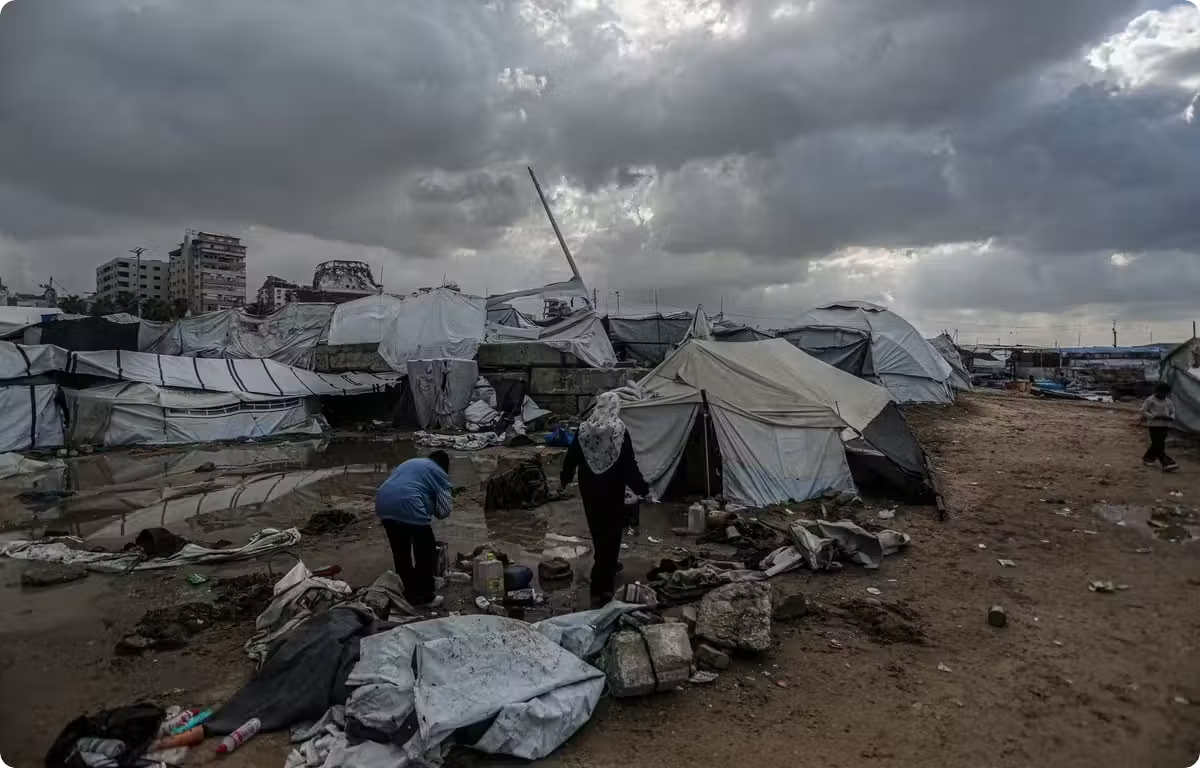
Further accounts emerge from documentary evidence, such as the Israeli journalistic project 'Naza,' where former members of the Israel Defense Forces (IDF) describe using AI to identify supposed Hamas fighters based on mobile phone contacts. These systems reportedly led to the destruction of entire apartment buildings in the Gaza Strip, resulting in significant civilian casualties and the deaths of whole families. Such cases illustrate how AI-driven targeting can amplify the scale of destruction and disproportionately affect non-combatants, often without adequate safeguards or mechanisms for accountability. [1]
Despite not yet being universally deployed, lethal autonomous weapons are expected to proliferate alongside the rapid advancement of AI technology. This trajectory has spurred calls for preemptive international regulation to establish clear boundaries before these systems become embedded in all forms of conflict, including internal security operations and border control. Nicole Van Rooijen hopes for a formal international framework to serve as a 'moral barrier' following a significant diplomatic step in September 2026, when 128 states parties to the Convention on Certain Conventional Weapons (CCW) adopted a document aimed at regulating LAWS. Key nations involved include China, Russia, the United States, Israel, and Ukraine. [1]
A decisive outcome is anticipated in November at the Geneva conference of the United Nations, where the CCW will deliberate on further measures. Without effective regulation, advocates warn that the security, humanitarian, and ethical risks will continue to grow. Van Rooijen also points out a strategic paradox: as autonomous weapons reduce the risk to soldiers’ lives, the threshold for entering war decreases, potentially making military conflict more frequent and less restrained by the traditional deterrent of casualty concerns. [1]
The growing recognition of these dangers is reflected in the alarming statistics from the Office of the United Nations Secretary-General. A June report highlighted that 2025 saw a record number of child victims of grave violations in armed conflicts, with 38,558 children affected—the highest figure since the mandate on protecting children in armed conflicts was established in 1996. The report attributes part of this surge to the increased use of explosive weapons in densely populated areas and the integrating role of AI in targeting processes, further emphasizing the human cost of unchecked technological advancement in warfare. [1]
- Categories:
- International Relations
- Entities: