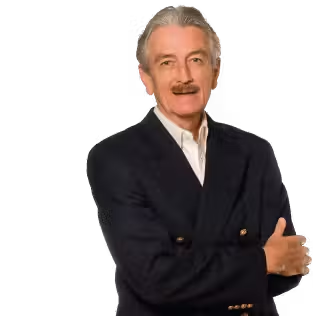
Alexandre Dartchiev, the Russian Ambassador to the United States, has died unexpectedly in Moscow, according to the Russian Ministry of Foreign Affairs. The 66-year-old diplomat passed away on a Wednesday, with spokesperson Maria Zakharova stating via Telegram that his death was the result of a chronic illness 20 Minutes. Dartchiev had assumed his role in Washington in March 2025, a period characterized by an attempted diplomatic rapprochement between Russian President Vladimir Putin and U.S. President Donald Trump.
Dartchiev's death adds to a troubling pattern of sudden passing among Russian heads of mission over the last decade. A particularly concentrated wave of deaths occurred between 2016 and 2017, when four active ambassadors died within eight months: Andrei Karlov was assassinated by gunfire in Ankara, Alexander Kadakin died in New Delhi, Vitaly Churkin suffered a heart attack in New York, and Mirgayas Shirinski was found dead in his swimming pool in Khartoum 20 Minutes. More recent cases include Sergei Kriukov in Senegal in 2019, Alexander Sourikov in Mozambique in 2024, and Alexander Matsegora, who died suddenly in North Korea in December 2025 20 Minutes.
The nature of Dartchiev's passing has raised questions due to inconsistent official communications. While Moscow initially described the death as 'sudden,' Maria Zakharova later referred to a 'chronic illness' without providing further details 20 Minutes. This opacity has led some observers to speculate about internal purges or eliminations orchestrated by the Kremlin. However, Jean de Gliniasty, a former French Ambassador to Russia (2009-2013) and research director at IRIS, suggests these discrepancies might simply reflect the bureaucratic disorder inherent in the Russian system rather than a calculated strategy 20 Minutes.
Given Dartchiev's highly sensitive assignment—managing the diplomatic 'thaw' between Russia and the U.S., specifically concerning the Ukrainian conflict—the possibility of foul play has been debated. De Gliniasty remains skeptical of the theory that the Kremlin kills its ambassadors, arguing that dissatisfied diplomats are typically reassigned or sidelined rather than executed 20 Minutes. Conversely, another diplomat familiar with Russian affairs argued that it is both possible and plausible that President Putin could order the poisoning or physical elimination of his representatives 20 Minutes.
Further analysis points to the blurring lines between diplomacy and intelligence in Russia. Some experts suggest that since many Russian diplomats are members of security services, there could be internal 'housecleaning' efforts conducted by intelligence officers against their own colleagues 20 Minutes. Others note that prior to the war in Ukraine, ambassadors held more autonomy, but influence has since shifted toward the security services 20 Minutes.
Alternative theories focus on the extreme physical and psychological toll of the profession. Most of the ambassadors who died in post, including Churkin, Sourikov, and Dartchiev, were in their sixties, a demographic with higher cardiovascular risks 20 Minutes. Since the 2014 annexation of Crimea, the role has become increasingly grueling. De Gliniasty described the position as 'extremely stressful,' involving grueling workdays far removed from the stereotypical image of lavish embassy receptions 20 Minutes. He posits that the combination of Russia's shifting international standing after the invasion of Ukraine and the overarching pressure from security services has significantly increased stress levels, potentially contributing to the series of deaths 20 Minutes.
- Categories:
- International Relations
- Entities: