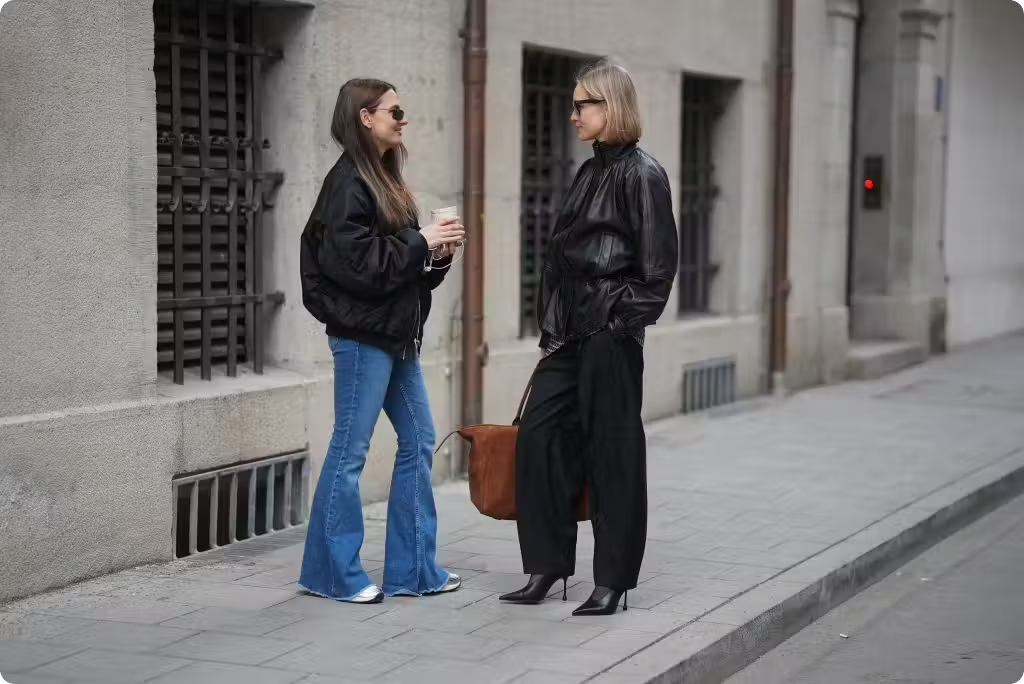
For the cold season in autumn 2026, the fashion industry proposes a subtle evolution of a known denim trend: 'tulip' jeans (or crin-style jeans). While sharing the DNA of its predecessor, 'barrel jeans' (barrel-shaped jeans), the tulip model differs through a more refined construction and a sleeker profile, catering to preferences for a cleaner silhouette in everyday wear. This new interpretation of the cut moves away from the extreme volume of the previous version, opting for a balance between comfort and elegance without sacrificing the element of surprise that recent fashion has imposed. The history of this style's emergence shows a clear polarization of consumer preferences. A few years ago, the launch of barrel jeans marked a major trend, characterized by a wide structure at the hips that gradually tapers toward the ankles. This model was quickly adopted by major fashion houses and became ubiquitous in streets, generating two distinct consumer camps: those who immediately embraced the trend and those who rejected it for its excessive volume. Its controversial success paved the way for a more measured version, one that would justify its existence through nuances of more sophisticated cutting. The tulip version thus appears as a direct response to this polarization, maintaining visual similarity with barrel jeans but adjusting proportions to be more accessible and versatile. If the barrel jean was a bold style statement, the tulip jean is a more discreet choice, finding its place both in the wardrobe of fashion lawyers and among those initial skeptics of loose cuts. The name 'tulip' suggests a floral shape, rounded in the middle and fitted at the base, similar to an open lily bed but without reaching the extremes of the barrel silhouette. [1]
The fundamental difference between the two models lies in the amount of material and how it drapes on the body. While the barrel jeans feature a pronounced curve and massive volume in the thigh and ankle areas, the tulip jeans significantly reduce this volume. The cut remains slightly arched, offering a shape that is neither straight nor tight, but has a moderate presence. This subtlety allows for easier integration into contemporary outfits, which tend to avoid overly geometric or exasperatingly bulky shapes. The commercial offering reflects this diversification of tastes. Among the brands that have adopted the tulip cut are COS, which offers a denim model for €99, presented as a classic version of the new trend. (& Other Stories) proposes a similar variant, with a curved trim down to the ankle, priced at €89, emphasizing the fine line of the model. Topshop brings a more practical approach, with a high-waist model priced at €79.99, suitable for intensive use in the cold season. The premium segment is represented by brands such as Free People, which launches the Washed Corduroy Twisted Jeans variant at €178, combining corduroy material with the tulip cut for a distinct textural effect. In the high-end segment, Citizens of Humanity offers a premium variant, the Tulip Wide Leg Mid Indigo model, which sells for €370, consolidating the status of the tulip jean not just as a passing fad, but as a staple of the contemporary wardrobe, with options for all budgets and styles. These models demonstrate how the fashion industry uses subtle variations of a successful design to maintain consumer interest and offer them more diversified options. The launch of tulip jeans does not negate the success of barrel jeans; rather, it complements their portfolio, providing an alternative for those seeking the same benefits of comfort and non-conformist shape, but in a more tailored and refined version. It is proof of the flexibility of contemporary design, which can adapt raw forms to meet the demands of a fashion industry that also values subtlety. [1]
- Categories:
- Fashion