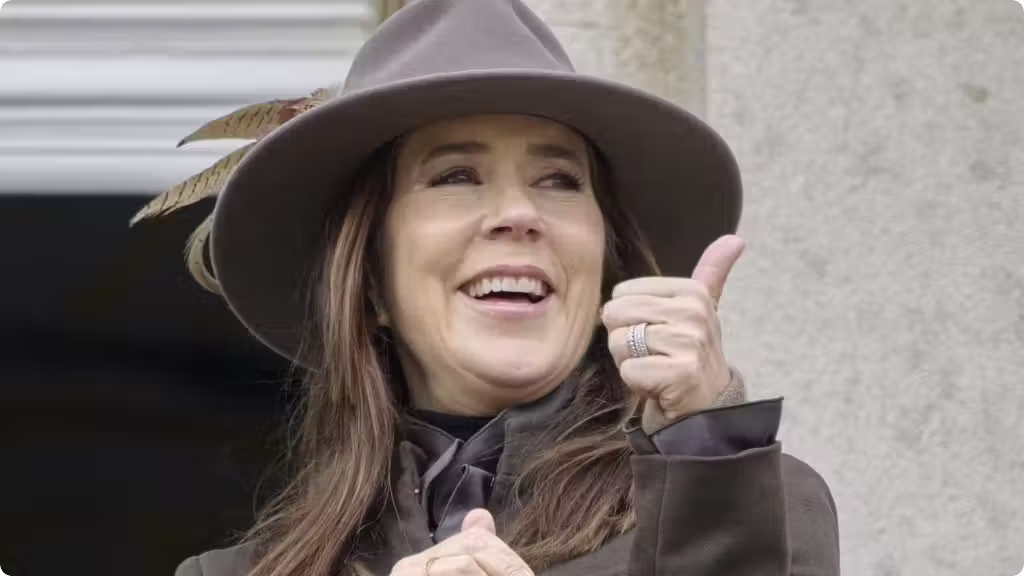
This week, European and Caribbean monarchies have been the center of media attention, each illustrating different aspects of contemporary royal life and protocol. In Copenhagen, Denmark, King Frederik X and his wife, Queen Mary, participated in the important cultural event marking the reopening of King Christian IV's Winter Hall at Rosenborg Castle. The event marks the conclusion of a three-year restoration process and restores public access to the historic space that was previously the living quarters of Denmark's longest-reigning monarch, Christian IV, who ruled from 1588 to 1648 over both Denmark and Norway. On November 5, Queen Mary was honored with officiating the opening of this historic space, receiving a guided tour of the castle and the newly renovated hall. [1]
Beyond its historical and architectural significance, the event drew particular attention due to the wardrobe imagery of Queen Mary. For this special occasion, the sovereign opted for a stylistic approach that combines royal elegance with current fashion trends, featuring a violet-colored jacket. The chosen color, a deep violet with slight pinkish undertones, is described by specialized fashion sources as 'Royal Purple.' This specific shade falls within a broader context of winter season fashion trends, competing with other classic fall-winter colors such as burgundy, which has long been a favorite in fashionable women's wardrobes. The jacket, a product of the Italian fashion house Dolce & Gabbana, is a wool 'double-breasted' model, complemented by classic footwear by Gianvito Rossi, which the Queen frequently wore on other recent public occasions alongside other members of the European royal family. [1]
Simultaneously, across the Atlantic in Antigua and Barbuda, King Charles III and Queen Camilla concluded their official autumn tour in the Caribbean nation. The two British monarchs spent six days in the host country, attending the opening ceremony of the Commonwealth Heads of Government Meeting (CHOGM) and celebrating the culture and people of Antigua and Barbuda. Recent photographs published by British authorities during this tour capture significant details of protocol and homage paid to the host nation. The Sheriff's regalia of King Charles is made from the traditional 'madras' fabric tied to Antigua and Barbuda's Independence Day, while Queen Camila’s wristwatch, partially hidden by her sleeve, features a multicolored beaded bracelet made by a local artisan. [1]
Another notable aspect of King Charles’s attire was his colored tie, a gift offered to the monarch by the widow of Australian comedian Barry Humphries, best known by his iconic character, Dame Edna Everage. The tie originated from Humphries’ personal collection. Additionally, Queen Camilla wore a turquoise chiffon dress created by Anna Valentine, accessorized with turquoise and diamond earrings from the Queen’s private collection. In all photographs taken by the British Monarchy’s official photographer, Chris Jackson, the two monarchs wear poppies, symbolizing remembrance for those fallen in conflicts. [1]
During this six-day tour, King Charles delivered a memorable speech at the CHOGM opening ceremony. He expressed strong feelings regarding Britain’s colonial past, stating that the transatlantic slave trade 'fills his heart with horror and puts his soul in deep sorrow,' while carefully avoiding offering a formal official apology. Instead, he praised the Royal Navy’s important role in historical attempts to enforce the end of slavery once it was abolished. The tour was also marked by viral moments, including one where the King, confronted by torrential rain on a cricket field, raised his arms and shouted asking for an umbrella—a moment captured by the public and quickly distributed in the media. These distinct events in Denmark and Antigua and Barbuda illustrate the diversity of duties and images presented by monarchic institutions in 2026. [1]
- Categories:
- Fashion
- Entities: