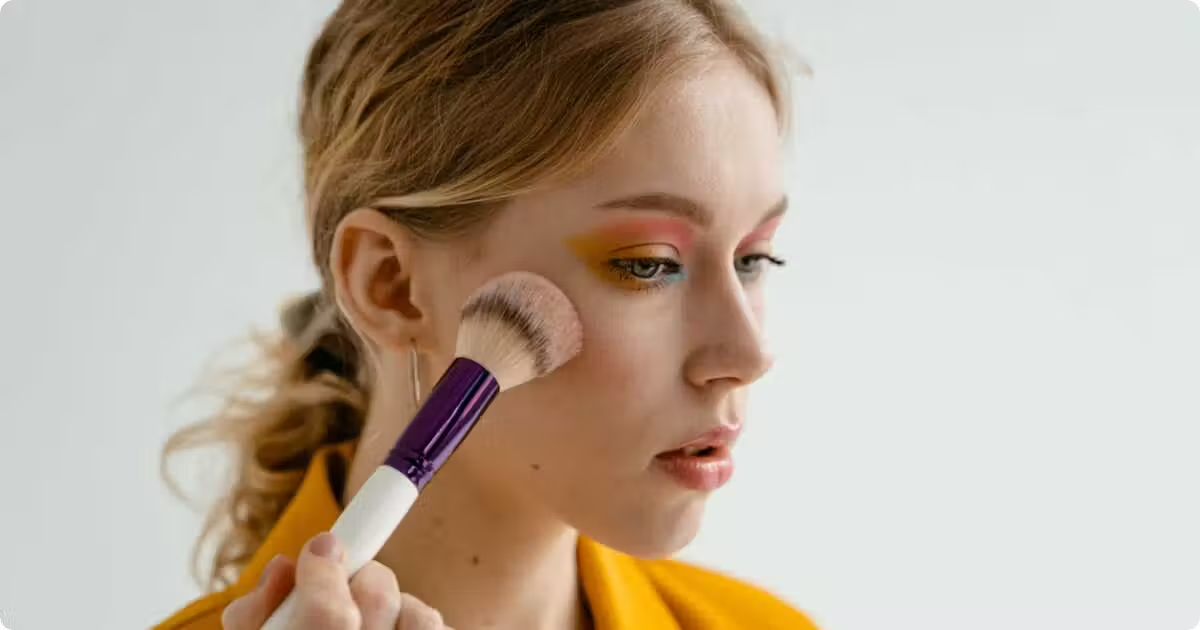
In the age of social media beauty tutorials, identifying your skin tone to select the most flattering makeup shades has become a ubiquitous topic. While professional colorimetry services—costing upwards of €100—offer precise analysis, makeup artist Célia, known professionally as @glowbycelia_ on Instagram, demonstrates that effective results can be achieved at home through two simple, free diagnostic tests. Her methods, which have garnered significant attention online, focus on determining whether a person’s complexion possesses cool, warm, or neutral undertones, a crucial step often overlooked in favor of superficial preferences. [1]
The first diagnostic test utilizes everyday jewelry. According to Célia, the decision is not merely a matter of preferring gold over silver, but observing which metal makes the skin appear more luminous and vibrant. If silver jewelry enhances the complexion, the individual likely has a cool undertone, characterized by pink, red, or bluish hues in the skin. Conversely, if gold jewelry creates a more harmonious and bright appearance, the skin likely possesses a warm undertone, leaning toward yellow, golden, or peach tones. A third possibility exists: if both metals suit the skin equally well, the individual has a neutral undertone, containing both warm and cool elements, allowing for greater flexibility in color selection. [1]
The second test involves comparing two pieces of clothing against the face while ignoring the garments themselves. Holding a pure white top next to the face reveals one’s true undertone when the viewer focuses strictly on how their own skin reacts to the contrast. Pure white tends to accentuate cool undertones, making them appear clearer and brighter. A cream-colored top, being softer and warmer, typically complements warm undertones better. If both shades flatter the face similarly, it further confirms a neutral skin tone. Célia emphasizes that many people mistakenly analyze the clothing’s effect on the fabric or general lighting rather than observing the direct impact on their facial complexion. [1]
Once the undertone is identified, selecting the appropriate blush shade becomes an intuitive process guided by expert makeup artist Aliénor (@alieenor.fr), who specializes in colorimetry and contrast. For those with cool undertones, cool-toned blushes such as pinks, violets, and even blue-based shades are recommended, as they harmonize with the natural pink or red hues of the skin. For warm undertones, orange and coral blushes provide a natural flush that enhances the underlying yellow or golden tones without appearing clashy or artificial. [1]
Beyond basic color matching, Aliénor advises considering the saturation level of the blush in relation to one’s overall coloring, including eye and hair color. Individuals who are best suited for low-saturation colors should opt for neutral, lightly pigmented blushes that offer a subtle hint of color. In contrast, those who are enhanced by high-saturation hues can confidently choose vivid shades, such as bright red, vibrant orange, or striking pink. This approach ensures that the makeup choice amplifies the wearer’s natural features rather than overwhelming them, proving that understanding one’s specific color profile is the foundation of effective daily makeup application. [1]
- Categories:
- Fashion