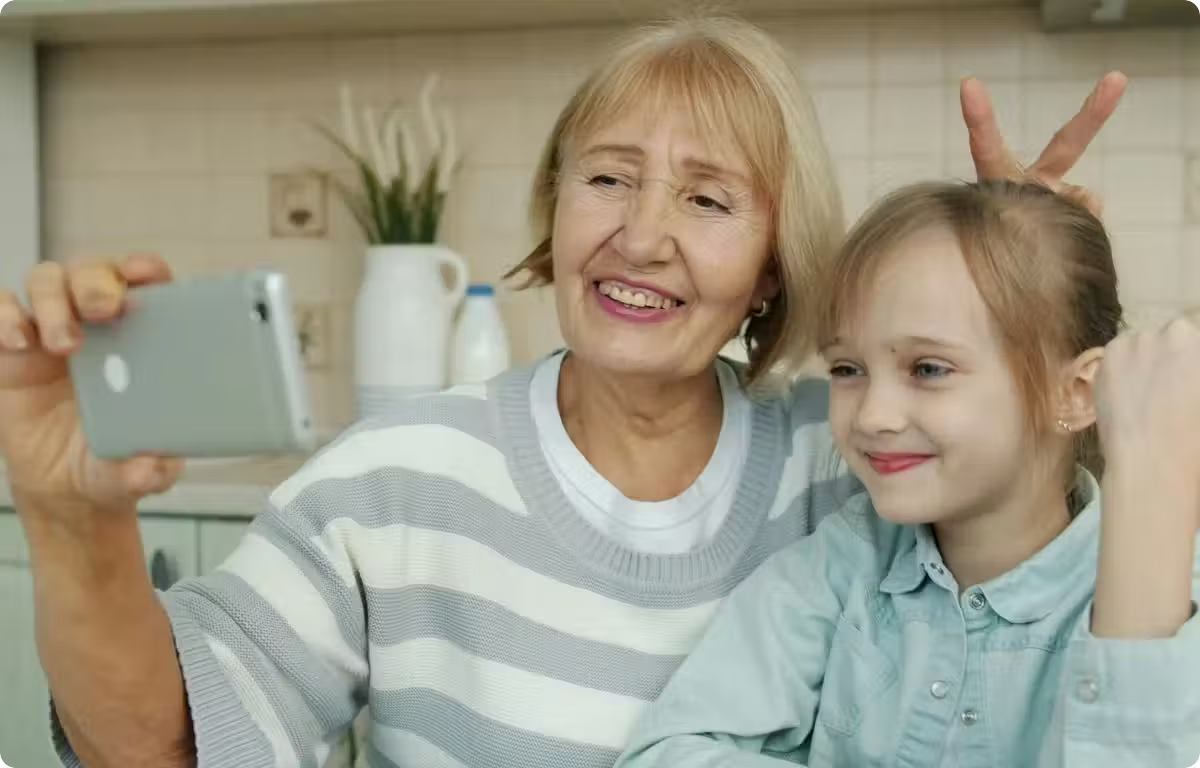
A growing phenomenon dubbed 'grandmaslop' is causing distress among parents, as older generations increasingly use artificial intelligence to retouch and alter photos of their grandchildren. The term, borrowed from overseas, describes the trend where baby boomers—born between 1945 and 1965—are utilizing generative AI tools like ChatGPT, Gemini, and Claude to modify images shared via messaging apps such as WhatsApp and SMS. While many boomers were previously hesitant to adopt AI—with only 17% of those aged 60–75 reportedly using generative AI in 2025 according to an Ipsos study—there appears to be a sudden surge in interest in photo editing technology. [1]
The primary concern among parents is not just the aesthetic alteration of these images, but the serious privacy and security implications. When photos of minors are uploaded to AI services, they can become trapped on servers, potentially exposing them to malicious actors. Véronique Béchu, director of the Observatory against Cyberbullying and Violence towards Minors at the e-Enfance/3018 association, warns that once a photo is sent to an AI service, control is lost. It is often unclear how long the image will be stored, who will access it, or whether it will be used to train the underlying AI models. This lack of transparency creates a significant risk of the images being diverted for harmful purposes. [1]
Experts emphasize that even innocent family photos can be weaponized. If shared on open social networks or public profiles, these images can be used to generate fake, sexualized, or stereotypical content. Samuel Comblez, deputy general director of e-Enfance/3018, notes that this is a documented issue where benign content is transformed into pedocriminal material that remains accessible online indefinitely. Beyond safety risks, there are psychological concerns. Children regularly viewing digitally altered versions of themselves—featuring smoothed skin, refined faces, or modified features—may begin to doubt the adequacy of their natural appearance, negatively impacting their self-image during crucial developmental periods. [1]
Legally, the sharing of minor's photos by grandparents is subject to strict regulations in France. Article 372-1 of the Civil Code, stemming from the law of February 19, 2014, mandates the express consent of both parents if parental authority is joint. Furthermore, Article 9 of the Civil Code guarantees everyone, including children, the right to respect for their private life. Béchu clarifies that AI editing does not exempt users from these rules. Parents are advised to read the terms of use of AI platforms and can request the removal of content directly from the concerned platforms if consent was not given. Ultimately, experts stress that open dialogue between parents and children is the best defense, allowing families to set boundaries and anticipate these digital risks. [1]
- Categories:
- Environment