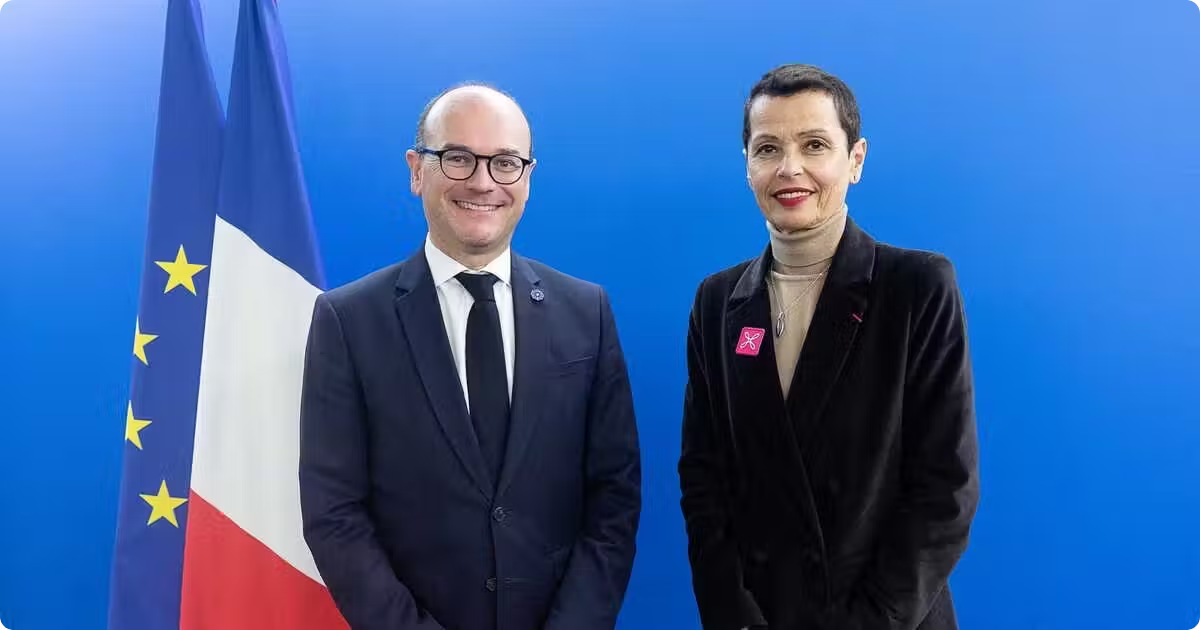
France’s Minister of Industry, Sébastien Martin, has backed the introduction of a new indicator within the national higher education admission platform, Parcoursup, designed specifically to promote the recruitment of women into industrial careers. The proposal, put forward by the association Elles Bougent, aims to reward educational establishments and training programs that actively implement measures to dismantle gender stereotypes and foster diversity in technical fields.
The initiative comes amid stark disparities in the French industrial labor market, where women constitute only 24 percent of engineers and 15 percent of technicians. Sébastien Martin emphasized that there are no objective reasons for such gaps, asserting that boys possess no inherent predisposition for scientific or technical subjects. He argued that societal stereotypes significantly hinder recruitment efforts in industrial sectors and called for a shift in how scientific and technical pathways are perceived by young people and their families.
Valérie Brusseau, representing the association Elles Bougent, highlighted that these statistics reflect a reality shaped by early-life stereotypes and educational practices. She noted that discrepancies in mathematical performance between girls and boys begin as early as first grade (CP) and are exacerbated by a lack of awareness regarding career opportunities in industry. Brusseau stressed that 83 percent of educators who interact with the association discover the scope of industrial jobs for the first time, indicating a critical need for better visibility of these career paths.
The proposed 'index of openness to female talent' would not simply measure the current percentage of women in specific courses. Instead, it would evaluate and highlight institutions that take concrete steps toward gender balance, such as organizing meetings with female role models. During the Industry Week held from November 16 to 22, more than 1,000 events dedicated to promoting gender diversity in industrial jobs were organized across France to further this goal.
Minister Martin expressed support for integrating this perspective into the ongoing reforms of Parcoursup. He cautioned, however, that any mechanism introduced must achieve its intended effect without producing counterproductive results. The dialogue underscores a growing recognition that national policies must be reinforced by local initiatives, particularly in regions undergoing reindustrialization.
Local ecosystems play a pivotal role in this transformation. Martin pointed to the Cotentin region, which anticipates the creation of nearly 10,000 industrial jobs over the next five to six years, noting that success depends on engaging women. Similarly, in the Hauts-de-France region, the establishment of gigafactories requires approximately 1,000 recruits. In these areas, professional high schools and private companies are increasingly organizing open days and sensitivity campaigns aimed directly at young women.
Brusseau added that women in remote or enclosed territories face a 'double penalty,' having to combat gender stereotypes while also managing the challenges of living in areas that often require early relocation for education. To address this, Elles Bougent utilizes over 15,000 role models—engineers, technicians, and data scientists—to show young girls the daily realities and possibilities of these careers. Brusseau argued that motivation extends beyond salary, emphasizing the importance of purpose and team dynamics in attracting talent.
While Elle Bougent focuses primarily on vocational guidance, reaching approximately 70,000 girls annually, government agencies like France Travail are involved in direct recruitment support. In April, the ministry presented a plan for industrial employment alongside Jean-Pierre Farandou, Minister of Labor and Solidarity. This initiative includes projects to help 10,000 women transition into future-proof roles. An example cited by Martin was the training programs for women at Airbus Atlantic in Saint-Nazaire, where many job seekers receive tailored support.
The broader context of these efforts involves addressing the 600,000 jobs estimated to be vacant in the French industrial sector in the coming years. With 35 percent of French business leaders currently being women, Martin noted that increasing the number of women in top management positions will naturally reinforce the importance of female leadership in scientific and technical hierarchies. The consensus between the minister and industry advocates highlights a shared commitment to systemic change through both state policy and grassroots educational intervention.
- Categories:
- Environment
- Entities: