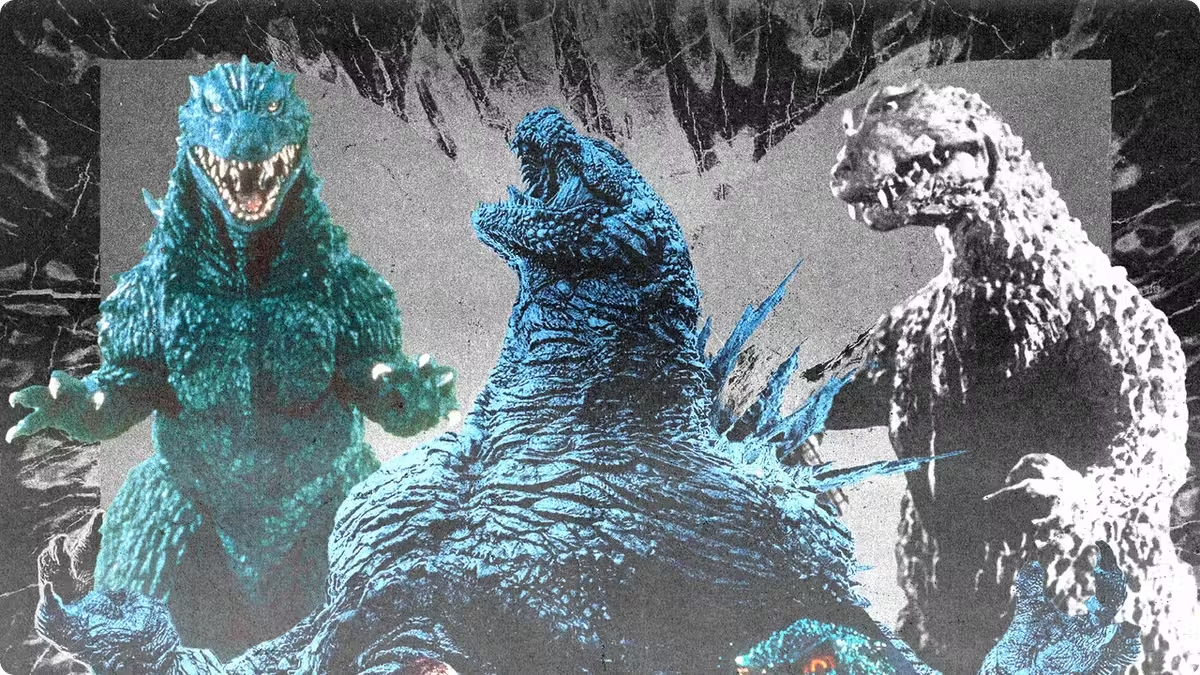
Although the irradiated character, better known for his roars than for dialogue, was never considered 'prestigious' in the classic sense, Godzilla has enjoyed the status of a beloved figure, comparable to Harry Potter or Batman. However, exceptions exist: The Criterion Collection released a deluxe Blu-ray edition of the original 1954 film directed by Ishirō Honda, marking its 1000th title with an extensive set from the Showa era (1954–1975). Martin Scorsese called Honda 'an extraordinary artist and artisan,' placing the 1954 film among the creations that fueled the imaginations of young viewers, while Kiyoshi Kurosawa described it as an early lesson on national trauma. [1]
A critical shift began in recent decades. After 2004 seemed to mark the end of the franchise with 'Final Wars,' Toho returned the monster in an aggressive form with the 2016 film 'Shin Godzilla.' This movie was a complete reboot and reimaging of the character, combining bureaucratic satire with cosmic horror under the direction of Hideaki Anno, best known for 'Neon Genesis Evangelion.' This series of films anticipated contemporary global chaos, but Toho later chose to produce an anime trilogy for Netflix rather than maintaining a connection with director Anno for direct sequels. [1]
None of these experiments predicted, however, the phenomenal 2023 success of the film 'Godzilla Minus One.' Directed and written by Takashi Yamazaki, the film became the highest-grossing Japanese-language production in U.S. history and received widespread acclaim from Oscar-winning directors such as Steven Spielberg, James Cameron, Christopher Nolan, Guillermo del Toro, and Bong Joon-ho. The film also won the franchise’s first Academy Award for Best Visual Effects, balancing spirit and spectacle more effectively. [1]
'Godzilla Minus One,' released afterward at the New York Film Festival, inherited the burden of raised expectations. It was the first Japanese film shot specifically for IMAX screening and debuted alongside prestigious works such as 'Artificial' and 'Behemoth.' While appreciated for its intense visual spectacle and fight sequences against King Ghidorah, some critics noted that director Yamazaki may have overestimated the initial project. Godzilla does not appear until after 50 minutes and is present only briefly at the conclusion, with the focus falling on characters—even if narrative interest does not significantly increase in that direction. [1]
Despite less enthusiastic reviews compared to its predecessor, the franchise’s viability and newly acquired prestige seem undiminished. Godzilla's cultural impact on Tokyo is physically visible in the Ginza neighborhood, where historical landmarks like the Nichigeki Theatre and the Wako building have been repeatedly destroyed on screen and then repurposed for marketing. Commemorations and souvenirs sold near the mentioned buildings demonstrate Japan's ability to transform suffering and spectacle into financial gain, keeping the public's fascination alive and present. [1]
- Categories:
- Entertainment
- Entities:
-
- Christopher Nolan
- Tokyo
- Netflix
- Tom Cruise
- Japan
- Martin Scorsese
- Steven Spielberg
- U.S.
- Christopher Mcquarrie
- James Cameron
- Guillermo Del Toro
- Bong Joon-Ho
- Godzilla Minus Zero
- Godzilla Minus One
- Godzilla
- Kiyoshi Kurosawa
- Veep
- Toho
- Thomas Pynchon
- Criterion Collection
- Ishiro Honda
- Hideaki Anno
- Godzilla LLC
- Shin Godzilla
- Final Wars
- Mothers
- Rodan
- Chinatown
- A Life In Film
- Vineland
- In The Loop
- Neon Genesis Evangelion