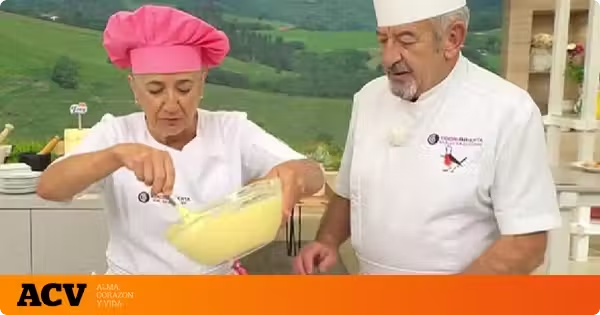
The culinary world often presents diverse approaches to household cooking, ranging from traditional baking methods to innovative alternatives that require no specialized equipment. While some recipes rely heavily on modern appliances like electric ovens, others demonstrate that fundamental techniques such as steaming and gentle heat can produce equally rich results. In Spain, recent coverage highlights how prominent chefs share solutions for cooks who lack access to standard ovens or prefer simpler methods, focusing on the versatility of common kitchen tools. A specific example of this versatile cooking philosophy comes from renowned Spanish chef Eva Arguiñano. She recently shared a recipe for a refined egg yolk cake (bizcocho de yema de huevo) on her program Cocina Abierta. Designed to serve eight people, the dish requires precise ingredients: six egg yolks, two whole eggs, 100 grams of sugar, and 100 grams of refined cornstarch. To complete the dessert, it calls for 100 grams of couverture chocolate, twelve raspberries, and mint leaves for decoration. The preparation involves creating both a sweet syrup infused with orange liqueur and a fine yolk cream that serves as both filling and coating. [1]
Arguiñano’s technique bypasses the oven entirely by utilizing a steam-cooking method. She instructs cooks to place a water-filled pot on the stove, add a thin layer of water (a finger's depth), and place the cake mold inside. Covering the pot with a lid wrapped in a cloth traps the steam effectively, preventing condensation from dripping onto the cake and ensuring even cooking. This makeshift steamer requires approximately 40 minutes of cooking time, compared to the 30 minutes typically needed when using a conventional oven preheated to 120 °C. The cloth must be secured tightly to the lid without hanging down toward the heat source to ensure safety and proper steam retention. [1]
The preparation begins by beating the six egg yolks, two whole eggs, and sugar with electric beaters until the mixture is well frosted and voluminous. Refined cornstarch is then gently folded into the mixture to maintain its airiness. The batter is poured into a 25-centimeter diameter mold lined with baking paper at the bottom. While the oven method involves placing the mold in a water bath and baking for 30 minutes, the alternative steaming method offers a reliable substitute for households without functional ovens or those seeking a gentler cooking process that preserves moisture. [1]
For the syrup component, 50 milliliters of water and 50 grams of sugar are heated until dissolved, after which a tablespoon of orange liqueur is added for flavor. The fine yolk cream is prepared separately using eight egg yolks, 150 grams of sugar, 70 milliliters of water, and a few drops of lemon juice. The sugar, water, and lemon juice are heated together slightly before being slowly poured into the egg yolks while mixing continuously. This mixture is returned to low heat and stirred constantly until it thickens into a smooth cream consistency. This dual-component system allows for a layered dessert with balanced sweetness and texture. [1]
Assembly involves slicing the cooled cake horizontally into two halves. The interior layers are moistened with the orange-infused syrup before spreading the fine yolk cream over the bottom half. The second cake layer is placed on top, and the entire cake is coated with remaining cream on the surface and sides. Finally, melted chocolate is piped onto the top to create diagonal cross lines and small dots within the resulting diamond shapes. Fresh raspberries arranged around the base and fresh mint leaves complete the elegant presentation, highlighting how professional techniques can be adapted for home kitchens without industrial equipment. [1]
While this steaming method gains attention in Spanish media as a practical alternative for egg yolk cakes, it stands in stark contrast to other contemporary oven-based recipes that dominate social media. For instance, recent trends highlight one-pan oven dishes, such as Jamie Oliver’s Thai chicken curry, which use high heat to roast ingredients rapidly. These two approaches illustrate the spectrum of home cooking: one leveraging rapid, high-temperature roasting for flavor concentration, and the other relying on slow, moist heat for delicate textures. Both methods remain valid depending on available tools and desired outcomes, emphasizing adaptability in the modern kitchen. [1]
- Categories:
- Entertainment
- Entities: