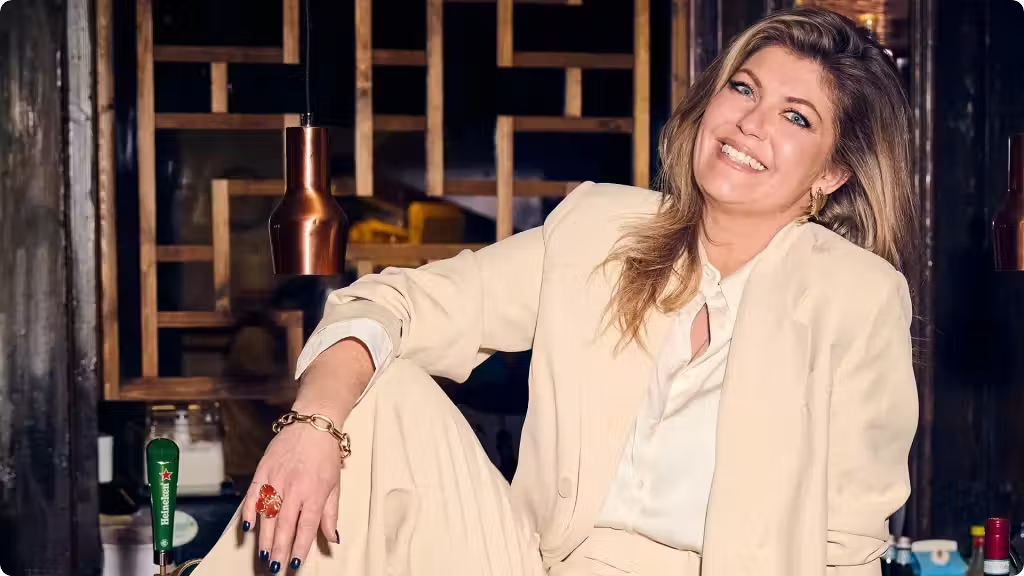
Pauline Wingelaar, a Dutch television presenter, influencer, entrepreneur, and author best known for her roles in the reality series *Echte Gooische Meisjes* and *Echte Gooische Moeders*, has released her debut book titled *Gooische Chaos*. The work offers a personal and humorous account of her life, exploring themes of motherhood, entrepreneurship, and the search for balance. [1]
Wingelaar opens the chapter dedicated to household dynamics by describing a strict division of labor with her partner, Harmen. In their daily routine, Harmen is responsible for preparing the lunchboxes for their sons in the morning, while Wingelaar handles the laundry and makes the beds. [1]
Despite the agreement, Wingelaar admits difficulty in delegating childcare tasks entirely. While she acknowledges that Harmen makes a genuine effort, often ensuring coffee is ready, she maintains that she would approach the details differently. Her preferences lean towards more varied meal options, such as leftover sausages or sushi, rather than standard bread with peanut butter. This reflects her tendency to manage the emotional and physical care aspect of parenting, finding it hard to fully relinquish control. [1]
Wingelaar contrasts her family's role distribution with that of their parents. Her mother managed most domestic duties regarding Wingelaar, while her father focused on his career. Conversely, Harmen’s mother ensured the children were clean and in pajamas so his wife could receive his attention after work. Harmen, however, wanted to break this pattern, recognizing that Wingelaar struggled to manage everything alone alongside her work commitments. [1]
Described as a 'very nice father,' Harmen is actively involved not just on weekdays but also on weekends when the boys attend hockey. However, Wingelaar notes he was a less effective father during the infant stage. She recalls an instance where a friend complained about sleep deprivation due to a baby who cried and needed night feeds. Harmen, unaware of the struggle, remarked that his own baby, Rein, slept through the night. Wingelaar had breastfed both sons, Rein and Died, obsessively and around the clock for six months, while Harmen remained largely uninvolved in the night shifts. [1]
Wingelaar explains that the feeding regimen was partly due to Rein’s refusal to drink unless a specific nipple cover was used, a tool that was not always accessible. After six months, she felt it was time to stop, especially as Died had started solids and she desired more independence. The timing coincided symbolically with Dies' birth on July 1st and the cessation of breastfeeding on January 1st, marking exactly half a year. [1]
Died, born prematurely, required the full half-year of breastfeeding. Wingelaar believes she could have continued longer given the benefits of breastfeeding, but she appreciated the symbolic closure. During this period, Harmen began changing diapers, an act Wingelaar captured in a photo because he appeared completely unfamiliar with the task. When asked to babysit, he used the term 'oppassen' (look after), indicating his perception of it as a special favor rather than a routine duty. [1]
Wingelaar shares an anecdote where a friend from Harmen’s past photographed him pushing the stroller through Naarden-Vesting, finding his appearance amusing. She notes that walking with a stroller made him act clownish, feeling somewhat like a 'rose water wimp' and out of his depth. Babies were not his strong suit initially, but he has since adapted well. To Wingelaar, his style was oddly appealing; she found traditional baby-wearing styles 'sweet' and appreciated Harmen’s straightforward approach. [1]
Wingelaar maintained primary responsibility for night feedings, choosing to handle them herself rather than alternating with Harmen. She found the process practical and efficient, avoiding the hassle of warming bottles or mixing powder. This arrangement suited both partners, allowing them to feel comfortable in their respective roles. While she assigned him tasks like heating bottles or helping during meals, the overall dynamic flowed naturally, validating their chosen division of labor. [1]
- Categories:
- Entertainment
- Entities: