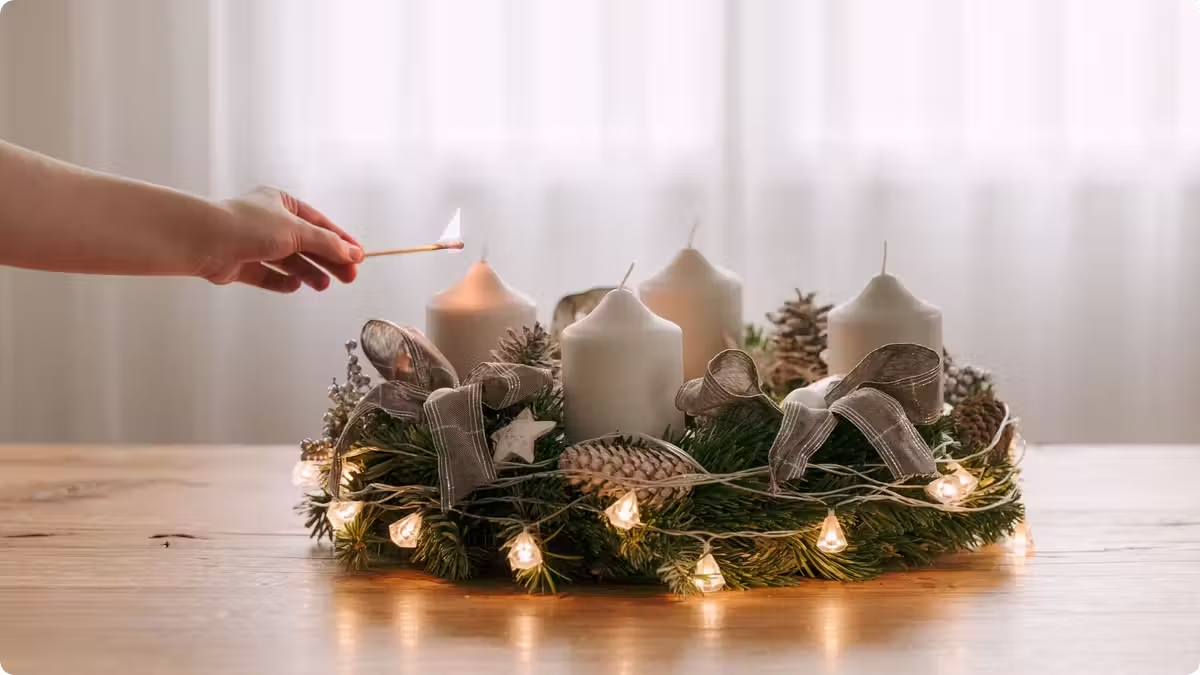
As the holiday season approaches, the traditional Advent wreath faces a stylistic evolution that mirrors broader shifts in home interior design. While the classic formula—a crown of pine greenery adorned with thick stub candles, colorful ribbons, and decorative baubles—remains a staple for many households, it increasingly clashes with the clean lines and uncluttered aesthetics of modern living spaces. The solution, according to recent trends emerging from Scandinavia, lies in adapting the Advent wreath to fit contemporary tastes through minimalism and refined elegance. This Nordic approach challenges the assumption that holiday decor must be dense and chaotic, proving instead that simplicity can create a sophisticated seasonal statement. [1]
At the heart of the Scandinavian aesthetic is the philosophy that 'less is more,' a principle that extends beyond daily life into the realm of Advent decorations. Instead of relying on abundant pine branches, glittering ornaments, and an array of colorful elements, Nordic designs prioritize clear forms and subtle details. This shift results in an Advent wreath that feels less like a rustic assembly of natural materials and more like a curated piece of contemporary art. The visual focus moves away from the bulk of the foliage and toward architectural clarity, allowing the decoration to serve as an elegant accent rather than a dominant focal point. [1]
One of the most striking differences between the traditional Germanic style of Advent wreaths and their Scandinavian counterparts is the choice of lighting. Traditional wreaths often feature thick, stubby pillar candles that sit heavily within the greenery, drawing the eye downward and emphasizing volume. In contrast, Nordic designs frequently utilize tall, slender taper candles. These elongated candles draw the viewer's gaze upward, creating a sense of height and airiness. The interplay of light and shadow becomes more dramatic, and the overall look is significantly more refined. This simple substitution transforms the wreath from a bulky centerpiece into a sleek, vertical element that complements modern furniture and open-plan living areas. [1]
The foundation of the wreath itself undergoes a similar transformation. While bound circular wreaths remain common in many regions, Scandinavian styles often discard the rigid circular form in favor of loose, organic arrangements placed within base bowls. These bowls serve a dual purpose: they are aesthetically pleasing and practically superior. Unlike flat plates or wreaths placed directly on table surfaces, which allow falling pine needles to scatter across the dining or living room floor, a bowl catches debris immediately. This practical benefit makes the bowl a preferred vessel for maintaining cleanliness while enjoying the beauty of natural greenery. The greenery itself is often left natural, loosely draped, and allowed to spill slightly over the edges of the bowl, enhancing the organic feel without appearing messy. [1]
Color palettes in Scandinavian Advent decor also diverge from the eclectic mix of reds, greens, and golds typical of traditional designs. Monochromatic schemes are favored, where the entire arrangement sticks to a single color family. This might mean using only green foliage and white candles, a strict palette of deep reds and burgundies, or variations of bordeaux tones. By limiting the color range, the design achieves a cohesive and calming effect. The absence of visual noise allows the textures of the wood, wax, and foliage to stand out, creating a rich sensory experience that relies on nuance rather than contrast. This approach aligns with the broader Scandinavian trend of hygge, where comfort is derived from simplicity, warmth, and tactile quality rather than abundance. [1]
For those who find the combination of delicate greenery and tall candles too austere, the Nordic style still offers room for creativity without compromising its minimalist integrity. The key is restraint. Instead of adding numerous decorative items, designers suggest incorporating just a few intentional details. A single narrow velvet ribbon, placed simply around the base or lightly tied, adds a touch of luxury without clutter. Individual pine cones can be selected for their unique shapes and placed strategically among the greens. Delicate twigs or bare branches may be included to add structural interest. These elements are not meant to hide the candle or the greenery but to complement them. The result is an ensemble that feels reduced yet fully realized, balancing modern elegance with seasonal warmth. [1]
- Categories:
- Entertainment