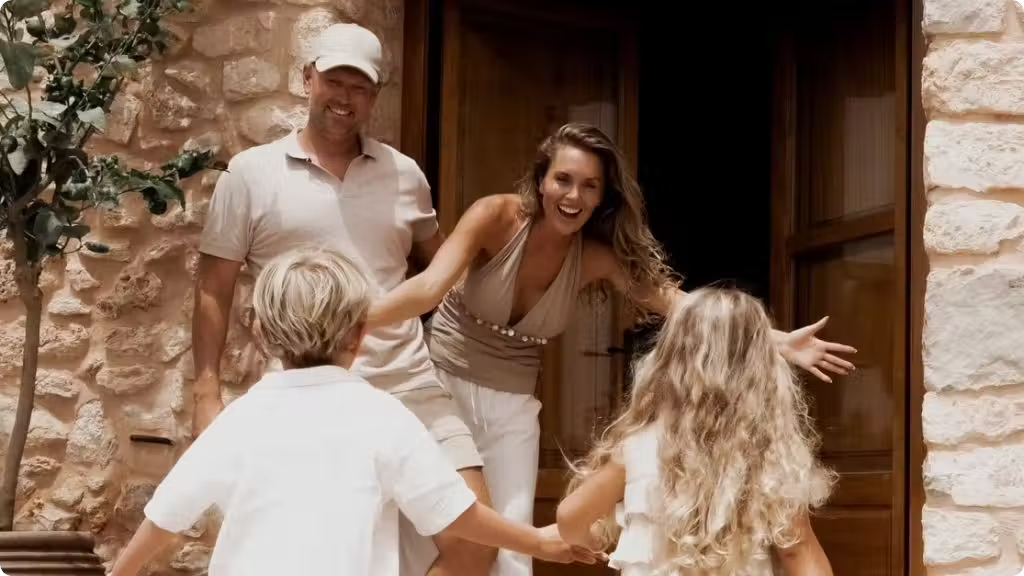
In the recurring feature 'Kind aan Huis', the Dutch publication LINDA.mini published a detailed analysis of how the pilot and founder of the brand MyRoyalKids, Julia Feenstra, manages the interiors and family dynamics alongside her two children, Flynt (6) and Filipa (5), in an unusual setting. The editorial journalism highlights the family's exclusive residence, a Spanish farmhouse located on the island of Ibiza, characterized by stone walls and high wooden ceilings, offering readers a glimpse into the lifestyle of the renowned pilot. [1]
Feenstra describes the home as a romantic and welcoming space that preserves the authenticity of traditional Spanish architecture with a 'slight modern twist'. Although the walls and basic structure remain intact, the couple replaced typical Spanish carpets with a seamless floor ('screed floor'), a decision made with the implication that her husband, an experienced interior designer, has exclusive control over the space's aesthetics. Due to the relatively compact size of the dwelling, efficient partitioning was adopted, with bedrooms arranged around common areas. The adjacent garage was transformed into a guest room and, simultaneously, into a play area for the children, where favorite toys include LEGO games and wooden trains from BRIO. Spaces are maintained through organizing toys in woven Spanish baskets, directly involving the little ones in the cleaning process. [1]
The daughter's small room follows a beige-white color palette intended to induce calm. The furniture includes a bed marked by the presence of a decorative tent with light-up balls from Lifetime Kidsrooms, pastel clothing items, and a decorative night lamp produced by Djeco. The workspace is provided by a vintage desk designed specifically for creative activities, highlighting the emphasis on comfort and intimacy. The children's library is rich, focusing especially on works by authors Rachel Bright and Jim Field, which convey life lessons through stories such as 'The Whale Who Wanted More' or 'Lars the Lonely Camel'. Functional details include a snail-shaped blue alarm clock produced by Alecto, which changes color to mark the beginning of the day and helps with learning time, integrating visual education into daily routine. [1]
Flynt benefits from a slightly more generous space, with chromatic accents similar to his sister's but differentiated by a double bed ('stapbed') from Lifetime Kidsrooms. The decor includes a string of beads in shades of beige and dark blue, fluffy rugs, and, like his sister, a vintage desk and integrated storage solutions. Objects in the room bear the imprint of family experiences and distinctive gifts. A memorable object for the child is a miniature antique vase displayed in a glass case, acquired together with his aunt from a craft market and paid for with his own money. Another remarkable emotional element is a memory made of plaster of the hands placed on a table for Father's Day, kept by the son due to the symbolic significance he attributes to it. [1]
A practical aspect of life on the island, namely the deficient logistics infrastructure, constitutes a major challenge in managing deliveries. Julia Feenstra admits that she sometimes feels like she is 'living in prehistory' because she lacks a valid physical address for correspondence. Package collection takes place weekly from a central distribution point, and goods ordered online are usually shipped to a Dutch address, with her husband personally picking up deliveries during his business trips. [1]
The editorial proposes a selection of products used and appreciated by the family, including Montessori pedagogical elements and educational toys such as magnetic blocks. Among the editorial suggestions are recommended literary titles, providing examples of stories that offer moral lessons for children. The magazine also indicates well-known brands in the category of decorative articles, mentioning decorative lights. [1]
- Categories:
- Entertainment
- Entities: