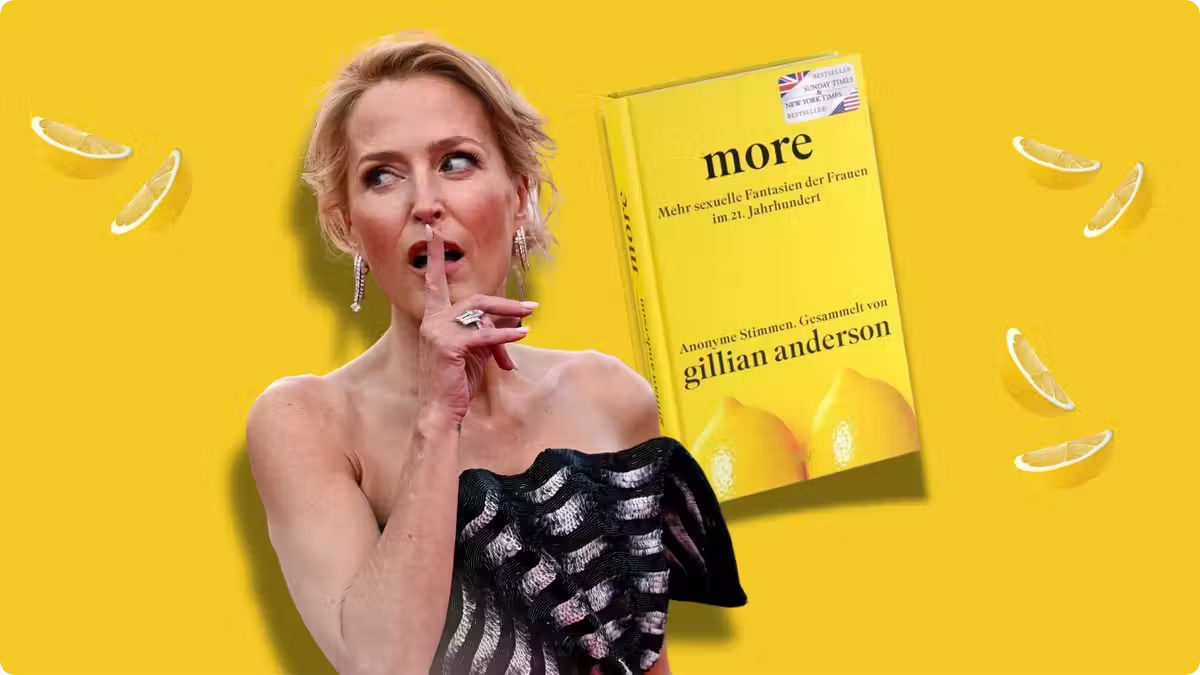
Gillian Anderson, the actress best known for her role as Agent Dana Scully in The X-Files, has released a new book titled More, continuing her exploration of female sexual fantasy begun in her previous bestseller Want. Drawing on anonymous letters from women across 50 countries, aged between 18 and 80, the book compiles secret erotic imaginings and analyzes the deeper emotional needs behind them. Anderson, who also plays sex therapist Jean Milburn in the Netflix series Sex Education, used the platform to challenge the silence surrounding female desire, noting that many fantasies serve as coded language for broader psychological needs rather than just physical acts. [1]
A significant shift is evident compared to the initial collection Want (2019). While early submissions often asked if having certain thoughts made them bad people, newer entries in More demonstrate greater confidence. Women are now questioning the why behind their desires, recognizing fantasies as tools for self-understanding. Psychological insights cited by Anderson, including from therapist Esther Perel, suggest that these imaginations often address unmet emotional needs—such as the desire to be seen without judgment, the relief from constant caregiving, or the pleasure of relinquishing control in a safe, imagined space. [1]
The book details five specific archetypes of fantasies drawn from the correspondence. These include a chef dreaming of intimacy in a restaurant kitchen, a woman imagining submission in a corporate boardroom where she paradoxically holds the narrative power, a married woman whose secret desire is her driver, a single woman attracted to intellectual non-alpha-masculine types, and a recurring fantasy of ex-partners returning to worship her without demand. These narratives highlight themes of being valued for one's entirety, breaking away from traditional performance anxieties, and finding pleasure in roles that defy standard societal expectations of female passivity or professional dominance. [1]
To contextualize these personal stories, Anderson references academic research by Canadian psychologist Christian Joyal, which surveyed 1,516 adults, including 799 women, regarding 55 distinct sexual fantasies. The study confirms that the vast majority of these imaginings are neither rare nor abnormal. Statistics indicate that between 28.9% and 64.6% of women experience fantasies of sexual domination, yet only about half wish to act them out. Furthermore, approximately one-third of women report fantasies involving other women, despite only 19% identifying as bisexual or homosexual. Shared universal elements include the desire for romantic atmosphere, emotional connection, and a specific, comforting setting. [1]
Anderson frames the book More as a call to action, urging women to claim their right to want and discover their desires without shame. She points to the systemic suppression of female sexuality, noting that up to 95% of online advertising related to female lust, motherhood, and well-being is blocked by algorithms on major platforms. This digital invisibility reinforces the idea that female desire is taboo. Through her promotional tour, which included interactive installations in cities like London, Anderson aims to normalize these conversations, emphasizing that sexual wishes are fundamental aspects of human identity, not frivolous distractions. [1]
- Categories:
- Entertainment
- Entities: