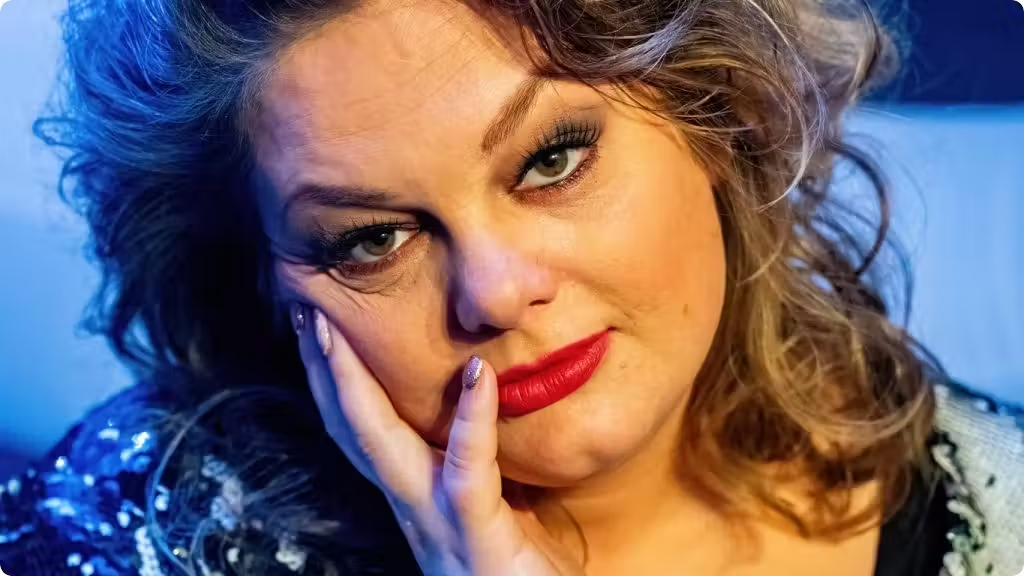
Fieke Opdam, a 38-year-old former nun and current cabaret artist, has released an autobiographical novel titled 'Non-actief' (Non-active), detailing her experiences of childhood abuse and her subsequent time within a Catholic convent. [1]
Although not raised Catholic, Opdam was drawn to the imagery of religious life after seeing the film *Sister Act* as a teenager. At 15, she undertook an internship with nuns, and following a difficult childhood marked by abuse and time in youth care, she entered the convent at 18. She became known as the youngest nun in the Netherlands, serving as a public figure for monastic life. [1]
The structure of her book was dictated by legal constraints; because the perpetrators of the abuse were protected by defamation laws and never convicted, Opdam could not name them or reveal all identifying details without risking legal action. She emphasizes that while the narrative remains her truth, the legal necessity to protect abusers creates a frustrating barrier for victims seeking full transparency. She aims to show both the beauty and the darker, complex realities of the Christian faith and monastic hierarchy. [1]
Opdam describes her childhood and early adulthood as confusing, rejecting the label of a 'loveless' upbringing. Instead, she explains that violence was inextricably linked to love, making it difficult for victims to leave abusive situations or seek help. This dynamic fostered deep self-blame, where victims convinced themselves the fault lay with them, creating negative self-perceptions that persisted into adulthood and made them vulnerable targets. [1]
During her seven years in the convent, Opdam initially found a sense of belonging and community among the sisters, who were often intelligent women trapped within an oppressive system. However, the strict regulations and hierarchical structure offered little protection against abuse. She recounts instances where she was told that abused girls were more susceptible to demonic temptation due to the loss of virginity, or that their faces automatically appeared flirtatious, reinforcing feelings of guilt and shame. [1]
The isolation of convent life prevented Opdam from verifying the validity of these harmful beliefs, as she had no access to the internet, newspapers, or television. She describes the environment as one where dissent was suppressed, and strict adherence to rules did not guarantee safety or fairness. When she attempted to speak out against sexual violence within the community at age 27, she faced no support and was eventually ostracized, leaving her homeless and without resources. [1]
Following her departure, Opdam turned to theater and cabaret, finding a space where she could reclaim agency over her narrative. Under the guidance of director Karin Bloemen, she learned to establish boundaries and reject coercion. The experience transformed her relationship with love, which she previously viewed as a precarious balance requiring constant performance to earn. Now, she finds stability in her professional success and personal happiness. [1]
While Opdam retains her personal belief in God, she has rejected organized religion, citing frequent systemic failures. The trauma of her formative years in the convent left lasting marks, and she uses her platform and writing to advocate for victims of sexual violence. She challenges the societal expectation that victims must provide exhaustive details to be believed, arguing instead that the responsibility lies with the perpetrators and the systems that enable them. [1]
- Categories:
- Entertainment
- Entities: