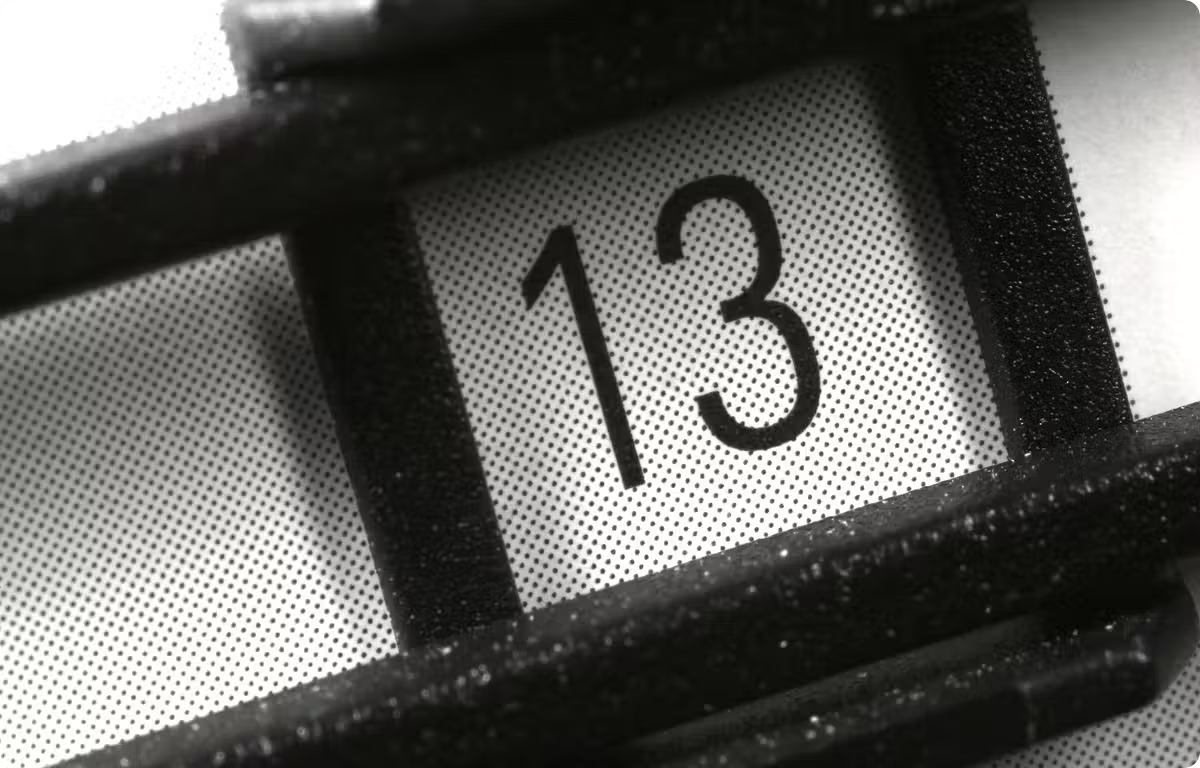
The superstition related to the number 13 goes beyond simple calendar-related fear, influencing practical decisions in various industrial and service sectors. In aviation, several airlines have removed the 13th row from their seating charts, jumping directly from row 12 to row 14. This practice is evident among carriers such as Air France and Lufthansa, according to seat maps published on Seatmap. However, there are exceptions: low-cost companies like Ryanair, EasyJet, and Transavia retain this number in their seating schemes. [1]
The decision to omit the number 13 is also found in the hotel and construction sectors. The Chateaubriand Hotel in Saint-Malo, France, does not assign rooms numbered 13, justifying the measure by the high likelihood that guests would reject such rooms or form a negative perception of their stay. In the United States, the tension involved in navigating this taboo has led elevator manufacturer Mowrey Elevators to adapt its products so that 85% of manufactured units do not feature a 13th floor, often displaying “12B” instead or jumping directly to 14. [1]
Cruise ships also adopt this precaution. The largest ships ever built, Icon of the Seas and Harmony of the Seas, do not have a deck numbered 13. The same measure was taken by ships such as the Costa Concordia, which although did not have a deck 13 among its 17 decks, ran aground on the seabed near the island of Giglio, Italy, on Friday, January 13, 2012, a tragic event that claimed 32 lives. [1]
Moreover, there are cultures where the number 13 is not associated with bad luck, such as the Provençal custom of preparing 13 desserts for Christmas. Although French lotteries offer increased jackpots on Friday the 13th, Italy associates bad luck with Friday the 17th. The number 17, written as XIII in Roman numerals, is an acronym of the word “Vixi” (“I have lived”), suggesting the end of life, as noted by Libération. [1]
- Categories:
- Entertainment
- Entities: