On November 23, 2026, the Italian wellness and lifestyle website Star Bene published a guide on creating a special Christmas atmosphere through the decoration of the traditional Christmas tree, emphasizing psychological comfort and aesthetic warmth. While the French publication Femme Actuelle focuses on the horticultural care of the poinsettia (Euphorbia pulcherrima), also known as the Christmas Star, Star Bene concentrates on the decoration techniques for fir and spruce trees, addressing both artificial and natural varieties to enhance home ambiance during the winter season. [1]
The guide begins by advising consumers to select a high-quality pine or fir tree, preferably one that appears as natural as possible. This recommendation applies to both live and artificial trees, with the underlying principle being that superior quality materials result in a more realistic and enduring decorative centerpiece. The selection process is framed not merely as a shopping task but as the foundational step in achieving a magical holiday aesthetic, with quality ensuring the tree’s structure supports complex decorations and maintains its shape over the festive period. [1]
A critical yet often overlooked element is the base of the tree. The source argues that leaving the trunk and root area exposed detracts from the overall illusion and visual completeness of the installation. To correct this, the article suggests covering the base with festive-themed fabric, constructing a custom paper cone to conceal the stand, or placing the tree in a wicker basket. Additional decorative touches, such as holly branches and pinecones, should be arranged around the feet to mask any plastic roots or mechanical stands, thereby integrating the tree seamlessly into the room’s décor and enhancing the sense of a natural forest floor indoors. [1]
Lighting is identified as the primary tool for transforming a tree from a simple plant or decoration into a warm, inviting focal point. The guide recommends using LED lights for their safety and economic efficiency, particularly noting the availability of warm-toned LEDs that replicate the glow of vintage incandescent bulbs. It advocates for avoiding the common spiral pattern of wiring, which can look uniform and artificial, and instead suggests wrapping strands around individual branches from the trunk outward and then back. This technique not only creates a more dynamic, organic distribution of light but also helps camouflage electrical cables within the foliage. For a medium-sized tree, approximately 300 light strands are suggested to ensure full coverage, including areas near walls where reflection can amplify the magical effect. [1]
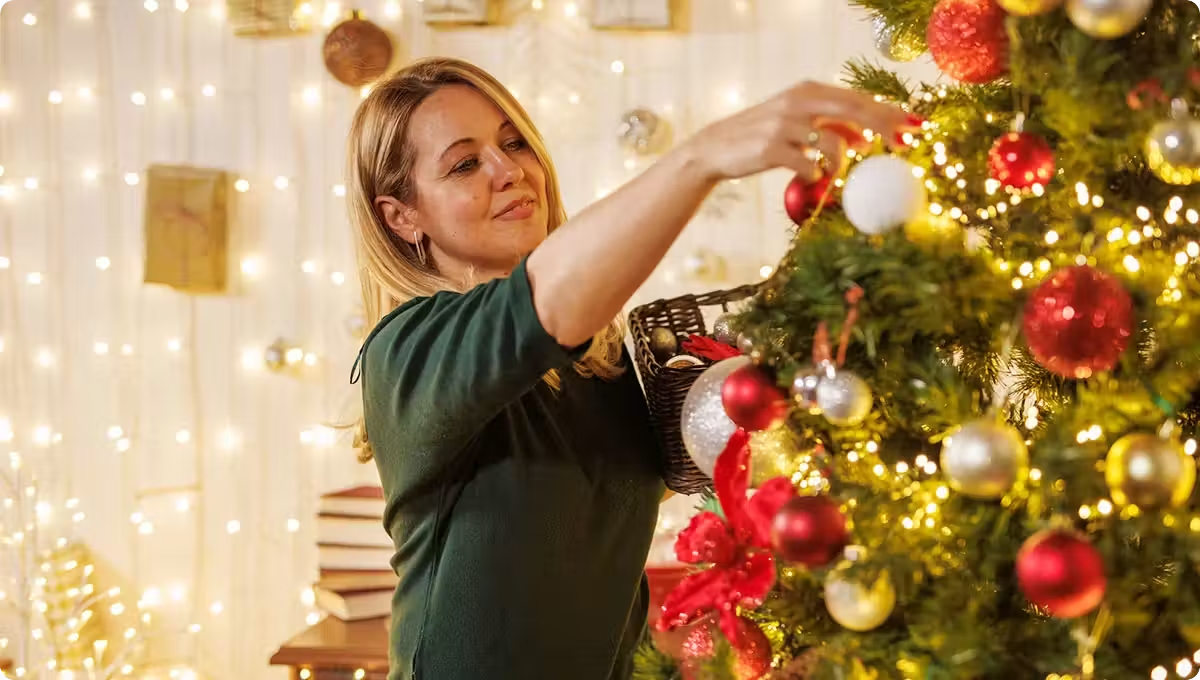
Regarding ornaments, the article challenges conventional sizing rules by encouraging the placement of large baubles higher up on the tree, provided there is a balancing heavy ornament at the base opposite side. This approach allows for greater flexibility in design and ensures the tree looks balanced from all angles. Small baubles are recommended for the lower sections, creating a gradient effect. The emphasis is on visual equilibrium and harmony rather than strict adherence to traditional top-heavy or bottom-heavy conventions. This method allows decorators to experiment with scale while maintaining a cohesive look. [1]
The tradition of illuminating trees is rooted in ancient Celtic and Viking celebrations of the winter solstice, intended to propitiate the return of the sun. Today, decorating the tree is described as a family ritual that transforms a simple fir into a triumph of light and color. It serves as a moment of joy and entertainment for children and a nostalgic journey into childhood for parents. According to psychologist Marco Pacori, elements such as lights, balls, and gold or silver threads evoke feelings of happiness and create an atmosphere where anyone entering the home feels welcomed and in a good mood. Exterior decorations, such as on doors and windows, are seen as signals of friendship and openness to neighbors and visitors. This psychological dimension underscores the tree’s role not just as a decoration but as an emotional anchor for the household during the holidays. [1]
Interior designer Licia Terzoli provides specific technical advice for maximizing the impact of artificial trees. She notes that size is less important than quality; even small trees can be effective if well-made. High-end artificial trees typically combine materials like nylon, polyethylene, and PVC to achieve a realistic texture. When setting up such a tree, branches should be shaped carefully: lower branches are bent downwards, while upper branches are pointed towards the ceiling, mimicking the natural growth pattern of real pines reaching for light. This attention to detail significantly enhances the tree’s authenticity and visual appeal. Terzoli’s expertise highlights the importance of treating decoration as a craft requiring patience and specific techniques, rather than a quick assembly task. [1]
For those seeking a warm and emotive aesthetic, the guide suggests exaggerating the use of glass baubles, which reflect light more intensely than plastic alternatives. These should be attached using thin metal wire rather than plastic hooks, which are more visible and less secure. This method not only ensures durability but also contributes to a finer, more elegant appearance. The choice between classic green, white-washed (blanched), or multicolored trees is left to personal taste, with the note that white-washed trees require fewer decorations to look complete. Mixing up to seven colors is acceptable if a recurring motif—such as a red ribbon, gold branch, or silver leaf—ties the palette together, ensuring the result is curated rather than chaotic. [1]
The overarching theme of the article is that Christmas decoration is a therapeutic and communal activity that bridges generations. By engaging in the meticulous process of shaping branches, arranging lights, and hanging ornaments, families create a shared memory space. The article distinguishes itself from plant-care guides by focusing entirely on the aesthetics and psychology of the Christmas tree as a symbol of hospitality and tradition. It serves as a comprehensive manual for homeowners in Italy who wish to elevate their holiday decor beyond basic assembly, offering professional-level tips on lighting, structure, and ornamentation to create a truly special and emotionally resonant holiday environment. [1]
Ultimately, the guide concludes that the effort invested in decorating the tree pays off in the atmosphere it creates. Whether through the strategic use of warm LEDs, the careful placement of reflective glass ornaments, or the concealment of mechanical parts, every detail contributes to the sense of magic. The article positions the Christmas tree not merely as a seasonal item to be discarded after January, but as a centerpiece of home identity during the holidays, worthy of thoughtful design and care. This perspective aligns with a broader trend in lifestyle media that emphasizes mindfulness and intentionality in holiday traditions, moving away from mass-produced shortcuts towards personalized, high-quality decorative experiences. [1]
Star Bene’s publication date of November 23, 2026, places this advice squarely in the pre-holiday preparation window. The timing reflects the urgency for readers to finalize their decorative plans before the peak of the shopping season. The article’s structure, moving from tree selection to base treatment, lighting, ornaments, and psychological context, offers a logical flow for decorators preparing their homes. It contrasts with the poinsettia care guide by addressing the larger, more permanent fixture of the holiday season, suggesting that a well-executed tree installation is the foundation upon which other decorations, such as garlands, mantels, and tables, are built. This holistic view of holiday prep highlights the interconnectedness of domestic spaces during the festive period. [1]
The distinction between this guide and the French poinsettia article is notable in both subject and scope. While Femme Actuelle targets the specific care of a living plant requiring water, light, and humidity management, Star Bene addresses the static art of tree decoration. However, both share a common goal: enhancing the home’s aesthetic during the holidays. The Italian guide’s emphasis on realism, quality materials, and psychological comfort complements the French guide’s focus on longevity and botanical health. Together, they represent two sides of the same coin: one preserving nature as a living decoration, the other celebrating human creativity through artificial enhancement. Both aim to bring warmth and joy to the home, recognizing that the holiday season is a time for nurturing both plants and familial bonds. [1]
In conclusion, the Star Bene guide provides actionable, detailed advice for achieving a professional-looking Christmas tree that balances tradition with modern convenience. From selecting the right tree material to mastering the art of light placement, each tip is designed to elevate the everyday into the extraordinary. The inclusion of psychological insights adds depth, reminding decorators that the true value of the tree lies in the emotions it evokes rather than its mere presence. For Italian households looking to create a memorable holiday atmosphere, this article serves as a valuable resource, offering clear steps to avoid common pitfalls and maximize the visual and emotional impact of their Christmas decor. [1]
The article also subtly addresses sustainability by recommending LED lights for their energy efficiency and durability, and by advocating for high-quality artificial trees that last multiple seasons. This aligns with growing consumer awareness of environmental impact, even within the realm of disposable-style holiday decor. By investing in better materials and more efficient technologies, decorators can reduce waste over time. This practical aspect of the guide resonates with contemporary values, making the traditional Christmas tree more aligned with modern, eco-conscious lifestyles without compromising on aesthetic ideals. [1]
Finally, the guide encourages experimentation and personalization. While it offers rules—such as the 300-light rule or the balance of large and small ornaments—it also explicitly states that personal preference should guide color choices. This flexibility empowers readers to adapt the advice to their own tastes and home styles, whether minimalist or maximalist. The article’s tone is encouraging and expert, aiming to boost reader confidence in their decorating abilities. By demystifying the process and providing clear, step-by-step instructions, Star Bene makes professional-grade holiday decoration accessible to the average homeowner, reinforcing the idea that a beautiful Christmas tree is achievable with a bit of knowledge and care. [1]
The publication’s focus on specific techniques, such as the non-spiral light wiring and the use of metal wire for ornaments, sets it apart from generic holiday blogs that offer only high-level tips. This level of detail suggests a readership that is seriously engaged in holiday preparation and seeks to avoid the common mistakes that make decorations look cheap or unfinished. The emphasis on 'realism' and 'natural effect' indicates a shift in trends towards subtler, more sophisticated decor, where the goal is to mimic nature as closely as possible, whether through high-end artificial materials or careful placement of lights and shadows. This trend reflects a broader cultural move towards quality over quantity in home decoration. [1]
In summary, the Star Bene article from November 23, 2026, offers a comprehensive, psychologically informed, and technically detailed guide to Christmas tree decoration in Italy. It complements but does not overlap with the French poinsettia care guide, addressing a different but equally important aspect of holiday home preparation. By focusing on the structural and aesthetic elements of the tree, it provides essential knowledge for creating a warm, inviting, and visually stunning centerpiece for the festive season. Its emphasis on quality, realism, and emotional resonance makes it a valuable resource for decorators seeking to elevate their holiday traditions. [1]
- Categories:
- Entertainment
- Entities: