The urban environment of Bucharest is facing a major crisis in the supply of heat and hot water, caused by the inability of heating plants to maintain production capacity or operate fully. The municipal operator Termoenergetica has informed the public that certain adverse situations will likely be remedied in the coming days. [1]
The current heating system relies on three units owned by the company ELCEN, private infrastructure, and a local supplier known as Casa Presei. Direct opposition comes from the two inactive facilities: CTE Bucharest West and CET Grivița. This dysfunction strongly affects the distribution network of many urban municipalities, as confirmed on Thursday by the Municipal Company Termoenergetica. [1]
The CTE Bucharest West facility, administered by the company ELCEN, requires an extended period of repairs. The main cause of the shutdown lies in two severe technical incidents, accompanied by fires, which occurred during the spring of this year. The scheduled date for the official reopening of this energy center is November 15, 2026, officially provided by the operating entity ELCEN. [1]
Starting in April, responsibility for supplying areas previously served by this plant passed to CTE Grozăvești and CET Energo. Unfortunately, CTE Grozăvești faces major difficulties in ensuring the necessary technical parameters for all areas in Districts 1, 5, and 6. The negative effects of this imbalance are predominantly felt in the Drumul Taberei and Militari neighborhoods. [1]
Another critical instance, represented by CET Grivița, has been blocked since the beginning of the current year, motivated especially by the insolvency circumstances of the entity administering it. Negotiations have been held with its representatives to evaluate the possibility of resuming operations. Restoring functionality would lead to a significant improvement in supply and reduce the additional burden placed on other functioning centers. [1]
To improve the supply in the Military and Drumul Taberei area, the possibility was analyzed to increase thermal energy production at CTE Progresu and transfer some consumers from District 5, who are currently supplied via CTE Grozăvești. [1]
Administrative Districts 2, 3, and 4 are facing specific problems related to the temperature of the heat carrier delivered by CTE Bucharest South. [1]
Although the flow rate and pressure levels are sufficient, the actual temperature of the heat carrier reaches only about 71 degrees Celsius, well below the 88 degrees Celsius required by the delivery order from Termoenergetica to ELCEN. Adopting this measure would contribute to reducing the existing burden on CTE Grozăvești. [1]
Major deficiencies also occur in areas within Districts 4 and 5, which receive services from CTE Progresu. The actual delivery capacity is approximately 100 gigacalories, while the total high demand is around 200 gigacalories. [1]
A technical defect affects eight heating points in District 4, serving blocks on Nițu Vasile Street, parts of Olteniței Boulevard, and along Cricovul Dulce Alley. [1]
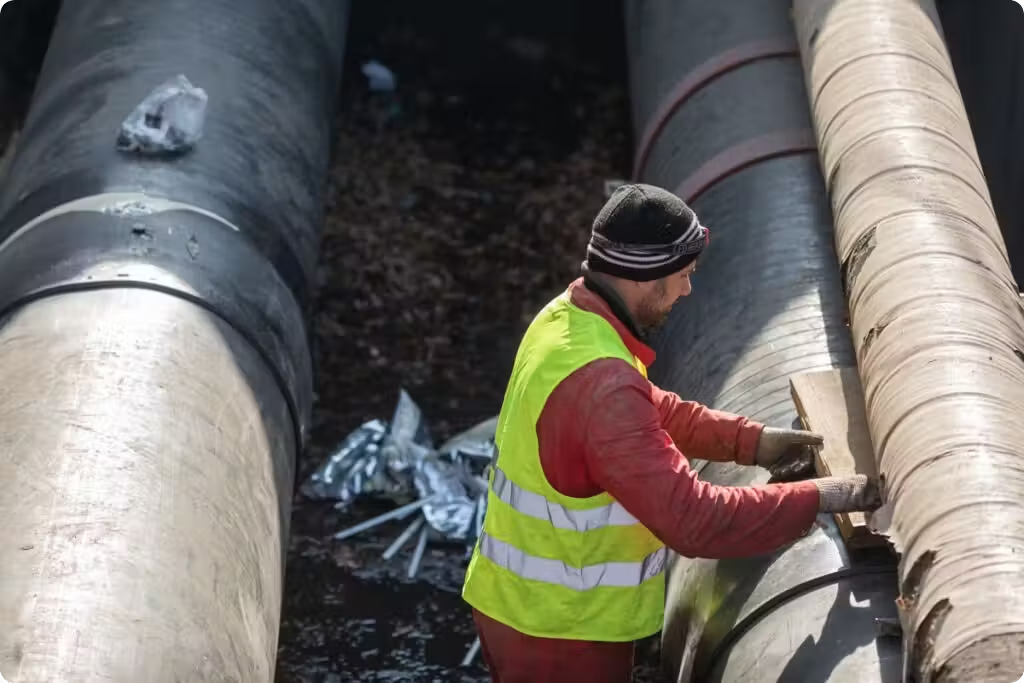
That region has experienced persistent operational problems in recent years and is part of a large-scale network modernization program, identified as Objective 21, Lot 4. Temporary pipes are planned to ensure continuity of supply during interventions. [1]
Intervention teams are already on alert. Termoenergetica's official estimate for the completion of works and the resumption of the normal heat flow is November 6, 2026. [1]
As the story develops
Update
Termoenergetica: Problems with heat and hot water supply in Bucharest
The Municipal Company Termoenergetica informs that the district heating system in Bucharest is affected by the shutdown of CTE Bucharest West and CET Grivița plants, and the supply problems of heat and hot water are felt in districts 1, 2, 3, 4, 5, and 6. [2]
Update
Termoenergetica: 70% of Bucharest without heat and hot water at normal parameters
The thermal energy system operates at only 70%, and hot water and heat are completely cut off in 51 areas of Bucharest. The thermal situation remains critical in the coming days, with no signs of rapid improvement. Breakdowns have affected all districts of the Capital, and the problem is far from over. The severity of the situation is amplified by the yellow rain and wind code, with temperatures continuously dropping. During this period, more than 2,300 apartment buildings in Bucharest have neither hot water nor heat at corresponding parameters. District 1 is among the least affected but feels the problems fully, with estimated repair periods until mid-month. [3]
Problems are reported in areas such as Aviației, Griviței Avenue, and Iancu de Hunedoara Boulevard. In the Aviației neighborhood, a secondary network breakdown affects the hot water supply for 32 apartment buildings on Căpitan Alexandru Șerbănescu, Avionului, Aviației, Aripilor, and Borșa streets, and on Pipera Boulevard. Outages are reported on Grigore Alexandrescu Street and Griviței Avenue. On Ion Câmpineanu Street, five buildings are affected by the suspension of natural gas supply at the Lutheran Thermal Power Plant. Estimated timeframes vary; some interventions are scheduled to end on November 5, while others have a deadline of mid-month. In District 2, residents of Pantelimon, Moșilor, Colentina, Tei, and Fundeni face interruptions or deficiencies. Problems concern Pantelimon Avenue, Moșilor Road, Mihai Bravu Boulevard, Chișinău Boulevard, and surrounding streets. In the Tei area, several apartment buildings on Maica Domnului, Oteșani, Deleni, and Grigore Ionescu streets are affected. Along with network breakdowns, Termoenergetica identifies insufficient temperatures of the heat carrier supplied by CTE Sud in the Colentina and Fundeni areas, affecting hot water preparation and heating. [3]
District 3 presents the most widespread thermal irregularities, in neighborhoods Vitan, Dristor, Baba Novac, Titan, and the Basarabia Boulevard area. Interruptions are on Vitan Road, Vlaicu Vodă, Brândușelor, Foișorului, and Theodor Pallady Boulevard. Apartment buildings on Unirii, Decebal, and Basarabia Boulevards are also affected, as well as Liviu Rebreanu, Câmpia Libertății, and Baba Novac streets. Some areas have complete supply cut off for repairs, while others receive heat carrier at low temperatures due to CTE Sud problems. Restart times reach up to November 6. [3]
In District 4, interruptions mainly affect Nițu Vasile, Berceni, Olteniței, and Alexandru Obregia areas. Problems are on Secuilor, Rezonanței, Sergent Nițu Vasile, Stoian Militaru, Laloșu, and Constantin Brâncoveanu Boulevard. Apartment buildings on Olteniței Avenue, Covasna, and alleys next to Alexandru Obregia Boulevard are targeted. Interventions include identifying and repairing network breakdowns. Termoenergetica estimates that work in the Nițu Vasile area may last until November 7. [3]
In District 5, problems are concentrated in Drumul Sării, Petre Ispirescu, and Mărgeanului areas. Apartment buildings on September 13 Road, Mihail Sebastian, Petre Ispirescu, Dumbrava Nouă, Cobadin, Mărgeanului, Bârca, and Bârnova are affected. Interruptions are caused by rehabilitation works (Lot 5). The estimated restart time is November 6, 8:00 PM. A secondary network breakdown affects two apartment buildings on Dr. Nicolae Turnescu Street, with intervention hindered by lack of access to private property. [3]
According to the CMTEB list, District 6 records the most areas lacking thermal energy. Problems involve Drumul Taberei, Militari, and Ghencea, on streets Drumul Taberei, Valea Argeșului, Râul Doamnei, Târgu Neamț, Brașov, Apusului, Mărgelelor, and Iuliu Maniu Boulevard. In the Drumul Taberei area, deficiencies at thermal points affect dozens of apartment buildings. Other interruptions are on Timișoara Boulevard, Prelungirea Ghencea, and adjacent streets. Irregularities are caused by primary and secondary network breakdowns and maintenance works. Timelines vary, with some works continuing after November 5. [3]
Problems persist after the start of the heating season (October 16). At the beginning of November, only 71% of owner associations received heat carrier at normal parameters, 29% having deficiencies. Causes include plant shutdowns. CTE Bucharest West, which serves District 6, was still shut down after spring breakdowns, and CTE Progresu entered the restart procedure. CTE Bucharest South did not supply at the requested temperature, and CTE Grozăvești did not adequately cover the need. Restarting plants and modernizing the network are essential for improvement. Termoenergetica confirmed that heat carrier supply began on October 16, after meeting external temperature conditions. “Currently, 71% of owner associations have hot water and heat at corresponding parameters, while the remaining 29% do not, due to the current situation of thermal energy production capacities.” [3]
The four ELCEN plants are: CTE Bucharest South, CTE Bucharest West, CTE Grozăvești, and CTE Progresu. CTE Bucharest West (District 6) is not operating, undergoing repairs after spring fires, with restart scheduled for November. CTE Progresu (Districts 4 and 5) is in the technical maneuvers phase for startup, coordinated with CMTEB. At CTE Bucharest South (Districts 2, 3, and partially 4), the carrier temperature did not meet the command note. Restarting CTE Progresu will redistribute thermal load, improving South parameters. At CTE Grozăvești (Districts 1, 5, and 6), the taken thermal and hydraulic load does not allow adequate supply. Operation of CTE Bucharest West and CTE Grivița is necessary to ensure parameters. Starting October 26, 2026, Termoenergetica carried out primary network reconstruction works in District 4, under the POIM project “Rehabilitation of the District Heating System of Bucharest Municipality.” Works were carried out on Constantin Brâncoveanu Boulevard, 700 mm primary pipe section, Lot 5, Objective 21. Affects Constantin Brâncoveanu Boulevard, Secuilor Street, Olteniței Avenue, Șerban Vodă Road, and adjacent areas. Intervention involved pipe restoration, connections, and replacement of an underground chamber. Temporary stoppage affected 17 thermal points, approximately 166 apartment buildings, during October 26–30, 2026. Dispatch centers and intervention teams work around the clock. Customers receive information via SMS at 031.9442 or by calling 0800.820.002, and the Termoalert app provides real-time details. [3]
Update
Bucharest thermal crisis: Thousands of apartment buildings remain without heat and hot water at parameters
Thousands of Bucharest residents face interruption of heat and hot water supply at corresponding parameters due to major breakdowns in the district heating system. The Capital’s power plants are operating at reduced capacity, leaving many neighborhoods without heat carrier, a situation characterized as being based on breakdowns and the insolvency of entities managing productive units. [4]
According to the Municipal Company Termoenergetica, the distribution system currently relies on three ELCEN plants, private infrastructure, and the Casa Presei neighborhood plant. Operations are however seriously compromised by the complete shutdown of two critical units: CTE Bucharest West and CET Grivița. This major dysfunction affects supply across the entire territory of the Capital. [4]
The impact of breakdowns and reduced production capacity is distributed asymmetrically in the city. District 1 is moderately affected, although it feels the tension taken over by other networks. The most affected areas are District 6 (Drumul Taberei, Militari, Ghencea), where supply is intermittent or stopped, and Districts 4 and 5, where network breakdowns overlap with insufficient local plant capacity. [4]
The main factor of the deficit is CTE Bucharest West, administered by ELCEN. The plant is shut down during this period for repairs, after two severe technical incidents, accompanied by fires, blocked production in the spring of 2026. The official reopening date, communicated by ELCEN, is November 15, 2026, a period delaying the return to long-term normalcy. [4]
Since April, the thermal load taken over by CTE Bucharest West has been redistributed to CTE Grozăvești and CET Energo. However, CTE Grozăvești cannot handle the necessary hydraulic and thermal pressure for Districts 1, 5, and 6. Deficiencies manifest critically in the Drumul Taberei and Militari neighborhoods, where apartment temperatures drop substantially. [4]
The second critical point is CET Grivița, blocked since spring due to the insolvency of the entity managing it. Negotiations with its representatives to resume activity are ongoing. Restarting this plant is considered essential not only for its coverage area but also for reducing the “burden” imposed on other centers already operating at full capacity. [4]
The only improvement measure currently analyzed for the Drumul Taberei and Militari areas is increasing thermal energy production at CTE Progresu. This step would involve taking over some consumers from District 5, who are currently supplied exclusively through CTE Grozăvești, offering a small relief to the system. [4]
Beyond interruptions, Districts 2, 3, and 4 face a specific problem related to the temperature of the heat carrier delivered by CTE Bucharest South. [4]
Although flow rate and network pressure are at nominal levels, the actual temperature of water from CTE South is approximately 71 degrees Celsius. This is well below the threshold imposed by Termoenergetica’s delivery order to ELCEN, which specifies 88 degrees Celsius. Low temperatures prevent adequate hot water preparation and efficient home heating. [4]
The short-term solution aimed at reducing the load on CTE Grozăvești, but with insufficiently supplied temperature from South, the impact on thermal comfort remains significant. [4]
Reduced capacity is also visible at the level of CTE Progresu, which serves areas in Districts 4 and 5. The plant is currently delivering approximately 100 gigacalories, half of the actual need estimated at 200 gigacalories, explaining major temperature deficiencies in these areas. [4]
A specific technical defect affects eight heating points in District 4. These serve apartment buildings on Nițu Vasile Street, parts of Olteniței Avenue, and along Cricovul Dulce Alley. [4]
This area has experienced persistent operational problems in recent years, which is why it is part of a large-scale network modernization program, known as Objective 21, Lot 4. To ensure service continuity during complex interventions, temporary pipes are planned and installed. [4]
Intervention teams are activated around the clock. Termoenergetica announced that the official estimate for completing network breakdown remediation works and resuming normal heat flow in the Nițu Vasile area is November 6, 2026. [4]
The Nițu Vasile area and surroundings are not isolated in its problems. It is part of a large-scale network modernization program, identified as Objective 21, Lot 4, where major pipe works are underway, and supply is temporarily ensured through temporary branches to avoid total thermal energy cuts. [4]
Placement of temporary pipes within Objective 21, Lot 4, is essential to maintain minimum supply continuity in District 4 during complex network interventions. [4]
The source of details for this synthesis article on the Bucharest thermal crisis is Mediafax, cited within the Profit.ro publication. [4]
- Categories:
- Energy
- Entities:
-
- București
- G4media.Ro
- Mediafax
- ELCEN
- Termoenergetica
- Militari
- Compania Municipală Termoenergetica
- Drumul Taberei
- Șoseaua Olteniței
- CET Grivița
- CTE Grozăvești
- CTE București Vest
- CTE București Sud
- CTE Progresu
- CET Energo
- Nițu Vasile
- Aleea Cricovul Dulce
- Obiectivul 21
- Casa Presei
- Calea Griviței
- Pantelimon
- Titan
- Fundeni
- Aviației
- Calea Vitan
- Șoseaua Mihai Bravu
- Bulevardul Chișinău
- Șoseaua Pipera
- Colentina
- Bulevardul Theodor Pallady
- Șoseaua Pantelimon
- Vitan
- Bulevardul Iancu De Hunedoara
- Tei
- Dristor
- Strada Ion Câmpineanu
- CTE Sud
- Centrala Termică Luterană
- Moșilor
- Baba Novac
- Strada Grigore Alexandrescu
- Sectorul 6
- Sectorul 4
- Sectorul 1
- Sectorul 2
- Sectorul 3
- Sectorul 5
Sources
- G4Media Bucureștiul are probleme cu furnizarea căldurii și a apei calde, pe fondul avariilor și al capacității reduse de producție a centralelor / Sunt afectate trei sectoare
- stirileprotv.ro Termoenergetica a publicat harta zonelor din București unde sunt probleme cu apa caldă și căldura. Ce cartiere sunt afectate
- Profit.ro Mii de blocuri din București îngheață. Nu au căldură, nici apă caldă la parametri corespunzători
- Jurnalul Rețeaua de căldură a Capitalei a cedat: Peste jumătate dintre bucureșteni, lăsați în frig și fără apă caldă