In response to escalating social tensions over the cost of living, French Labor Minister Jean-Pierre Farandou stated on November 8 that he will not propose any significant Smic (minimum wage) increase that could harm employment. The minister warned that raising the Smic to 1,700 euros net would destroy more than 230,000 jobs. He indicated that a discussion on the issue is scheduled for Monday at Matignon, where Prime Minister Sébastien Lecornu will convene employers and trade unions for a social conference. [1]
As the story develops
Update
France's Social Conference: Lecornu's Attempt to Quell Rising Anger
Prime Minister Sébastien Lecornu faces mounting social pressure less than six months before the presidential election, with protests continuing over rising fuel prices linked to the US-Iran conflict and sustained student activism. On Monday, Lecornu launched efforts to calm the situation by convening a social conference at Matignon with employers and trade unions, followed by meetings with student and high school representatives and a committee on Parcoursup reforms. While the Prime Minister has the authority to adjust the Smic, he lacks the power to raise other wages and refers them to social partners. His position is constrained by a lack of financial room maneuver and the need to balance employer concerns about employment with worker demands for increased purchasing power. Lecornu announced that the government heard both the 'expectations' regarding purchasing power and the 'worries' of employers concerning job losses. He promised 'concrete answers' which were to be presented to the press following the social conference. [2] [3]
Public sector unions were excluded from the main conference and scheduled to be received separately by Lecornu on Friday. The segmentation of responses between private/public sectors and students/salaried workers risks extending the social movement, warned UNSA secretary Laurent Escure. Michel Picon, president of the Union of Small Businesses (U2P), stated that his members would not accept a Smic increase unless the 'fiscal vice' on companies is relieved. The government explored several options: advancing the automatic Smic increase to December 1st and issuing an energy check gesture for low-income households. However, measures are unlikely to meet union demands for a €100-€150 raise. [3]
Labor Minister Jean-Pierre Farandou stated that while he wants the Smic to pass €1,500, he will not propose increases that 'damage employment'. In contrast, LFI coordinator Manuel Bompard dismissed any minor aid as a 'joke', noting inflation adjustments alone barely exceed €5. The French Labor Minister warned earlier that raising the Smic to €1,700 could destroy 230,000 jobs, reinforcing the constraints within which the conference is taking place. Ahead of the conference outcome, an inter-syndical coalition including student, high school, and teacher organizations called for further demonstrations on Tuesday. Without financial margins and less than six months before the presidential election, the government's ability to resolve deep social grievances remains limited despite efforts to engage various stakeholders. Economist Xavier Timbeau criticized the government's inability to respond effectively, stating they had spent years dismantling social dialogue and losing their parliamentary majority, leaving them ill-equipped for the current winter crisis. Timbeau added that the government can raise the Smic without bearing immediate consequences but risks compromising the broader budget if it attempts to raise civil service pay. The government aims for an around 2% Smic hike based on late-week negotiations, aiming for a figure close to €1,500. While far below union demands, the CFTC president noted this would still represent a tangible improvement. The government hopes the adjustment will exert a positive influence on professional sector negotiations, though some branch minima remain below the Smic level. Manuel Bompard reinforced the dissatisfaction, arguing that the focus should be on the number of people stuck at the minimum wage. Unions urge stopping public aids for companies whose theoretical minima fall below the Smic. Employer organizations maintain they cannot absorb simultaneous salary increases and tax relief reductions, pointing to complex 2026 social security laws that create unfavorable bases for lower-paid industries. Syndicates find the current regulatory application process too slow, creating delays in compliance and exacerbating tensions with both students protesting reforms and workers demanding wage justice. Social partners and the government agree the challenge extends beyond the nominal Smic level to the structural number of low-wage employees trapped at the bottom scale. Gabriel Attal highlighted that the primary issue is not just the level of the Smic but the percentage of French workers blocked at that level. Trade unions are demanding stricter conditions where businesses with sub-Smic minima would lose eligibility for public assistance, a move opposed by employers. Employers continue to reject cumulative wage and tax burden increases, citing the intricacies of the upcoming 2026 laws as a barrier to absorbing additional costs. Unions contend that the administrative timeline for regulating these industry-level adjustments leaves excessive room for delay, further eroding trust in the government's rapid response capabilities. As a result of the perceived slowness, activists remain committed to maintaining continuous protests and strikes as the sole lever for accelerating concessions. Following the failed dialogue between salaries and the government, the labor movement has resolved to escalate its demands until structural changes or drastic Smic increases are enacted. Xavier Timbeau, director of OFCE, argued the government lacks the economic capacity to satisfy all demands simultaneously. During intense weekend debates at Matignon, the government explored a modest increase of around 2%, or roughly €30 net per month. While well short of the €100-€150 union demands, the CFTC president deemed this a starting point for progress. [3] [4]
Update
Government Navigates Smic Hike Amid Fiscal Constraints and Union Demands
At the center of the social conference convened by Prime Minister Sébastien Lecornu at Matigon on November 9 was the contentious debate over the minimum wage, known as the Smic. Michel Picon, president of the Union of Small Businesses (U2P), issued a stark warning that his members would not accept an increase in the Smic if the 'fiscal vice' on companies was not simultaneously eased. The government is considering advancing the automatic Smic increase to December 1st, rather than waiting for the usual January 1st adjustment. This measure, aimed at providing immediate relief, marks the first such early increase since 2012. Despite the potential early adjustment, the magnitude of any increase is unlikely to satisfy union demands. The CFDT trade union is calling for a net raise of 100 euros, while the CGT is demanding approximately 150 euros. Labor Minister Jean-Pierre Farandou has expressed a desire for the net Smic to surpass 1,500 euros (currently 1,478 euros), but he firmly stated he will not propose increases that could harm employment. [5]
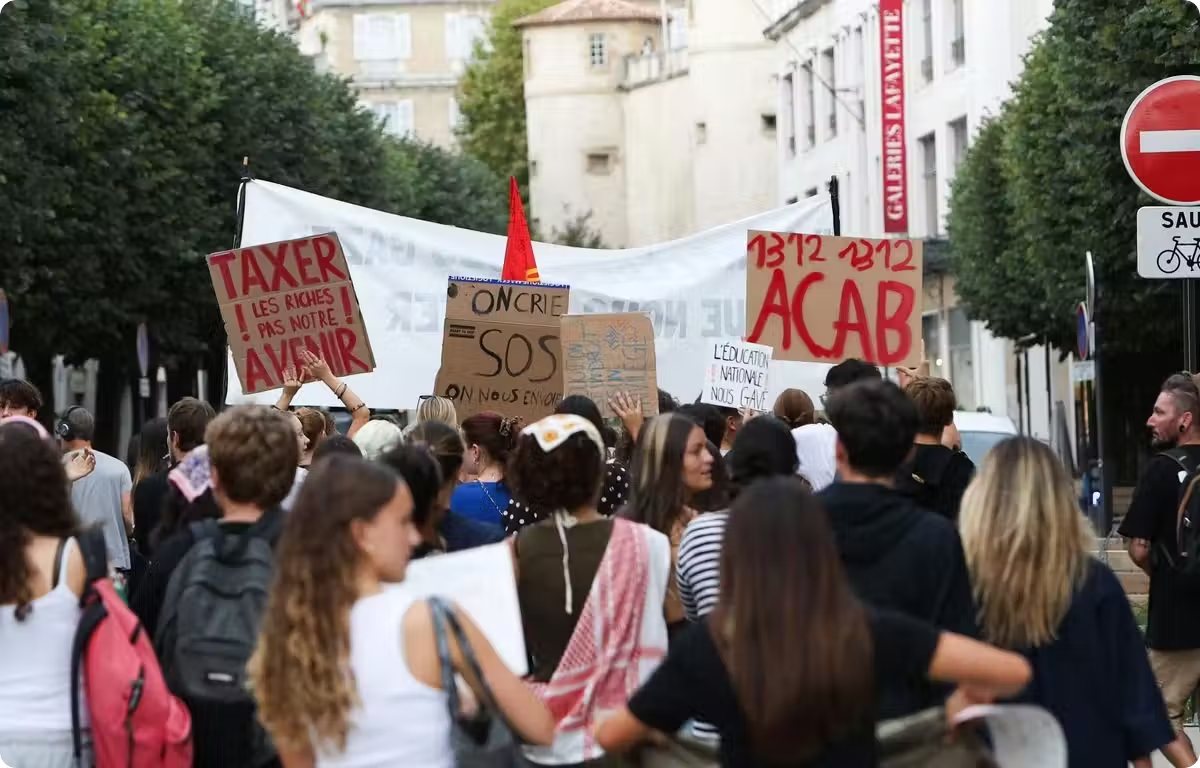
Social tensions remain high, with weekly demonstrations continuing since the start of the student movement in mid-September. The unrest escalated on October 17th with unprecedented incidents of violence and looting. An inter-syndical coalition, comprising student, high school, and teacher organizations, has already called for further demonstrations on Tuesday, ahead of the conclusion of the social conference. Following the social conference, Prime Minister Sébastien Lecornu plans to hold afternoon meetings with representatives of high school students and university students. These sessions will precede the first committee meeting dedicated to reforming the Parcoursup higher education orientation system, a key element of the students' grievances. [5]
The Purching Power issue is the primary subject of discussion at Matignon. While the Prime Minister has the authority to adjust the Smic, he lacks the power to mandate increases in other wages, referring those matters to social partners. Consequently, he is convening employers and trade unions in a formal social conference to negotiate these broader wage adjustments. In a letter sent to unions and employers on Friday, Sébastien Lecornu acknowledged he had heard both the 'expectations' regarding purchasing power and the 'worries' of employers concerning job losses. He has promised to present 'concrete answers' to the press following the outcomes of the conference. The 20 Minutes editorial team continues to monitor the social anger shaking France for several weeks, providing comprehensive coverage of the developing crisis. With less than six months remaining until the presidential election, Lecornu's margin of maneuver is extremely constrained. The government faces degraded public finances and a fragmented National Assembly, limiting its ability to resolve deep social grievances despite ongoing dialogue. [5]
Update
France: Government Approves 1,6% Minimum Wage Hike to 1,502 Euros Amid Social Unrest
The French government announced specific measures to address ongoing social unrest and rising cost-of-living pressures, culminating in a confirmed 1.6% increase to the minimum wage (Smic). Prime Minister Sébastien Lecornu detailed that the net monthly minimum wage will rise to 1,502 euros, effective December 1, marking the first time the Smic exceeds 1,500 euros. This adjustment comprises a mechanical 1% update to track inflation—typically applied in January but advanced here—and a discretionary 0.6% boost. Jean-Pierre Farandou, Minister for Labour, emphasized that this hike is intended to serve as a catalyst for sector-level negotiations. Companies operating under professional sector agreements where base wages fall below the new Smic threshold are expected to initiate talks immediately to align their conventions. To enforce this, the government will publish a decree later this week tying general employer tax exemptions to the maintenance of agreed-upon sectoral minima. Further reforms to these tax reliefs, which critics argue create traps for low-wage workers, are planned for early 2027. [6]
Beyond wage adjustments, the government prolonged the fuel bonus (prime carburant), allowing employers to provide tax-free payments of up to 1,000 euros to staff. This aid, initially raised from a 600-euro ceiling in September following price spikes driven by geopolitical tensions, will remain active into 2027. Additionally, officials indicated that the tax-free ceiling for overtime hours will be increased from 7,500 euros to 10,000 euros during upcoming parliamentary debates. The tax exemption covering 75% of public transport subscription fees, currently set to expire at the end of 2026, is also slated for extension. Furthermore, the CSG exemption for company value-sharing bonuses will be extended to firms with more than 50 employees. [6]
Transparency regarding corporate subsidies is another pillar of the announced package. By the end of the year, a new regulation will compel companies to disclose all public aid received to their Economic and Social Committees (CSE). Labour Minister Jean-Pierre Farandou stated that this measure aims to stimulate dialogue during mandatory annual negotiations (NAO). These diverse announcements came after Prime Minister Lecornu held consultations with employer and trade union organizations on Monday, attempting to quell widespread anger stemming from student protests, high fuel costs, and concerns over purchasing power ahead of the next presidential election. [6]
- Categories:
- Economy
- Entities:
Sources
- 20 Minutes Pour préserver l’emploi, le ministre du Travail refuse une « hausse excessive » du smic
- 20 Minutes Smic, Parcoursup… Lecornu au front pour tenter de calmer la colère sociale
- sudradio.fr Sébastien Lecornu face à la colère sociale et au Smic
- franceinfo.fr Conférence sociale du 9 novembre : des annonces décisives à la clé ?
- 20 Minutes EN DIRECT Colère sociale : Lecornu réunit syndicats et patronat à Matignon pour une conférence sociale…
- 20 Minutes Colère sociale : Smic, prime carburant, heures supplémentaires… L’essentiel des annonces du gouvernement