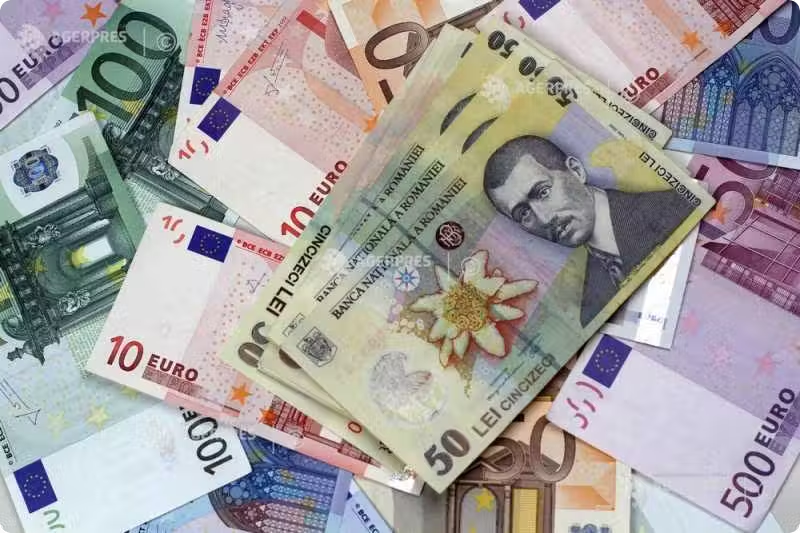
Romania received approximately 108.3 billion euros in non-repayable European funds during the period 2007-2025 and contributed about 35.9 billion euros to the European Union budget, resulting in a positive balance of over 72 billion euros. These data are part of an analysis conducted by Banca Transilvania (BT) on the occasion of nearly two decades of Romania's membership in the EU. [2]
According to the BT analysis, the benefit ratio is approximately three euros received for every one euro contributed by Romania to the community budget. These resources supported crucial investments in infrastructure, agriculture, businesses, and communities, contributing to the country's modernization. One of the most visible effects of integration is this very financial transfer mechanism, which supported economic growth. [2]
Regarding economic convergence, data presented by Banca Transilvania show that Romania's GDP per capita, adjusted for purchasing power parity, grew from approximately 44% of the European Union average at the time of accession to 78% in 2025. In nearly two decades, Romania thus recovered over 30 percentage points of the gap relative to the European average, although the pace of development was not uniform across periods and regions, and persistent disparities remain. [2]
The transformation of the Romanian economy was supported, among others, by entrepreneurs who invested, companies that developed services and created jobs, individuals who acquired new skills, and communities that leveraged EU opportunities. EU membership provided the framework for accelerating these transformations through access to a vast market, common rules, and predictability for long-term investments. [2]
Access by Romanian companies to the single market facilitated their entry into European production and supply chains, access to external customers, and technology transfer. In 2025, Romania exported goods worth approximately 96.6 billion euros, and over 71% of these were destined for EU member states. Thus, more than seven out of every ten euros generated by Romania's goods exports are directly linked to the community market. [2]
Omer Tetik, CEO of Banca Transilvania, commented on the analysis results: 'One of my best personal decisions was to have faith in Romania... My bet remains on Romania, but one that can play in a larger economic league: a more sophisticated economy, with more local capital, with entrepreneurs building regional companies, and with banks capable of supporting this ambition.' [2] [1]
Banca Transilvania emphasizes that the next stage of Romania's development, after nearly 20 years since accession, involves more Romanian capital, the development of regional companies, higher productivity, and high value-added investments. Romania will officially mark 20 years since its accession to the European Union on January 1, 2027. On this occasion, BT launches a series of ten public analyses on the evolution of the economy on its blog, section TheMacroZone. [2]
As the story develops
Update
Banca Transilvania: Romania has received over 108 billion euros in European funds (2007-2025), with GDP per capita reaching 78% of the EU average
Banca Transilvania publicly released an analysis highlighting the economic benefits of Romania's accession to the European Union. According to the presented data, Romania received approximately 108.3 billion euros in non-repayable European funds between 2007 and 2025, reporting a positive balance of over 72 billion euros against the contribution of approximately 35.9 billion euros to the community budget. [3]
- Categories:
- Economy
- Entities:
Sources
- AGERPRES România a primit peste 108 miliarde de euro din fonduri europene în perioada 2007 - 2025 (analiză)
- stirileprotv.ro România a primit peste 108 miliarde de euro de la UE, de la aderare. Bilanțul perioadei 2007–2025
- Forbes România România a primit peste 108 mld. de euro din fonduri europene în perioada 2007 – 2025