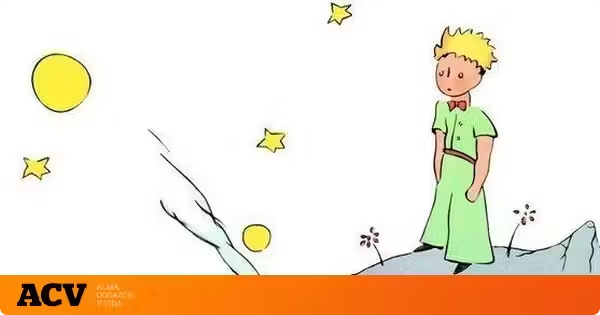
The dynamics of human affection have long served as a profound subject for literary reflection, psychological study, and philosophical debate. Among the myriad works that explore the intricacies of emotional bonds, Antoine de Saint-Exupéry’s 1943 masterpiece, 'The Little Prince' (Le Petit Prince), remains a cornerstone of global literature. While often categorized as a children’s book, its allegorical narrative delves deeply into themes of loneliness, friendship, loss, and, most significantly, the nature of love. A recent analytical piece published by El Confidencial, titled 'El Principito sobre cómo aprender a amar: 'El primer amor se ama con mayor intensidad; los amores posteriores se aman aún mejor'', draws upon the enduring wisdom of this work to examine the evolution of romantic attachment from first love to mature partnership. [1]
The central premise of the analysis revolves around a frequently attributed sentiment, often linked to the legacy of 'The Little Prince', which posits that 'the first love is loved with greater intensity; subsequent loves are loved even better'. It is crucial to note, as highlighted by the source, that this specific phrasing does not appear literally in Saint-Exupéry’s original text. However, the sentiment it conveys aligns closely with the profound lessons embedded within the narrative. The story of the young prince who leaves his asteroid, travels across various planets, and ultimately encounters a fox on Earth serves as an extended metaphor for the process of learning how to love and be loved. [1]
The analysis begins by addressing the unique character of first love. Psychological and anecdotal evidence suggests that initial romantic experiences are often marked by a heightened sense of intensity, novelty, and uncertainty. For many individuals, the first profound emotional connection is experienced without the buffer of past heartbreaks or the cynicism of experience. The discovery of another person, the vulnerability involved in opening up, and the sheer novelty of the emotion contribute to a memory that feels indelible. This intensity is not necessarily indicative of the relationship’s long-term health or durability, but rather reflects the raw power of uninhibited emotion. The 'Little Prince' resonates with this phase through his immediate, albeit flawed, attachment to his rose. To him, she is the most important flower in the universe, a status derived not from her objective superiority over other flowers, but from the time he has invested in her. [1]
However, as the article elucidates, feeling something with greater intensity does not automatically equate to building a healthier, more sustainable relationship. The initial rush of passion can sometimes obscure incompatibilities or prevent the establishment of necessary boundaries. It is here that the concept of 'learning to love better' becomes pivotal. The source argues that subsequent relationships benefit from the accumulated wisdom of previous ones. Disappointments, breakups, and the subsequent periods of reflection serve as crucibles for emotional growth. Through these experiences, individuals learn essential skills such as listening deeply, respecting limits, and understanding the nuanced needs of their partners. This shift marks a transition from loving based on impulse and projection to loving based on knowledge and commitment. [1]
The pivotal moment in 'The Little Prince' that illustrates this maturation is the prince’s meeting with the fox. The fox, a wise and patient creature, teaches the prince the concept of 'taming' (apprivoiser). Taming, in this context, means creating ties. It is an active process that requires time, patience, and ritual. The fox explains that until the prince tames him, they will be like any other boy and fox in the world. But once they are connected, they become unique to each other. This lesson dismantles the illusion that love is merely about finding a perfect partner. Instead, it emphasizes that value is created through shared effort, responsibility, and care. The prince realizes that his rose is special not because she is inherently so, but because she is the one he has watered, shielded, and listened to. [1]
The analogy extends directly to the comparison between first love and later loves. The first love, represented by the initial encounter with the rose, is characterized by awe and intense curiosity. It is often inexperienced and potentially naive. The later loves, informed by the fox’s teachings, are characterized by a deeper understanding of what sustains a bond. They are 'loved better' not because the emotions are weaker, but because the foundation is stronger. The maturity lies in the acceptance of the partner’s flaws, the willingness to work through conflicts, and the recognition that love is a verb—a continuous act of creation rather than a static state of being. This perspective suggests that the capacity to love does not diminish with age; rather, it transforms. It evolves from a passive experience of overwhelming emotion to an active practice of conscious choice and dedication. [1]
Furthermore, the article touches upon the societal and personal pressures associated with romantic success. In a culture that often glorifies the 'perfect' first love story, there can be a tendency to mourn lost potential or regret past failures. The reference to 'The Little Prince' offers a counter-narrative. It suggests that every relationship, whether short-lived or lifelong, contributes to the individual’s emotional repertoire. The pain of rupture is real, but so is the growth it engenders. By viewing previous relationships not as failures but as necessary steps in learning how to 'tame' and be tamed, individuals can approach future connections with greater confidence and clarity. The love that follows is not a lesser imitation of the first, but a richer, more nuanced expression of the same fundamental human need for connection. [1]
The enduring relevance of 'The Little Prince' lies in its universal accessibility. Published more than eight decades ago, its insights into the human condition remain strikingly contemporary. The quote, though apocryphal, captures the zeitgeist of modern relationship psychology, which increasingly emphasizes emotional intelligence, communication, and self-awareness in romantic partnerships. The analysis by El Confidencial serves as a reminder that while the spark of first love is unforgettable, it is the sustained flame of mature love that warms the home. It is a call to value patience, respect, and commitment above initial intensity. [1]
In conclusion, the exploration of 'The Little Prince’ perspective on love offers a comforting and empowering framework for understanding romantic evolution. It validates the intense, often chaotic nature of first love while championing the quieter, more deliberate strength of later attachments. By integrating the lessons of the fox and the responsibilities shown to the rose, individuals can navigate their emotional lives with greater wisdom. The ultimate message is one of hope: the ability to love is renewable. Each new chapter in one’s romantic life offers an opportunity to love more skillfully, more responsibly, and perhaps, more deeply than before. As Saint-Exupéry’s tale continues to inspire readers worldwide, its core truth persists: what makes us responsible is that we are 'tamed' by those we love, and it is through that mutual responsibility that we find our true significance. [1]
- Categories:
- Culture