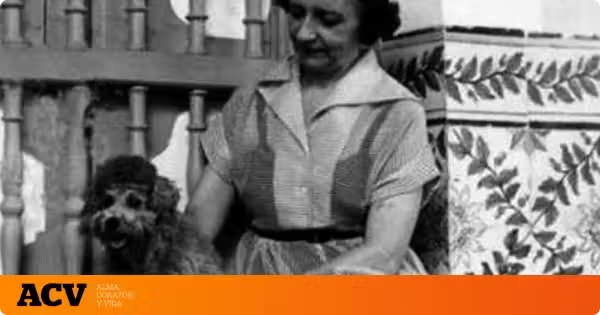
Spanish philosopher and writer María Zambrano, associated with the Generation of '27', explored the intersection of chance, personal effort, and decision-making in the context of human opportunity. Her thought suggests that while luck is often linked to uncontrollable circumstances, personal decisions and effort significantly influence the opportunities individuals encounter. [1]
Zambrano's reflections emphasize that favorable circumstances alone are often insufficient to achieve personal or professional goals. She argued that talent and preparation develop essential capabilities, while perseverance allows for overcoming obstacles. Furthermore, the conscious decision to recognize and seize an opportunity plays a critical role in outcomes, although external factors beyond individual will continue to exist. [1]
Throughout her career, Zambrano focused on themes of liberty, responsibility, and the construction of personal identity. In seminal works such as 'Persona y democracia' and 'El hombre y lo divino', she investigated the relationship between the individual and their environment, placing high importance on human experience and self-knowledge as tools for navigating difficulties and making informed decisions. [1]
Born in Vélez-Málaga, Spain, in 1904, Zambrano studied Philosophy in Madrid under the tutelage of José Ortega y Gasset. Following the Spanish Civil War, she began a prolonged exile that spanned several countries, including Mexico, Cuba, Italy, and Switzerland, where she continued to develop her intellectual framework and publish major works. [1]
During her exile, Zambrano formulated a philosophical proposal known as 'poetic reason' (razón poética), which sought to integrate philosophy, poetry, and personal experience. After decades abroad, she returned permanently to Spain in 1984, a period when her work gained increasing recognition within academic and cultural institutions. [1]
Zambrano's contributions to humanities were recognized with the Prince of Asturias Award for Communication and Humanities in 1981 and the Miguel de Cervantes Prize in 1988, making her the first woman to receive the latter. She passed away in Madrid in 1991, leaving behind an extensive philosophical and literary legacy that continues to prompt reflection on how personal effort interacts with the circumstances of life. [1]
- Categories:
- Culture
- Entities: