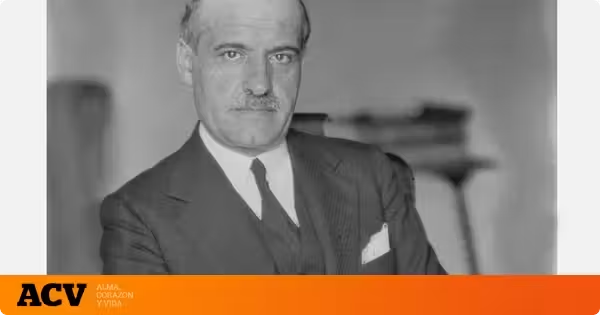
José Ortega y Gasset, one of the most influential Spanish philosophers of the 20th century, reflected on the nature of happiness, asserting that true satisfaction involves finding a purpose that gives meaning to one's decisions rather than simply enjoying small pleasures, achieving material goals, or maintaining a comfortable life. He emphasized the necessity of living with depth and cautioned against limiting existence to immediate gratifications El Confidencial. [1]
Using a gastronomic metaphor, Ortega y Gasset stated: “Happy people are those who are not satisfied with living with appetizers and side dishes, but who want to know the main course.” In this context, the 'main course' represents the essential elements of existence. This reflection serves as an invitation to distinguish between daily distractions and the experiences that provide genuine meaning to a person's life El Confidencial. [1]
A core tenet of this perspective is that the accumulation of pleasant experiences does not necessarily guarantee lasting personal satisfaction. While entertainment, social recognition, and material comforts can provide a sense of well-being, they often fail to address deeper existential concerns. Consequently, achieving happiness requires the identification of specific goals and the determination of which aspects of existence are truly important El Confidencial. [1]
This exploration of the meaning of life was a recurring theme in Ortega y Gasset's philosophy. In his 1914 work 'Meditaciones del Quijote', he developed one of his most renowned assertions: “I am I and my circumstance, and if I do not save it, I do not save myself.” With this statement, the philosopher highlighted the intrinsic relationship between the individual and the environment in which they exist El Confidencial. [1]
Born in Madrid, Spain, in 1883, José Ortega y Gasset became a cornerstone of contemporary Spanish thought. His most prominent works include 'España invertebrada', 'La rebelión de las masas', and '¿Qué es filosofía?'. Throughout his career, he addressed issues concerning society, culture, and the human condition, placing significant importance on individual responsibility and the necessity of constructing a personal life project El Confidencial. [1]
More than seven decades after his death in 1955, Ortega y Gasset's reflections continue to prompt questioning regarding the role of priorities in the pursuit of happiness. His thinking encourages a critique of lives centered exclusively on obligations and fleeting satisfactions. He taught that while enjoying small moments is important, it is equally vital to discover and dedicate time and attention to that which provides ultimate meaning to existence El Confidencial. [1]
- Categories:
- Culture
- Entities: