A recent article by El Confidencial explores the psychological evolution of romantic attachment, drawing parallels between modern relationship dynamics and the allegorical wisdom found in Antoine de Saint-Exupéry’s classic novel, 'The Little Prince' (Le Petit Prince). While the novel is widely recognized as a children’s book, its narrative serves as a profound meditation on loneliness, friendship, loss, and, most significantly, the nature of love itself. The analysis examines how individuals transition from the raw, uninhibited passion of first experiences to the nuanced, committed partnerships formed later in life. [1]
Central to this exploration is a sentiment often attributed to the legacy of 'The Little Prince': 'the first love is loved with greater intensity; subsequent loves are loved even better.' Crucially, the source notes that this exact phrasing does not appear in Saint-Exupéry’s original 1943 text. However, the underlying philosophy aligns seamlessly with the novel’s narrative arc. The story of a young prince who traverses various asteroids and eventually encounters a fox on Earth functions as an extended metaphor for the process of learning to love and be loved, offering insights that resonate deeply with contemporary psychological understanding. [1]
The analysis posits that first love is characterized by a unique intensity driven by novelty, vulnerability, and the absence of past heartbreak. For many, this initial emotional connection is experienced without the protective buffers of cynicism or prior experience, creating an indelible memory. The article draws a parallel to the prince’s immediate attachment to his rose; to him, she is the most important flower not due to objective superiority, but because of the time and care he has invested in her. This phase represents the raw power of uninhibited emotion, marking a period of awe and curiosity rather than established stability. [1]
However, high intensity does not automatically correlate with relationship health or longevity. The initial rush of passion can sometimes obscure incompatibilities or hinder the establishment of necessary boundaries. The source argues that subsequent relationships benefit from the accumulated wisdom of previous experiences. Disappointments, breakups, and periods of reflection act as crucibles for emotional growth, teaching individuals essential skills such as deep listening, respecting limits, and understanding complex partner needs. This marks a shift from loving based on impulse and projection to loving based on knowledge and conscious commitment. [1]
A pivotal moment illustrating this maturation is the prince’s meeting with the fox, who introduces the concept of 'taming' (apprivoiser). The fox defines taming as creating ties, an active process requiring time, patience, and ritual. Until the prince tames him, they remain identical to any other boy and fox; once connected, they become unique to each other. This lesson dismantles the illusion that love is about finding a perfect partner, emphasizing instead that value is created through shared effort, responsibility, and care. The prince realizes his rose is special because he has watered and protected her, not because of inherent qualities. [1]
The analogy extends to compare first love with later loves. The first love, akin to the initial encounter with the rose, is defined by inexperienced awe. Later loves, informed by the fox’s teachings, are characterized by a deeper understanding of what sustains a bond. They are 'loved better' not because emotions are weaker, but because the foundation is stronger. This maturity involves accepting a partner’s flaws, working through conflicts, and recognizing love as a continuous act of creation—a verb—rather than a static state. The capacity to love thus transforms, evolving from a passive experience of overwhelming emotion to an active practice of choice and dedication. [1]
The article also addresses societal pressures surrounding romantic success. In a culture that glorifies the 'perfect' first love story, individuals may mourn lost potential or regret past failures. 'The Little Prince' offers a counter-narrative, suggesting that every relationship contributes to an individual’s emotional repertoire. The pain of rupture is real, but so is the growth it engenders. By viewing previous relationships not as failures but as necessary steps in learning to 'tame' and be tamed, individuals can approach future connections with greater confidence. The love that follows is a richer, more nuanced expression of the human need for connection, rather than a lesser imitation. [1]
The enduring relevance of 'The Little Prince' lies in its universal accessibility and its insight into the human condition, published over eight decades ago yet remaining strikingly contemporary. Although the specific quote on love intensity is apocryphal, it captures the zeitgeist of modern relationship psychology, which increasingly emphasizes emotional intelligence, communication, and self-awareness. The analysis serves as a reminder that while the spark of first love is unforgettable, it is the sustained flame of mature love that provides lasting warmth, calling for a valuation of patience, respect, and commitment over initial intensity. [1]
Ultimately, the exploration of 'The Little Prince’s' perspective on love offers a comforting framework for understanding romantic evolution. It validates the intense, often chaotic nature of first love while championing the quieter, more deliberate strength of later attachments. By integrating the lessons of the fox and the responsibilities shown to the rose, individuals can navigate their emotional lives with wisdom. The core message is one of hope: the ability to love is renewable. Each new chapter offers an opportunity to love more skillfully and deeply, anchored by the truth that we find our significance through the mutual responsibility of being 'tamed' by those we love. [1]
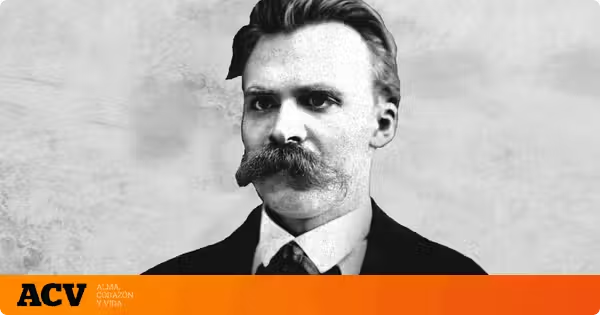
While 'The Little Prince' frames love through the lens of taming and responsibility, German philosopher Friedrich Nietzsche explored a different dimension of romance: the intersection of love and insanity. In his seminal work 'Thus Spoke Zarathustra', written between 1883 and 1885, Nietzsche addressed the contradiction between reason and emotion in his section 'On Reading and Writing'. He proposed a famous reflection: 'In love there is always some madness, but in madness there is always some reason.' This statement challenges the view that romantic attachment implies a loss of rationality, suggesting instead that love involves experiencing emotions that escape conventional logical frameworks. [1]
Nietzsche’s philosophy defends the idea that seemingly irrational behaviors in love may conceal deep motives not immediately understood. For Nietzsche, falling in love did not mean renouncing rational thought, but rather making space for instincts and emotions. His broader philosophical stance questioned moral norms that sought to control human impulses, arguing that love represents a force capable of transforming one’s perception of reality. In the same chapter of 'Thus Spoke Zarathustra', he linked love directly to the desire to live, assigning it a fundamental role in human existence. [1]
This interpretation connects with Nietzsche’s other works, such as 'The Gay Science' and 'Beyond Good and Evil', where he challenged the predominance of rationality over feelings. Consequently, 'amorous madness' should not be understood as a loss of control, but as an expression of emotional intensity. It invites reflection on why individuals, when in love, do not always act in the most logical manner. Unlike the structured, patient 'taming' described in Saint-Exupéry’s allegory, Nietzsche’s perspective highlights the inherent unpredictability and chaotic energy that can accompany deep romantic attachment, validating the irrational aspects of human connection as a source of profound reasoning and vitality. [1]
- Categories:
- Culture