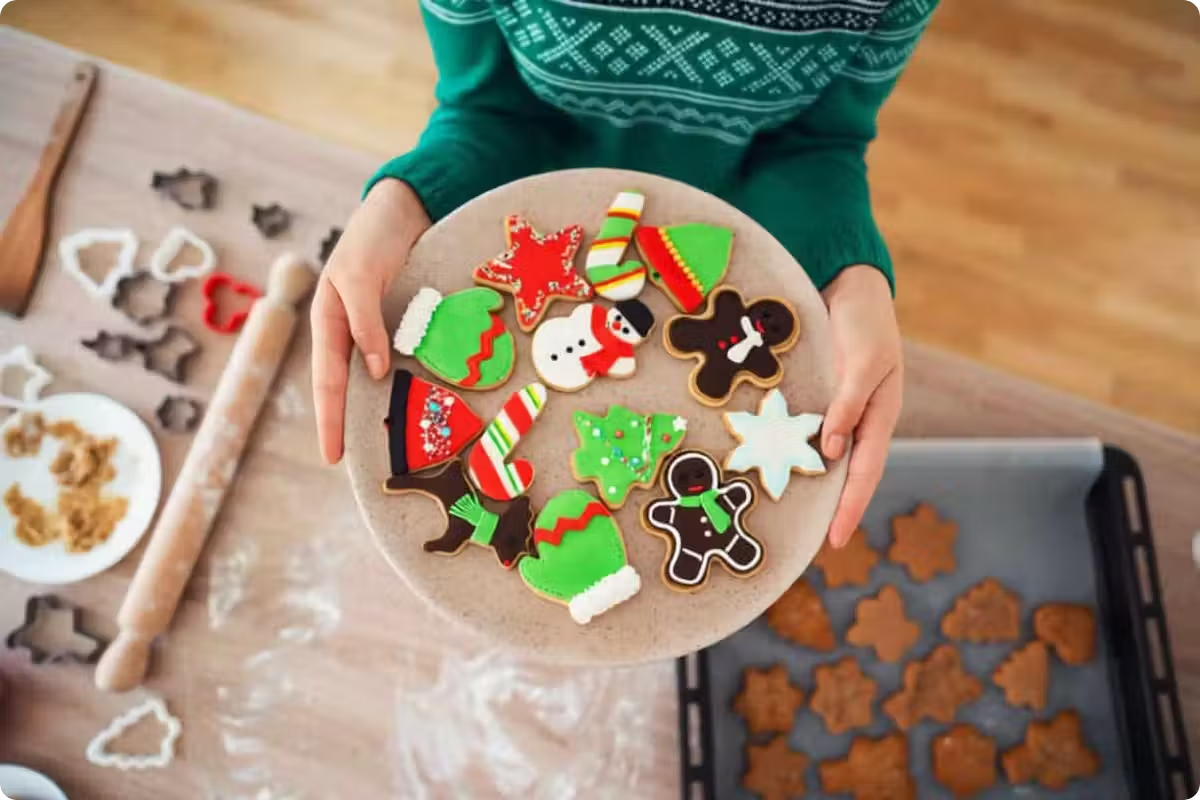
A Christmas cookie exchange serves as a festive social gathering where friends and family share homemade treats. The tradition involves each participant baking a single variety of cookie and bringing a large batch to a party to swap with other guests, allowing everyone to enjoy a diverse assortment of sweets without the burden of baking numerous different recipes themselves. The core mechanic of the exchange is based on reciprocity: one person provides a large quantity of one type of cookie, and in return, they receive a few of every other variety brought by the attendees. [1]
When selecting recipes for such events, the priority is finding options that can be produced in large batches, possess a strong flavor profile, and maintain visual appeal on a holiday platter. Ideal choices include drop cookies, shortbread, and cut-out cookies, as these typically hold their shape well during transport and remain fresh for several days. [1]
A curated list of 15 festive and easy-to-make Christmas cookie exchange recipes provides a foundation for sharing, with each offering specific ingredient lists, preparation steps, and storage guidelines. Planning is essential, as certain cookies require final assembly or decoration on the day of the exchange to ensure maximum freshness and presentation. For precise baking, it is recommended to weigh all-purpose flour at 120 grams per cup. The most accurate method for measuring by volume is to spoon the flour into the measuring cup and level it off rather than scooping directly from the bag. [1]
Among the recommended recipes are Christmas pinwheel cookies, which feature a visually striking spiral pattern created by rolling together red, green, and plain vanilla doughs. The process for pinwheel cookies involves beating butter and sugar until light and fluffy for approximately two minutes, incorporating an egg and vanilla, and finally mixing in the flour mixture until a cohesive dough forms. The dough is then split into three equal parts: one remains plain, while red and green food colorings are kneaded into the other two portions. Each colored portion is rolled between parchment paper into an 8 x 10 inch rectangle and chilled for 20 minutes to improve handling. The stacked rectangles are rolled tightly from one long side into a log, wrapped in plastic, and refrigerated for at least two hours until firm. After preheating the oven to 350°F (175°C), the chilled log is sliced into 1/4-inch rounds and placed on parchment-lined baking sheets. To streamline the party morning, the dough for these pinwheels can be kept in the refrigerator for up to two days. [1]
Chocolate crinkle cookies offer a distinct 'snowy' aesthetic; these fudgy treats are rolled in powdered sugar before baking, causing the tops to crack and reveal a white coating reminiscent of freshly fallen snow. Their preparation starts by combining oil, melted chocolate, and granulated sugar, followed by adding eggs one by one and stirring in vanilla. Dry ingredients—flour, baking powder, and salt—are whisked separately before being stirred into the chocolate mixture to form a soft dough. The dough balls are baked at 350°F (175°C) for 10 to 12 minutes, ensuring the centers remain soft while the tops crack. A generous application of powdered sugar is key to achieving the desired finish. Once cooled, they should be stored in airtight containers to maintain softness. [1]
Stained-glass cookies provide a vibrant look, featuring colorful melted candy centers. Using snowflake, star, or Christmas tree cutters enhances their festive appearance. The base consists of a standard butter and sugar creamed mixture combined with egg, vanilla, and a blend of flour, baking powder, and salt. Dough is rolled to 1/4 inch thickness, cut into shapes, and then smaller cutters are used to create the center holes for the candy. Because melted candy can be sticky, using silicone baking mats or parchment paper is highly recommended. These cookies are best consumed within a few days to avoid the candy centers becoming tacky in humid conditions. [1]
White Chocolate Cranberry Pistachio Cookies are another festive option, utilizing a natural red, green, and white palette. These buttery cookies combine white chocolate chips with the tartness of dried cranberries and the crunch of chopped pistachios. The method involves creaming butter with both types of sugar, adding eggs sequentially, and stirring in vanilla. Flour is mixed in, followed by folding in the chips, cranberries, and pistachios. The dough then requires a 30-minute refrigeration period. They are baked at 350°F (175°C) as rounded tablespoon scoops spaced 2 inches apart. Due to the presence of pistachios, it is critical to label these cookies clearly to alert guests with nut allergies. [1]
Jam sandwich cookies feature a layer of strawberry or raspberry jam between two buttery biscuits. A small cutout in the top cookie allows the red filling to be visible, finished with a dusting of powdered sugar. This specific recipe is designed to yield approximately 20 sandwich cookies. The dough is prepared by beating butter and sugar until fluffy, adding egg and vanilla, and mixing in flour and salt. The dough is rolled to 1/8 inch thickness. A 2-inch round cutter is used for the base, while a smaller star or heart cutter creates the window for half the cookies. Baking occurs at 350°F (175°C) for 8 to 10 minutes until edges are pale golden. Assembly involves dusting the cutout cookies with powdered sugar and spreading roughly 1/2 teaspoon of jam on the whole cookies before sandwiching them. To prevent the jam from softening the cookies excessively, it is advised to bake the components ahead of time but perform the final assembly on the morning of the exchange. [1]
Chocolate Peppermint cookies combine rich chocolate dough with white chocolate and crushed candy canes for a festive finish. The recipe calls for creaming butter and sugars, adding eggs, vanilla, and peppermint extract, then mixing in dry ingredients and 1/2 cup of white chocolate chips. The dough is chilled for 30 minutes. These are baked for 10 to 11 minutes and cooled briefly on the sheet before moving to a wire rack. Finishing touches include drizzling melted white chocolate (melted in 30-second microwave intervals) over the cooled cookies and immediately sprinkling with crushed candy canes. Once set, the cookies should be stored in airtight containers with parchment paper separating the layers to avoid sticking. [1]
Classic Gingerbread cookies can be enhanced with simple royal icing decorations in shapes like snowflakes, stars, or gingerbread people. The dough consists of butter, brown sugar, molasses, egg, and a flour mixture. They are rolled to 1/4 inch thickness and cut into festive shapes. Baking takes 8 to 10 minutes at 350°F (175°C) until the edges are set. The royal icing is made by beating powdered sugar, meringue powder, and water for 3 minutes, adjusting the water until the consistency is pipeable. Decorated cookies must dry for several hours. It is recommended to let the icing dry overnight to prevent smudging during packing. [1]
Raspberry Thumbprint cookies feature soft, buttery bases with centers filled with bright red raspberry jam. The dough uses butter, sugar, egg yolks, and vanilla, mixed with flour and salt, then chilled for 30 minutes. A deep well is pressed into each ball using a thumb or a 1/2-teaspoon measuring spoon. Baking lasts 12 to 14 minutes until edges are lightly golden. Using a thick jam and avoiding overfilling prevents the filling from bubbling over during the baking process. [1]
Ricotta Glazed Cookies are soft and cake-like, topped with a vanilla glaze and colorful sprinkles. The ingredients include butter, sugar, ricotta, eggs, vanilla, lemon zest, and flour, resulting in a sticky dough that must be chilled for 30 minutes. They are baked for 12 to 14 minutes until bottoms are golden and tops are set. The glaze—a mixture of powdered sugar, milk, and vanilla—is applied by dipping or spooning, with sprinkles added immediately. Because of the ricotta content, these cookies should be stored in the refrigerator if not served within 48 hours. [1]
Cranberry Orange Shortbread incorporates dried cranberries and fresh orange zest, finished with a white chocolate drizzle. The batter is made by creaming butter, powdered sugar, orange zest, and vanilla, then adding flour, salt, and chopped cranberries. The dough is shaped into two 2-inch wide logs and refrigerated for at least 2 hours. They are baked at 325°F (165°C) as 1/3-inch rounds. Shortbread's sturdy nature makes it an excellent choice for transport to parties. [1]
Red Velvet White Chocolate cookies provide a vivid red color contrasted with embedded white chocolate chips. Butter and sugars are creamed with eggs, vanilla, and red food coloring before mixing in flour and folding in white chocolate chips. Baking takes 10 to 12 minutes; they are cooled for 5 minutes on the sheet before transferring to a rack. Using red gel coloring instead of liquid prevents adding excess moisture to the dough while ensuring a deeper hue. [1]
Spritz cookies are buttery treats pressed into shapes like wreaths and trees using a dedicated cookie press, often accented with red and green sprinkles. The dough contains butter, sugar, egg, vanilla, and almond extract, mixed with flour and salt. Portions can be tinted red or green. Crucially, spritz cookies must be pressed onto cool, ungreased baking sheets without parchment, as the dough needs to adhere to the surface to release from the press. The dough should remain at room temperature for easier pressing, and sheets must be completely cool between batches. [1]
Coconut Macaroons offer a chewy alternative, dipped in dark chocolate and finished with white chocolate or sprinkles. The method involves folding stiffly beaten egg whites into a coconut mixture. The bottom half is dipped in dark chocolate, then topped with a white chocolate drizzle or sprinkles. Since they contain no wheat flour, they are a suitable option for those avoiding wheat, though ingredients should be checked for certified gluten-free status. [1]
Peanut Butter Blossom cookies are rolled in sugar and topped with a chocolate kiss while warm. The recipe blends butter, peanut butter, and sugars with egg, milk, vanilla, and flour. 1-inch balls are coated in granulated sugar and spaced 2 inches apart on the pan. Immediately upon removal from the oven, a chocolate kiss is pressed into the center of each cookie. Unwrapping the chocolates beforehand ensures they can be added quickly. These must be clearly labeled as containing peanuts. [1]
Chocolate Almond Biscotti are twice-baked for a signature crisp texture, making them ideal for dipping in hot beverages. The thick dough uses creamed butter and sugar, eggs, vanilla, almond extract, flour, and chopped almonds. The dough is shaped by hand into two 10-inch long logs. Initial baking is 25 to 30 minutes; then the oven is reduced to 325°F (165°C). The logs are sliced and baked again—10 minutes cut-side up and 8 to 10 minutes after flipping—until dry and crisp. Biscotti are highly durable, keeping for about two weeks in airtight containers. They must be labeled as containing almonds. [1]
Selecting the optimal cookie for an exchange requires balancing aesthetics, flavor, and portability. The goal is to find treats that look professional and do not disintegrate during transit. Structural integrity is key; shortbread, gingerbread, and chocolate crinkle cookies are preferred over overly soft or sticky varieties. Efficiency is improved by choosing recipes that produce at least two to three dozen cookies per batch. Fragile toppings like loose sprinkles or soft frostings should be avoided as they smudge easily during transport. Longevity is important; biscotti, shortbread, and gingerbread are reliable because they stay fresh for several days. Choosing recipes that allow for advance dough preparation or freezing minimizes stress during the busy holiday season. A balanced contribution includes variety in flavor (chocolate, fruit, spice), color, and texture (soft, chewy, crisp, crunchy). [1]
Packaging focuses on presenting homemade treats beautifully using affordable materials. Creativity and simple tools can transform basic packaging into festive gifts. Common accessories include ribbons and personalized tags. Clear cellophane bags are effective for individual cookies or small stacks, tied with red, green, or gold ribbons. Brown kraft bakery boxes offer a rustic feel and are particularly useful for transporting multiple varieties when lined with parchment paper. Reusable Christmas-themed tins are best for larger quantities, using parchment layers to keep cookies separated. Cardboard treat boxes with window lids are ideal for showcasing decorated sugar cookies. Glass jars provide a sophisticated display, either filled with a single variety or layered with different types, finished with a ribbon and label. Paper trays wrapped in clear cellophane allow for a neat, organized presentation of rows of cookies. Cookies must be completely cool before packaging to prevent moisture buildup and softening. Soft cookies should be separated from crisp ones using parchment paper. [1]
Ultimately, the most successful exchange cookies are those that balance ease of production with taste and visual appeal. Participating in these exchanges provides a way to build a collection of new favorite recipes while sharing homemade joy. [1]
Essentially, a cookie exchange is a collaborative holiday event centered on the swapping of homemade baked goods. The system removes the need for one person to bake everything, distributing the effort across the entire group. Beyond the food, these gatherings serve as opportunities for social connection and recipe sharing. The logistics of these events generally follow a standardized pattern. Typical operational steps for an exchange include selection, delivery, and collection. The host typically determines the required quantity, often enough for each guest to take a half-dozen to a dozen of each variety, plus extra for sampling. At the party, cookies are arranged on tables with accompanying labels and copies of the recipes. Guests circulate around the table, selecting samples from each batch to fill their own personal containers. The result is a curated box of assorted homemade treats and a library of new recipes. [1]
Strategic selection of what to bring can make a significant difference in the overall quality of the exchange. Highly recommended varieties include Linzer cookies, gingerbread, shortbread, pinwheels, and white chocolate cranberry cookies due to their portability and appeal. Diversifying the platter by bringing something different—such as fruity thumbprint cookies when others bring chocolate—is encouraged. [1]
Quantities vary depending on the specific host's rules and the guest list size. Requirements can range from a simple dozen to enough for every guest to have a small selection. Coordinating with the host prior to baking prevents producing too much or too little. [1]
Timeline management is a key part of holiday baking. Most cookies remain fresh for two to three days when stored in airtight containers at room temperature. Durable cookies like shortbread and gingerbread last longer. Perishable fillings like custard or cream cheese require strict adherence to refrigeration instructions. Frosted or delicate cookies should be baked as close to the event as possible to maintain the integrity of the decorations. [1]
Freezing is a highly effective strategy for managing early baking. Sugar cookies, gingerbread, shortbread, and chocolate crinkles all freeze exceptionally well. Baked cookies should be completely cooled, separated by parchment, and stored in freezer-safe bags with labels including the date and name. Thawing should occur at room temperature within the container to minimize condensation. For decorated cookies, freezing before icing is the preferred method. Alternatively, raw dough can be frozen and baked just before the exchange. [1]
Guests may choose to contribute items beyond the required cookies to enhance the gathering. While cookies are the primary focus, extra contributions are often appreciated by the host. Suggested additions include festive drinks like sparkling cider or hot chocolate, a small gift for the host, or extra packaging materials. Offering help with snacks or supplies ensures the host is supported without unnecessary duplication of items. [1]
- Categories:
- Culture