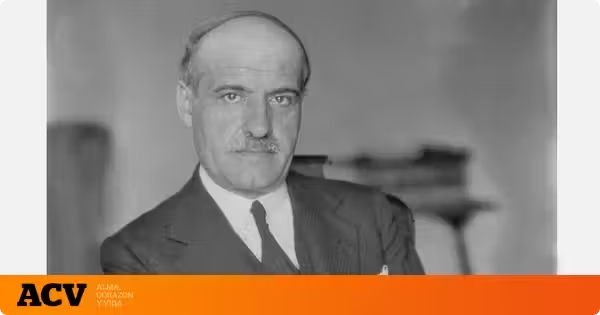
In a series of articles published in El Confidencial on 16 November 2026, the editorial team also highlights how Ortega y Gasset’s contemporaries framed similar questions about self-knowledge. Carl Gustav Jung is quoted as saying: “What irritates us in others can help us understand ourselves,” illustrating the era’s broader interest in linking personal insight to the inner examination of one’s own motivations. The same collection places Friedrich Nietzsche’s maxim in conversation with Ortega’s outlook, noting: “He who has a ‘why’ for living can bear almost any ‘how’,” a sentiment that echoes Ortega’s insistence on purpose-driven existence and the need to project oneself toward a meaningful future. The new article presents Ortega y Gasset as a thinker who urged viewing life not as a simple tally of lived experience but as a forward-moving path shaped by unexpected encounters with the future. According to the piece, living is not accumulating experiences but projecting oneself toward what one wishes to become, a line that resonates strongly today. From his earliest works, Ortega argued that philosophy should go beyond abstract analysis and embrace action, circumstance and decision. He explains this through the well-known formula “I am I and my circumstance,” which underpins his view that the past does not fully determine identity and that we are defined above all by the direction we are heading. The phrase about “collisions with the future” is situated in an interwar European context marked by social and political upheaval during the 1920s and 1930s. Modernity, mass expansion and a crisis of tradition risked turning people into passive observers of their own existence, prompting Ortega to stress personal responsibility for destiny and the need to confront the unexpected, make choices and accept consequences. For Ortega, “collisions with the future” describe not inevitable obstacles but a vital impulse that compels action. The future does not arrive passively; it constantly presses us with the necessity to choose and decide what to do in each instant. Life, in his view, is not a comfortable drift but a continual shock that pushes us forward. His claim that life “is not the sum of what we have been” rejects deterministic views that define people solely by successes, errors or memories. The past functions as baggage but does not absolutely define us. If it did, humans would be like stones—objects that exist without transformation. Instead, people build identity day by day, projecting toward a future that has yet to materialize. That projection is what keeps us alive for Ortega. Present being is more determined by wishes and projects than by yesterday’s events. Humans are “futurition”: beings in constant becoming, driven by the desire to realize what they imagine. This reframes existence as choosing what to become rather than repeating what has already been. The ideas retain particular relevance in a fast-moving society facing continuous change. Against paralysis produced by the past, Ortega invites focus on the present and future goals. In professional life, his philosophy proves especially useful. As jobs and roles disappear or transform because of technology and artificial intelligence, identity cannot rest only on what has been studied or done before. What defines a person is willingness to learn and to project oneself forward. [1]
- Categories:
- Culture