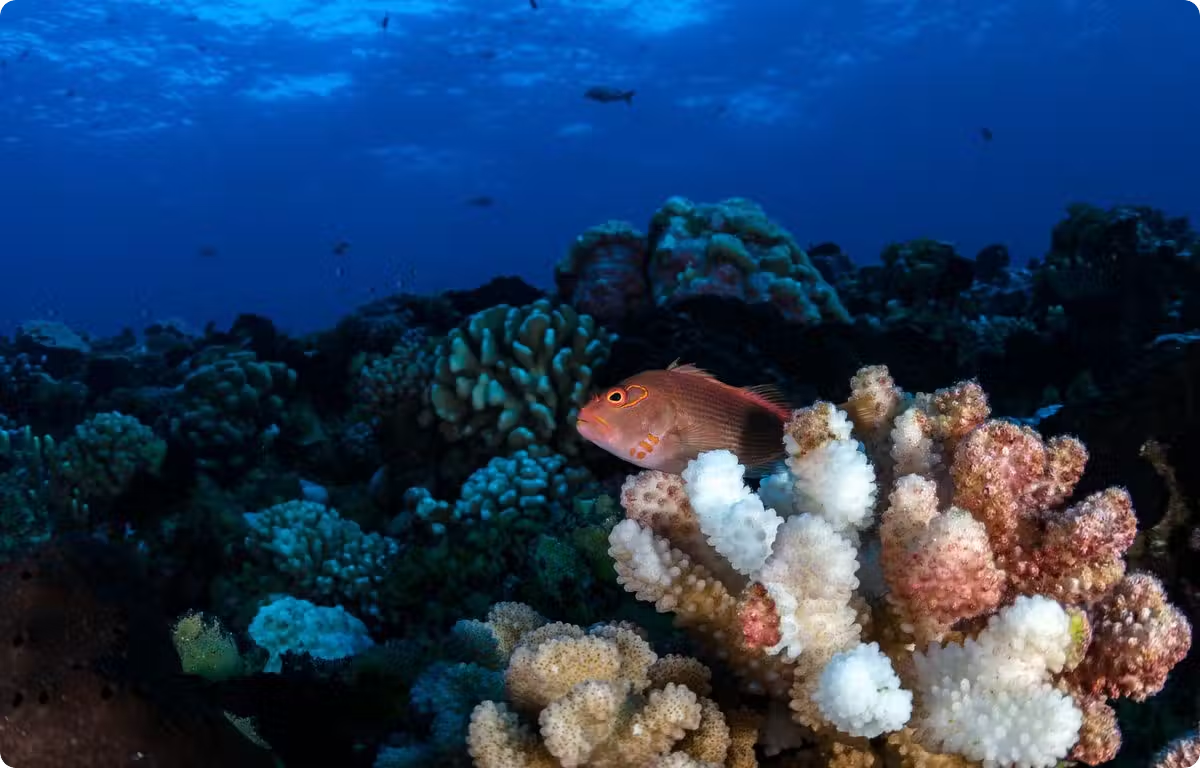
France is the fourth-largest coral nation in the world with 12 overseas territories spread across three oceans. An Ifrecor assessment covering 25 years, 450 sites and 200 scientists and local actors finds tropical seabeds under strain but still able to absorb shocks. Under the French tropics, coral reefs, seagrass beds and mangroves provide services valued at about €1.3 billion a year. Reefs covering nearly 60,000 km2 absorb up to 97% of wave energy before it reaches the coast. Together the ecosystems trap carbon, regulate climate and host more than a quarter of global marine life, supporting local food and tourism. [1]
In the Antilles, reefs are undergoing an ecological shift toward algae. In Guadeloupe, Martinique, Saint-Martin and Saint-Barthélemy corals are being replaced by algae, accelerating between 2020 and 2025. Local human pressures weaken ecosystem immunity. According to Catherine Gabrié, 72% of wastewater treatment plants in the Antilles are not compliant. Failing sanitation networks discharge wastewater to sea and agriculture adds nitrogen and pesticides. Nutrient-rich waters favour algal blooms that smother corals. Urbanisation and soil sealing flush toxic mud into the sea in heavy rain. Boat anchors scar seagrass, invasive species spread, and overfishing of herbivorous fish and urchins removes the reef’s natural grazers. [1]
Scientists stress both global and local action. Cutting greenhouse gas emissions is essential to limit coral bleaching, while local measures can restore resilience. Ifrecor points to two priorities for policy: restoring French wastewater and sanitation facilities to stop discharging sewage onto reefs and seagrass, and supporting farmers in less polluting practices. A third priority is protecting reef gardeners by regulating coastal fishing to preserve herbivorous fish and urchins and creating genuine refuge zones. Far from human pressure, such as the Éparses Islands in the Indian Ocean around Madagascar, corals, seagrass and mangroves remain largely stable and healthy. Hope remains in damaged areas where young corals are already recolonising Indian Ocean seabeds. [1]
- Categories:
- Culture