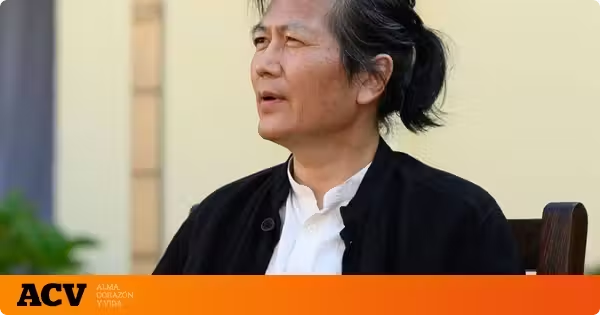
The interview focuses on his book No-cosas and its analysis of how capitalism, social media and an excess of information are changing relationships with the world. He questions a society marked by digital hypercommunication and the constant need to produce and share content. [1]
He was born in Seoul, South Korea in 1959 and moved to Germany where he studied Philosophy, German Literature and Theology. Recognised works include La sociedad del cansancio, La sociedad de la transparencia, Psicopolítica and No-cosas. [1]
Han states: “Nadie escucha. Cada individuo se produce a sí mismo. El silencio no produce nada. Por eso, el capitalismo no ama el silencio.” The quote, taken from No-cosas, frames his critique of a life model in which almost everything must generate a result. [1]
The piece includes a section heading “A favor del silencio.” [1]
He argues the information capitalism feeds a permanent need for communication, making silence seem strange. He considers the absence of noise fundamental for developing truly deep attention. [1]
He warns that being continuously connected does not necessarily mean closer relationships, as excessive communication can also favour isolation. [1]
In No-cosas he invites reconsidering the value of calm in an era dominated by screens and immediate information. The approach is not only to reduce external noise but to recover the ability to pause, listen and contemplate without the obligation to constantly produce. [1]
- Categories:
- Culture
- Entities: